Commuting is a daily reality for many people in Luxembourg, particularly for those travelling to Esch-sur-Alzette back from work. It is also the focus of Temps de trajet (Journey time), a book by sociologist Jessica Lopes and illustrator Charl Vinz, whom we met on the A4 motorway Luxembourg while heading from Luxembourg City towards Esch.
The idea for the book came from the authors' own experience. Vinz explained that it began as a conversation at home. His partner, Jessica Lopes, spends around two hours a day commuting, while he works from home, making the issue a constant topic in their household.
Lopes added that the more they talked about it, the more they realised how widespread the frustration is. She explained that everyone has something to say about commuting: journeys are too long, traffic congestion is constant, and public transport options are often insufficient. That shared experience sparked the idea for the project, Lopes said.
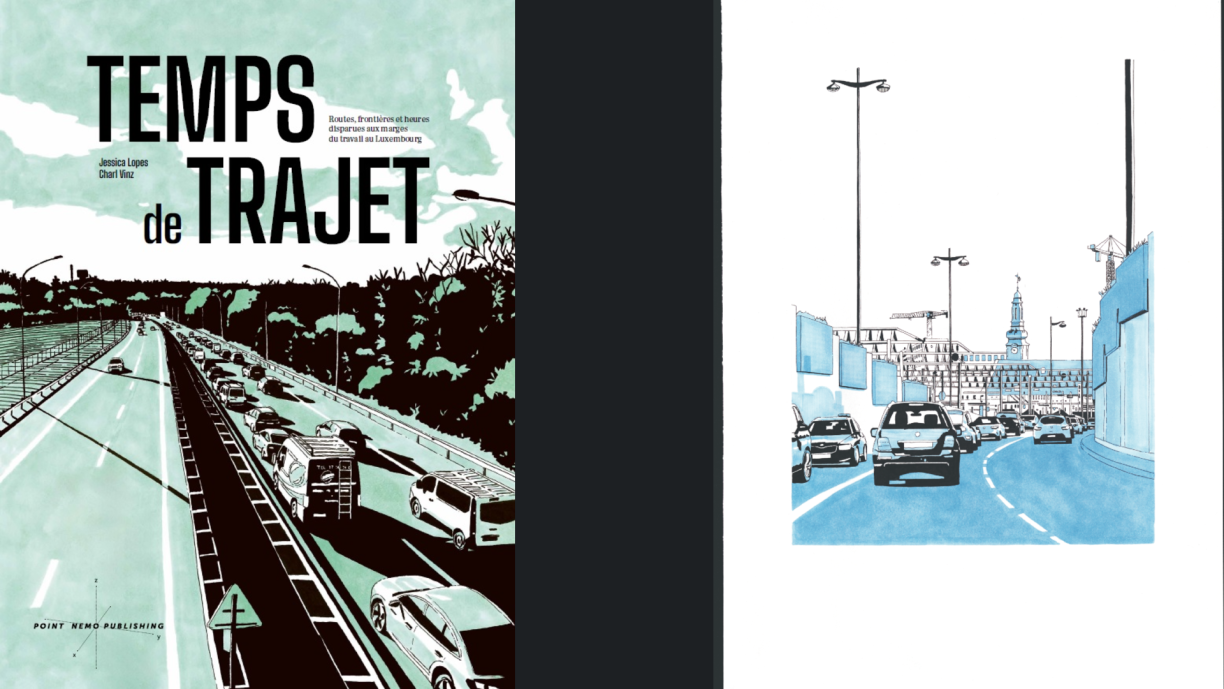
For the couple, this was their first book. Rather than relying on theory alone, they chose to gather material in the field.
Lopes explained that they followed 13 people on their daily journeys, meeting them at their front doors and accompanying them to work, sometimes in the early hours of the morning with a baker, late at night with a cleaner finishing a shift at 1am, or during peak hours. While she conducted interviews and wrote the text, Vinz visually documented the journeys, she said.
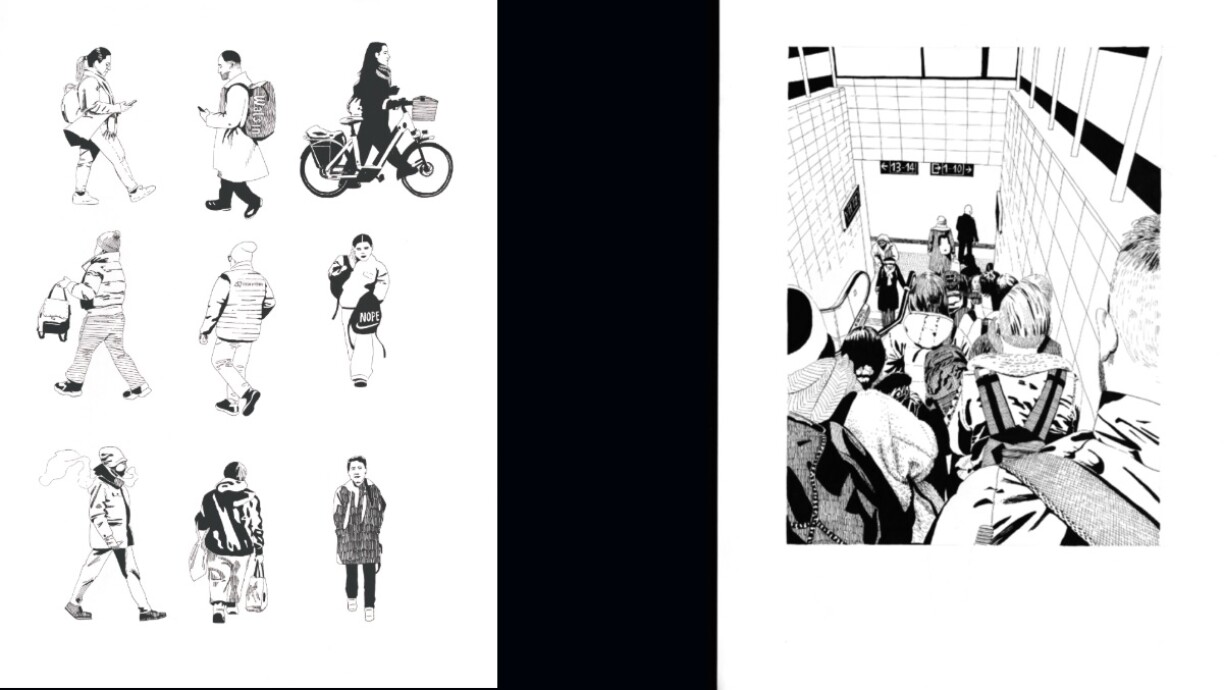
Vinz said his role was to observe and capture commuter experiences from different angles, drawing on his background in illustrating urban landscapes, movement, and crowds. He described the work as almost journalistic, aiming to portray a moment when public space is often completely saturated, which he believes is a very common situation in Luxembourg.
The aim of the book is not to propose solutions, but to shed light on existing inequalities.
Lopes pointed out significant differences between those with flexible working hours and those with rigid schedules. She said that people with strict timetables often leave home earlier or take earlier trains or buses to avoid delays, which increases the time spent commuting.
Lopes stressed that these are often lower-paid professions, such as hospitality, retail, and cleaning, where workers also tend to live further away.
She also highlighted inequalities linked to working from home, noting that some people can work from home one or two days a week, while others cannot at all. Gender also plays a role, as mothers often have additional responsibilities, such as managing their children's journeys, Lopes explained.
Vinz added that hearing people describe their experiences in real time brought richness and authenticity to the project.
The book has clearly struck a chord, with a second edition already published. Lopes said many readers have welcomed the fact that the issue is finally being openly discussed.
She also emphasised the accessibility of the format: a hybrid between a graphic novel, an essay and an illustrated report, which makes the topic easier to engage with than a traditional academic study.
Vinz described the project as sitting somewhere between art and sociology, addressing a topic that resonates strongly in Luxembourg and opens up an important conversation about inequality in daily life.