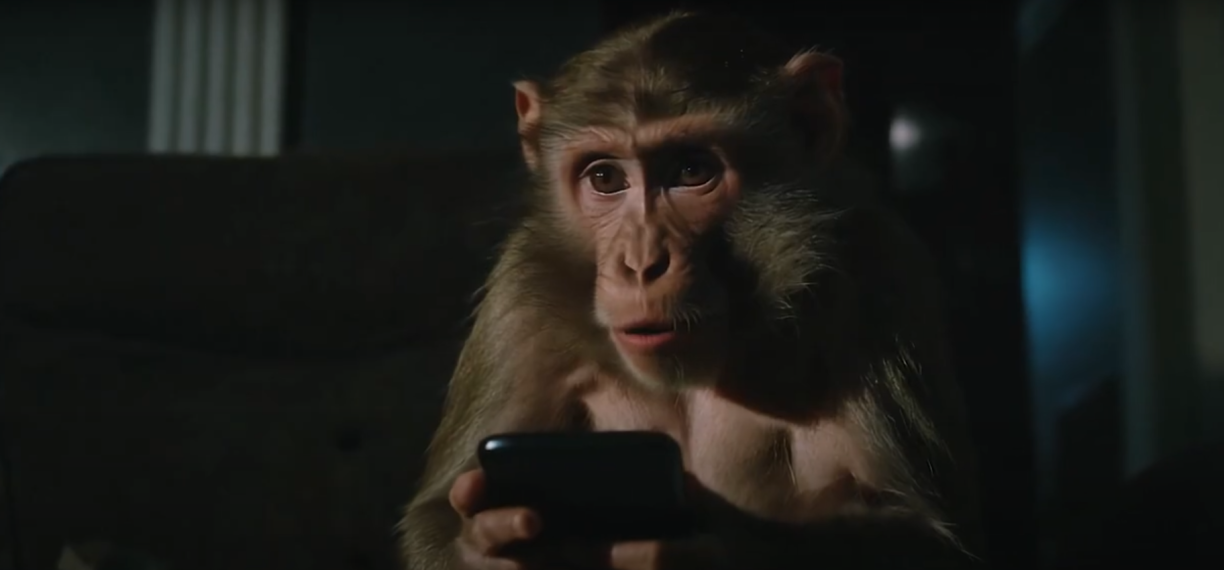
Bee-Secure and the Ministry of Education tackle this issue in their latest advertising campaign, crafting a clever allegory that compares a fictional cyber jungle to the digital jungle we inhabit today. Central to the campaign is a deepfake of Sir David Attenborough’s voice.
Attenborough recently expressed his ‘deep disturbance’ at AI’s ability to mimic his voice, objecting strongly to its use. Despite this, https://today.rtl.lu/family-matters/health-and-wellbeing/a/2205047.html and the Ministry of Education collaborated with Neon Internet (makers of LetzAI) to use a deepfake of his voice in their campaign.
While this choice adds emotional resonance and credibility due to Attenborough’s global popularity, it raises ethical questions about consent and the responsible use of such technology.
A deepfake of his voice is incredibly poignant due to the fact that he is someone that millions of people know and love, rendering the video more credible and heartfelt which adds to the impact that the creators were aiming for.
The video, framed as a mockumentary, is an apt way of describing the contents of the video, as a clever group of primates discovers how to use deepfakes. They fool a young macaque into believing one of his preferred political figures spread racist slurs against chimpanzees and gorillas, he proceeds to spread the misinformation to his friends.
Although the naivety of a young macaque should not be compared to that of a human and seems far-fetched, the scenario mirrors a situation that millions of people around the globe find themselves in. AI is developing at such a rate that it will soon be impossible to distinguish between real and fake, there are still some faults in its production often defying laws of physics or simply not able to create realistic looking hands but if you compare videos from a year ago and those that are being produced now – they are world’s apart.
Luxembourg too has been victim to fake news and misinformation being spread on social media platforms, with fakes of the Grand-Duc and RTL news reports circulating. We live in age where the risk of consuming misinformation is increasingly prevalent.
AI massively amplifies the credibility of disinformation especially in the political sphere, therefore it is imperative to take everything that we consume with a pinch of a salt.
The 2024 Global Risk Report claimed that misinformation and disinformation is the most severe short-term risk facing the world today. This led to the EU enforcing the “AI Act” which quite simply will not be enough to tackle this challenge. Goal of this act is to come up with far-reaching rules on artificial intelligence that the EU hopes will both harness innovation and defend against harms.
This advertising campaign is a step in the right direction, as people need to be educated of the threats at hand and awareness will be the key to creating a safer space online, because AI is here and it is here to stay.
The video is engaging and humorous, and the advertising campaign is a step in the right direction. With the slogan being “Monkey See, Monkey Do” and through the effective use of the allegory and metaphors it is very clear what the message of the campaign is. Do not believe everything that you see on the internet.
The use of generative AI to create the entire advertisement enhances its delivery, showcasing both the power and the risks of the technology and therefore adds to the efficacy of the delivery.
The video is supposedly aimed at younger viewers, as they often consume video content on social media platforms as their primary news source, however in the current climate of the world that we live in, it is a feature of modern life that can’t be overlooked.
Watch the full video here:





