Lately, I feel a malaise towards an increasingly polarising political landscape that incentivises seeing issues in binaries. Any topic seems to be pushed through a function and broken down, siloed, into two diametrically opposed viewpoints. Alongside this, the rise of short-form content and diminishing attention spans demand information to be rapidly digestible and somewhat understandable, but this often leads to information becoming forgettable just as quickly.
I would like to advocate for another way, driven by curiosity, in an attempt to cut through the noise and revive a sense of interest in things that are unfamiliar to us.
A dear professor once shared an analogy with me where, as an author, you should see yourself as an Indiana Jones-type character, cutting through the noise, bushes, hedges, and weeds with a machete in one hand while holding the reader and guiding them through the cleared path with the other. She really is great, a genuine shoutout to Dr Abby Innes.
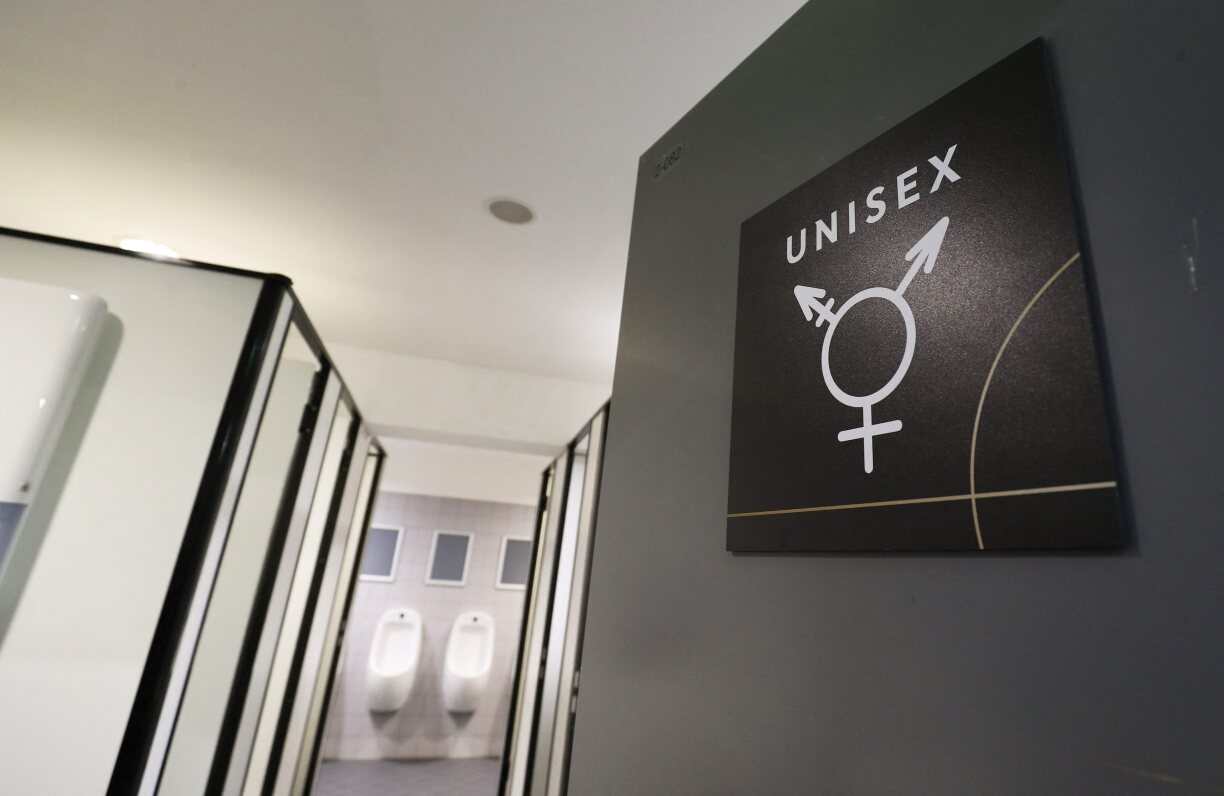
Take the latest unisex toilets debate, which has caused a bit of a stir. What seems to be a non-issue in other countries appears to have gripped ours. Studies have shown that unisex or gender-neutral restrooms can have a range of positive outcomes for society, including reducing waiting times for women and improving accessibility for those who do not identify with traditional gender categories.
In fact, the first question I asked myself when the debate first crossed my screen was: Why do gendered toilets exist in the first place? Bathrooms are not gendered at home, so why are they in public? To answer this, it is worth taking a closer look.
According to Shawna Lewkowitz and Jason Gilliland, in Victorian-era United Kingdom for example, toilets were created to encourage civility and give men a place to go that was out in public but contained. Even then, some believed this went too far, arguing that what should happen in private was becoming too public. Because women were assumed to belong in the private domain of the home, their need for access to public toilets went unrecognised in the United Kingdom, resulting in their complete exclusion from public toilet design for a further forty years.
From the outset, public toilets were not neutral conveniences but moral, social, and political statements about who belonged in public space. Seen in this light, current attempts to introduce neutral spaces for all members of society can be understood as an extension of a longer process of recognition and inclusion.
Frankly (and worryingly), parts of the debate currently in Luxembourg bring to mind Stanley Cohen's social theory of moral panic, which describes a wave of public concern and fear about a perceived threat to society's values or safety, often focused on a specific group or behaviour. Such reactions are typically disproportionate to the actual danger. Historical examples range from the Salem witch trials to the moralised, homophobic response to the HIV and AIDS epidemic of the 1980s and 1990s.
Henri Lefebvre, writing in 1968, introduced the concept of the right to the city, suggesting the idea that public spaces are often contested spaces and unequally accessible, but should ultimately exist for the common good.
If we view toilets in public schools as public spaces, then discussions about their design should centre on who is recognised, who is protected, and who is allowed to exist comfortably in shared environments. Public goods should serve public needs, and we should not continue down a path where we stick our heads in the sands of the past. To refuse to adapt to present realities, in all their diversity, is to deny people their rights.
Public goods are, by definition, non-exclusionary and must be available to all members of society. Some people identify with socially accepted gender norms, while others do not. Public schools are attended by children from all corners of society, not just those who neatly fit accepted categories. Designing public infrastructure as though diversity were an inconvenience rather than a fact does little to serve anyone well.
What is important is that we do not lose our humanity and kindness in the face of fear towards a nebulous concept of the 'other'. Perhaps more discussion is necessary to take all concerns into account. Perhaps the government could have held a clearer, more unified and resolute position to offer the public clarity on why this project represents a step forward rather than a threat. Particularly in the case of LGBTQIA+ issues, there is a duty of care owed to those who already face a harsher road to acceptance, both socially and perhaps even personally.
Education Minister Claude Meisch has clarified that the government plans to introduce unisex restrooms alongside retaining girls' and boys' restrooms in schools, which makes the intensity of the debate seem even more disproportionate.
Debates do have a purpose in persuading audiences of particular viewpoints, but they also exist to inform. That second function too often appears forgotten, sacrificed in favour of reactionary politics and simplified outrage. If we are to move forward, curiosity must replace reflex, and understanding must take precedence over fear. Only then can public debate truly serve the public good it so often claims to defend.





