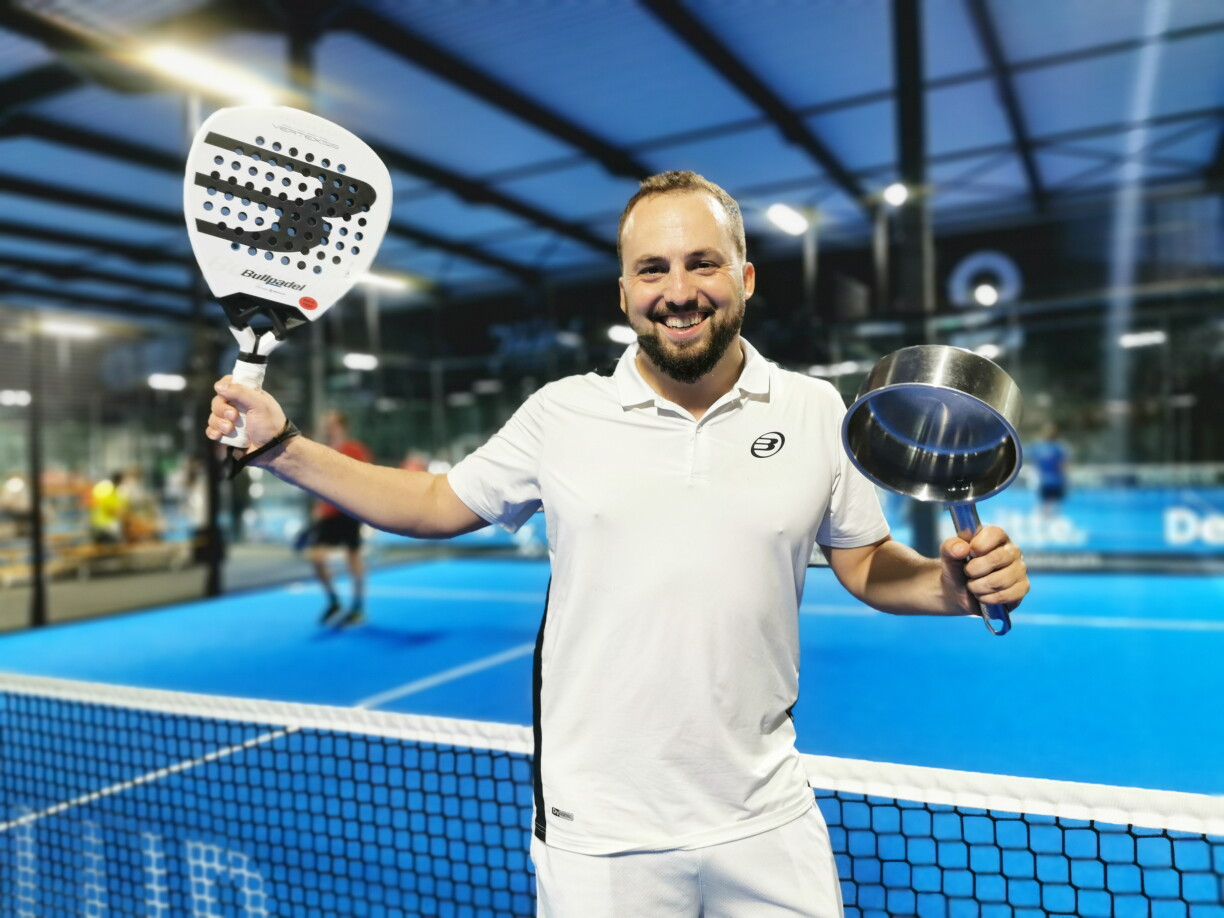
The aroma of barbecued food mingles with the sound of rackets and balls on nearby courts, while in one corner, rows of tables are set up for a major corporate event. On some days, up to two hundred people move seamlessly from the padel courts to the drinks reception, creating a bustling, lively atmosphere.
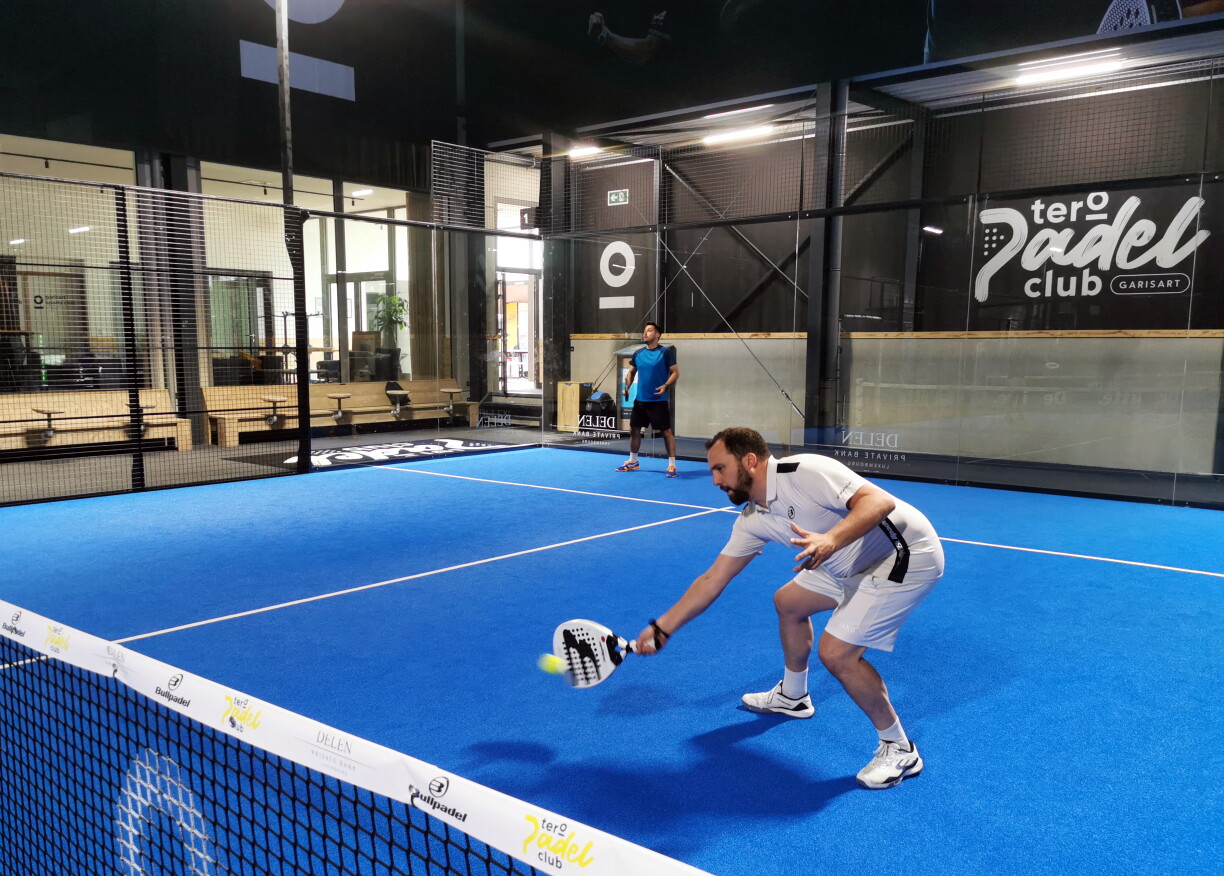
At the heart of this well-oiled operation is Arnaud Deparis, who is constantly on the move, checking in with staff, keeping an eye on the kitchens, and ensuring everything is running smoothly. This has been his daily routine for just over two years at the Tero Padel Club Garisart in Arlon, a sprawling 15,000-square-metre sports centre boasting sixteen padel courts, five tennis courts, and a football pitch, making it the largest padel club in Belgium.
But just a few years ago, Deparis was leading a very different life behind the stoves of a high-pressure restaurant in Luxembourg’s Kirchberg district.
At L’Avenue, Deparis was used to the fast pace and high standards of Luxembourg City’s restaurant scene. Over time, however, he began to feel worn down by the relentless rhythm and ever-changing expectations. “Things were going well", he recounts, "I knew everyone in Luxembourg. But being there every day at the same time, taking orders, dealing with increasingly demanding clients… I’d had enough.”
With a background in Michelin-starred kitchens, Deparis is no stranger to high standards, yet he found himself increasingly catering to requirements that clashed with his culinary instincts. “I started designing my menus around the clients: allergen-free, lactose-free, vegan dishes – food that did not resonate with me. Having to think about not putting butter on a rib of beef because a client is lactose-intolerant, that drives me mad! I love eating rillettes and boudin, and enjoying a good glass of wine.”
There was also the constant pressure to deliver on-the-spot. “When there were 120 guests in a service, and I didn’t have a vegan dish on the menu, I’d have to invent one instantly. It threw the whole service out of sync, and I was really fed up with that.”
Leaving the kitchen wasn’t a break so much as a logical next step. When the Tero group was looking for someone who could bridge food service, events, and sports management, Deparis took up the challenge. He started with the group’s bistro, Pilko, serving simple, hearty fare – croque-monsieur, pasta Bolognese, Caesar salads – aimed at a sporty, easygoing clientele happy to eat what was on offer.
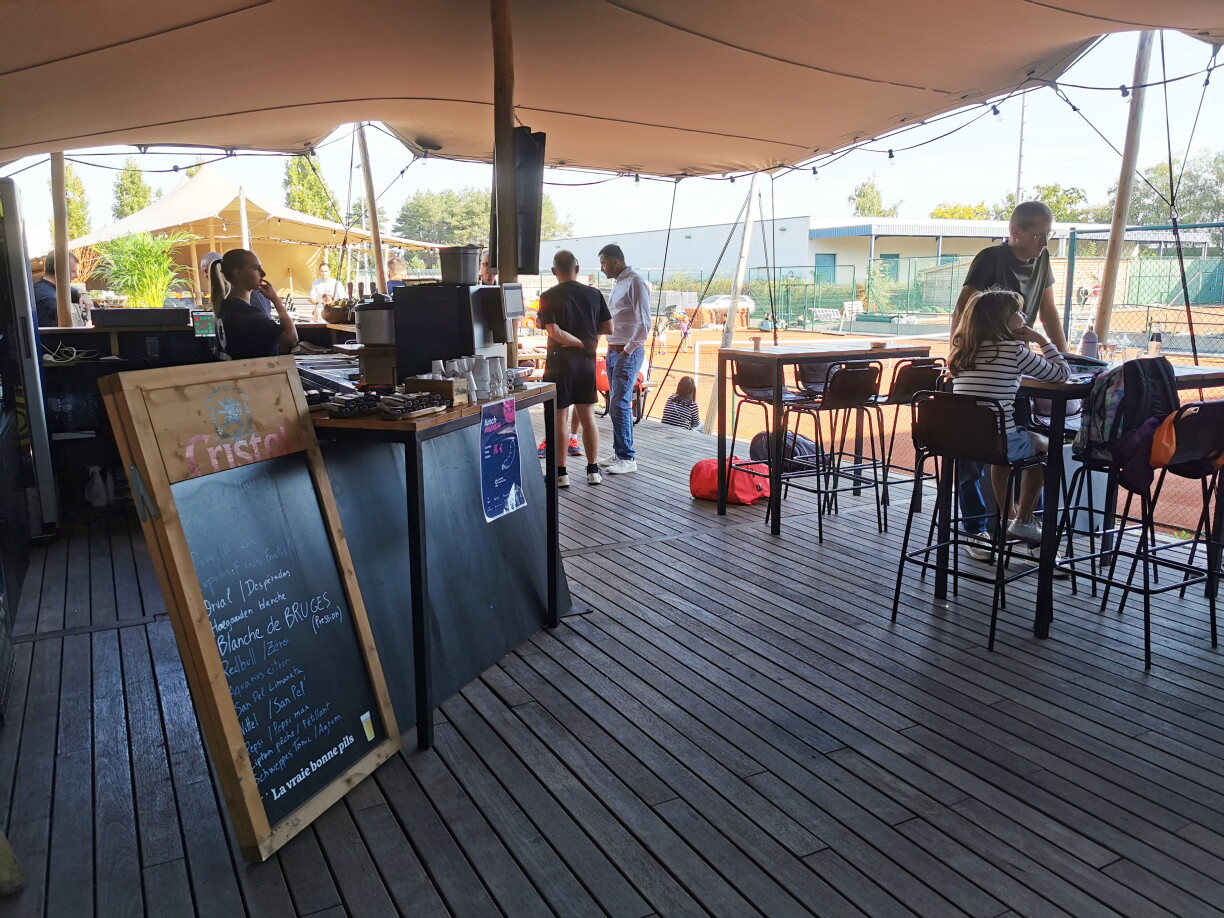
His role quickly expanded, and today, Deparis manages the entire Garisart site, which in just two years has become a benchmark for Belgian padel. The tasks were substantial: “There was a lot to restore in terms of the infrastructure”, he recalls, including overseeing the creation of a new 3,000-square-metre extension for additional padel courts, set to open in 2026. “We also had to revive the bar, which had lost its energy. Restoring that 'club spirit' was essential. Now, from 5pm to midnight, we’re full every day.”
Building a new network was the hardest challenge in the beginning, he admits, as, in Luxembourg, he knew exactly from supplier would provide the best produce.
The club’s ambitions continue to grow, with the upcoming “Road to Masters” event set to welcome between 400 and 500 players this summer.
Deparis has now settled into a steady rhythm just across the Belgian border, being in charge of events, interclubs, tournaments, but also managing the match captains, balls, courts… and sometimes even serving as a referee.
A typical week includes at least one major event, from placing orders to organising and executing banquets, for instance with groups that first want to play padel before wrapping up with a barbecue for 150 or 200 guests.
The venue itself is still expanding: a sports and health area is in the works, including the new Tero Studio for hyrox, pilates, reformer, and yoga classes. Deparis oversees the construction, quotes, and is on site every morning. In his own words, "managing a place like this with all the different trades is huge”.
Adapting to this new environment meant changing his approach, as he admits himself that he is pretty direct, a trait stemming from his time working in a loud and busy kitchen.
At Arlon, the interaction is different because he is directly facing customers. Nonetheless, with time, he has found balance, admitting that he has taken a step back, and the team trusts him.
While the pressure is still there, it feels different – less immediate and more manageable. Deparis explains that he is far less stressed than in his old job, where "everything had to be instant", for instance, when a customer had a gluten allergy that had to be dealt with immediately, compared to now, when he can solve problems over multiple days. This change means that he is no "longer constantly in crisis mode".
As for his work-life balance, he admits with a smile that it’s not necessarily improved and that he remains busy even in his free time, adding that this is a lifestyle he enjoys. Nonetheless, his days remain long, sometimes very long, when, for instance, there is a major event and he leaves home at 7.30am and returns at 1am."
Beyond his work at the club, Deparis has branched out: private chef gigs, consultancy for a new bakery on the French border, product development, and above all, an emphasis on good food.
He explains that his great passion is still sitting at the table with friends, whether it’s at a good brasserie or a Michelin-starred place, where he could spend hours.
Regarding the question of whether he would ever return to running a restaurant, Deparis replies that he has not ruled it out. However, his priority for now is his family, even though in 10 years, he could imagine potentially opening his own place. If that happens, he already has a name in mind: “‘À la cuillère’, because everything you eat with a spoon is always delicious.” But there’s one condition: if he opens a restaurant again, he wants to be the boss without anyone telling him "how to make beef bourguignon if they can’t even cook couscous".





