Dealers are relying on digital communication and appropriate know-how because digitalisation in the automotive sector has been advancing steadily for years. This is especially true for sales, but also for customer service. "The way people find out about vehicles has changed completely. Manufacturers are increasingly relying on the internet, which allows customers to obtain comprehensive information not only from home, but virtually from anywhere," emphasises Philippe Mersch, Chairman of the "Fédération des distributeurs automobiles et de la mobilité" (FEDAMO).
Trust is important
For the FEDAMO chairman, however, direct contact with the customer remains an important and decisive element in the vehicle purchase. "Basically, there is no substitute for this contact. It is a relationship of trust that is built up and should continue after the purchase," says Mersch. Kevin Colas, marketing manager at Autopolis, adds that more and more customers come to the showroom with a more or less concrete idea.
"A lot of information is available online and allows the customers to find out and compare. This means that preliminary decisions have already been made before they arrive in the showroom. Together with our sales specialists, it is then about advising the customer in the best possible way with regard to his/her needs and discovering the vehicle in reality: test drive, touching, etc.," says Colas, for whom the know-how at the dealership is an absolute added value.
He considers the development of the online car configurator, as offered by most brands on the net, to be the outstanding innovation of the digital car world in recent years. This tool allows the potential customer to put together his vehicle with all the technical details and other options conveniently on the computer screen or on his or her tablet or smartphone. "More and more customers are benefiting from this option, regardless of their age," says Philippe Mersch.
The Festival 2021 will be more digital
Of course, the internet gains even more importance in pandemic times. Car dealers are fully aware of this and are therefore increasingly relying on digital tools. Of course, also as far as direct contact between salesperson and customer is concerned. "We offer virtual appointments and chats and want to be able to advise and inform our customers directly as early as possible," says the FEDAMO chairman. And, as he says, there is definitely a willingness, even a desire among people to use such new ways of communication.
In the eyes of marketing expert Kevin Colas, this also has to do with the fact that with the pandemic, video conferencing has become socially established in society, especially in professional life. "People have quickly become accustomed to this new form of communication and have become proficient in a wide variety of applications. This makes it easier for us," says Colas. In this regard, he and the FEDAMO chairman also assume that the 2021 Autofestival will definitely become more digital. "Because the technical framework conditions make it possible, the dealers have prepared themselves accordingly and there is customer acceptance," say the two connoisseurs of the local car business.
More and more networked
Anyone who talks about digitalisation in the automotive business inevitably thinks about after-sales service. Here, manufacturers and dealers are constantly developing new concepts to make life easier for consumers. Kevin Colas gives the example of "direct garage feedback". With this application, the mechanic can communicate directly with the customer during a repair, explain to him or her in sound and vision, so to speak, what needs to be done to the vehicle and how much it will cost. "This is a plus in transparency and creates trust," says Colas. Other digital applications in the interest of consumers concern, for example, making appointments with customer service or accounting.
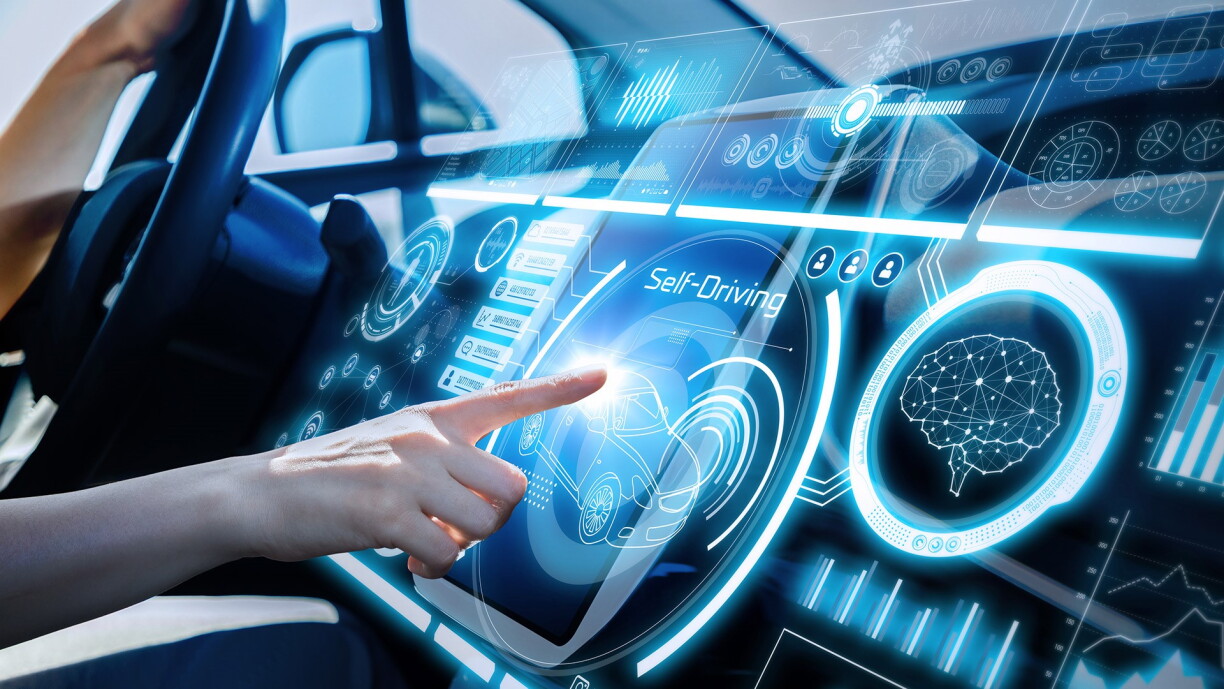
However, the digitalisation of the automotive sector is also taking place directly in the car. Keyword connectivity: a whole range of technically complex solutions are now simply part of a new vehicle. "Regardless of the price range," as Philippe Mersch emphasises. Connectivity has nothing to do with luxury. Meanwhile, there is a general tendency for vehicles to be networked. This applies to telecommunications and tracking, but also to the interaction with the dealership when it comes to customer service. Not to forget the modern apps for connecting to new traffic control concepts, such as those being developed for so-called smart cities.





