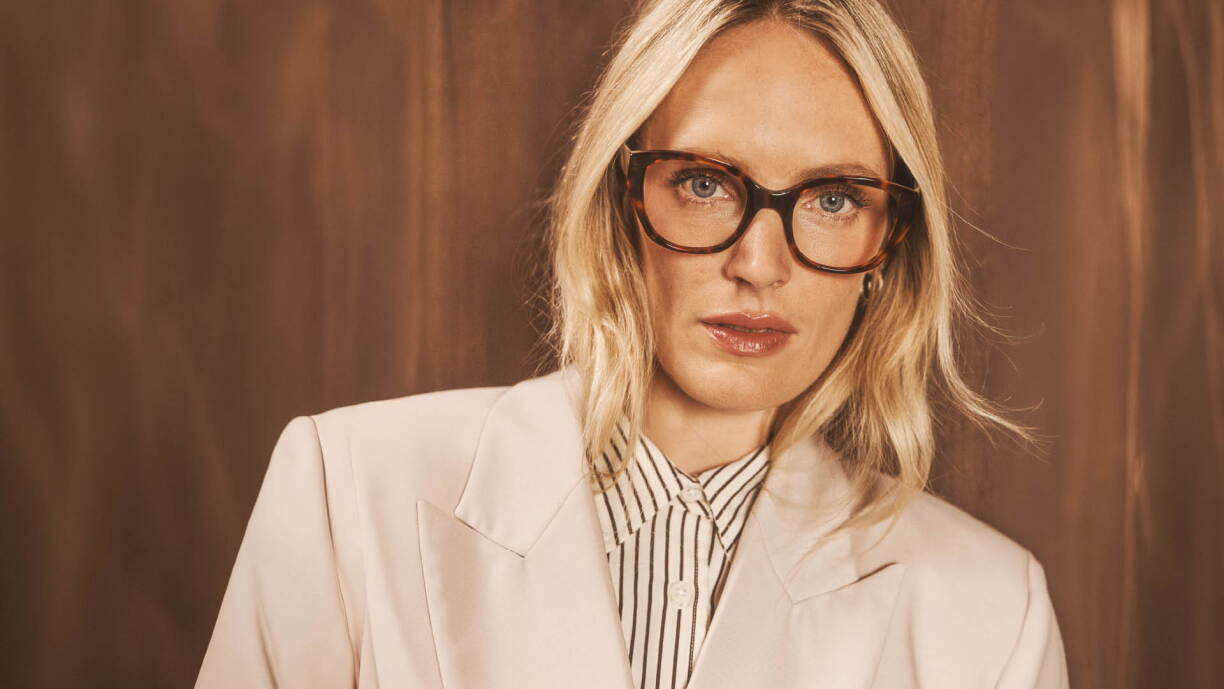
To focus on things up close, our eyes rely in particular on the lens inside the eye. Over the years, it gradually loses its flexibility, so reading small print or checking your phone takes more effort. Presbyopia can appear even if you have always had excellent eyesight. It can also come on top of short-sightedness, long-sightedness or astigmatism.
Among the most common signs: needing to hold text further away, looking for more light, or eye fatigue at the end of the day.
If your vision changes, an examination by an ophthalmologist will check both your prescription and the health of your eyes. Some eye diseases, such as glaucoma, develop for a long time without any symptoms: regular check-ups help detect them early. Your optician can then help you choose the eyewear best suited to your needs.
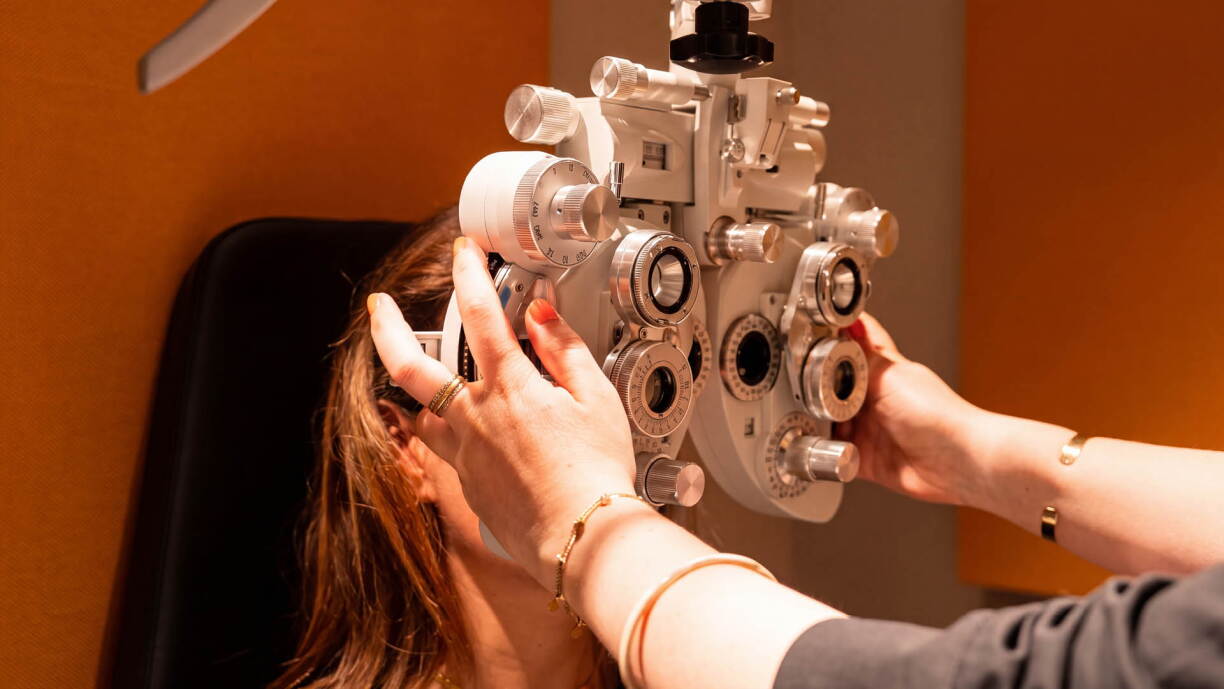
Progressive lenses combine several corrections in a single pair of glasses. The top of the lens is for looking into the distance and the bottom for seeing up close, while a transition zone supports your vision at intermediate distances, especially in front of a screen. This freedom takes a little getting used to: depending on what you are looking at, you naturally direct your gaze to the right part of the lens. Comfort depends on the design of the lenses, but also on your prescription, your habits and how precisely they are fitted. Someone who spends long hours at a computer will not necessarily have the same needs as someone who drives a lot.
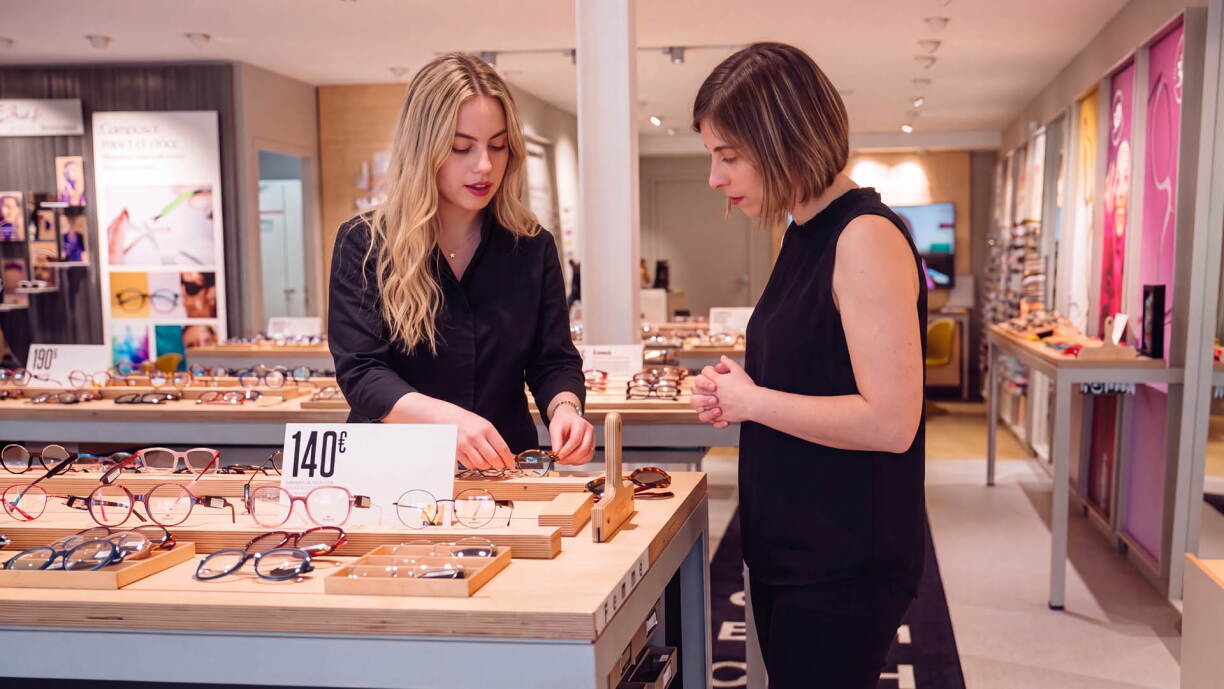
Choosing progressive lenses is not simply a matter of picking a lens range. In store, the optician takes the time to understand your daily life: screen work, driving, reading, hobbies… They then help you choose a suitable frame and take the measurements needed to position the lenses in front of your eyes. These steps matter as much as the quality of the lens. A well-fitted frame and precise centring contribute to more natural vision. That is why, at Acuitis, choosing progressive lenses always comes with personalised advice in store.
In the first few days, your eyes may need a little time to find their bearings. Wearing your new glasses regularly and turning your head towards what you want to look at can make adapting easier. Age also plays a part: the earlier you switch to progressive lenses, the smaller the difference in correction between distance and near vision. Your field of vision is then wider and adapting is easier. If discomfort persists, go back to see your optician: they can check the fit, the centring and your visual comfort.
Progressive lenses are practical when you want to move from one distance to another without changing glasses. But they are not the only option:
• Reading glasses can be fine for occasional close-up use, but they do not necessarily correct each eye appropriately and do not let you see clearly in the distance.
• Two pairs of glasses, one for distance and one for near vision, meet certain needs, with the drawback of having to switch between them.
• Lenses designed specifically for close-up or screen work can offer greater comfort in those particular situations.
• Progressive contact lenses (also called multifocal lenses) are another option for some people, once their suitability has been checked.
The best choice is the one that fits your vision and your day.
Under certain conditions, the CNS (National Health Fund) contributes to the cost of glasses: up to €30 for the frame, and cover for the lenses according to agreed rates. For adults, a new pair can generally be reimbursed every three years, or sooner if your prescription changes by at least 0.50 dioptres. To claim, send the CNS the original paid invoice from your optician, stating your 13-digit national identification number. Supplementary health insurance may also contribute, depending on your policy. Your optician can give you a quote to clarify the cost of your eyewear and the share likely to be covered.
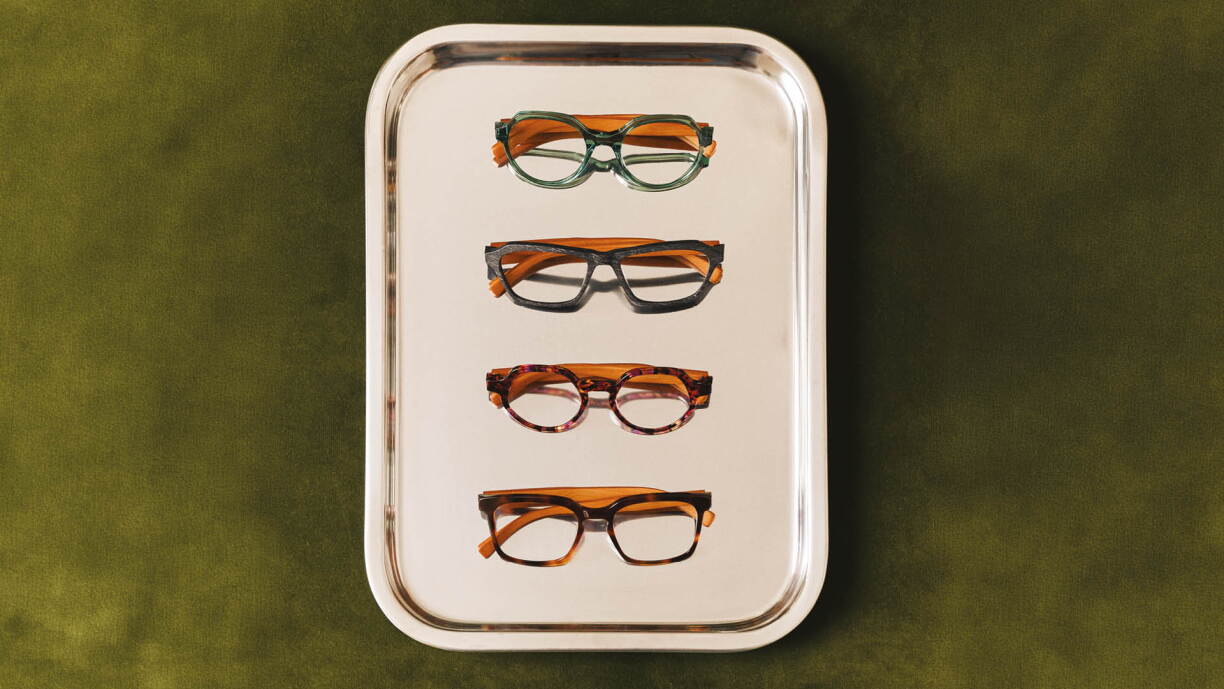
Switching to progressive lenses is also an opportunity to choose a frame that truly reflects who you are. Discreet or bold, classic or daring: your optician will guide you towards a shape you love that also suits your lenses. In Acuitis stores across Luxembourg, designs created in France by Frédéric Beausoleil meet lenses from our partners BBGR and Nikon. Our opticians support you from the very first conversation to the final adjustments, to find eyewear that suits both your eyes and your everyday life.
Unsure about your near vision? Step into your nearest Acuitis store: we will take the time to talk it through with you.





