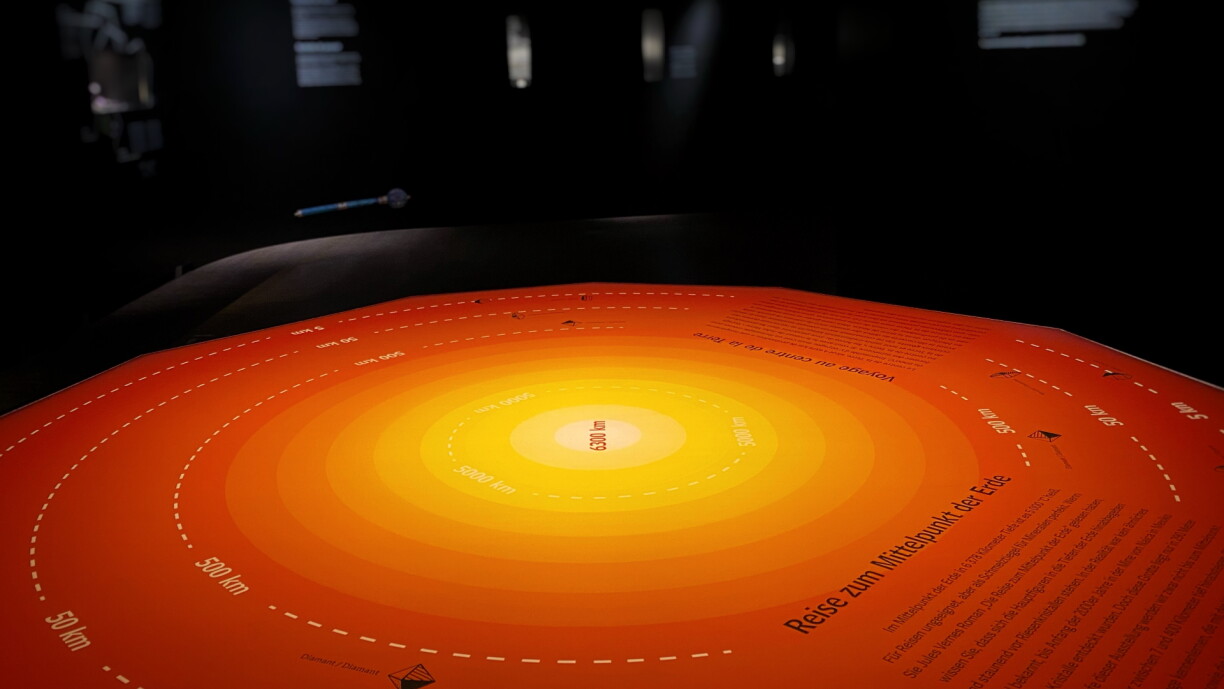
Born in complete darkness, in the depths of our planet, often in connection with magmas or overpressured rocks, miles from the surface, it took millions of years for them to reach a distance that could be exploited by humans. The internal forces of the Earth created and brought them towards us, where they acquired their structure and the features that make them unique : Mysterious gems and precious stones.
At a depth of 6378 km, the centre of the Earth has a temperature of 5000°C. It is impossible to travel there, but it's a great crucible for forming minerals. If you have read Jules Verne's novel "Journey to the Centre of the Earth", the heroes of the book go deep into the depths of the Earth and are filled with wonderment when they find themselves in front of giant crystals. No similar examples were known in real life until large crystals were discovered in the Naica mines in Mexico, in the early 2000s. But this cave is only 290 m deep.
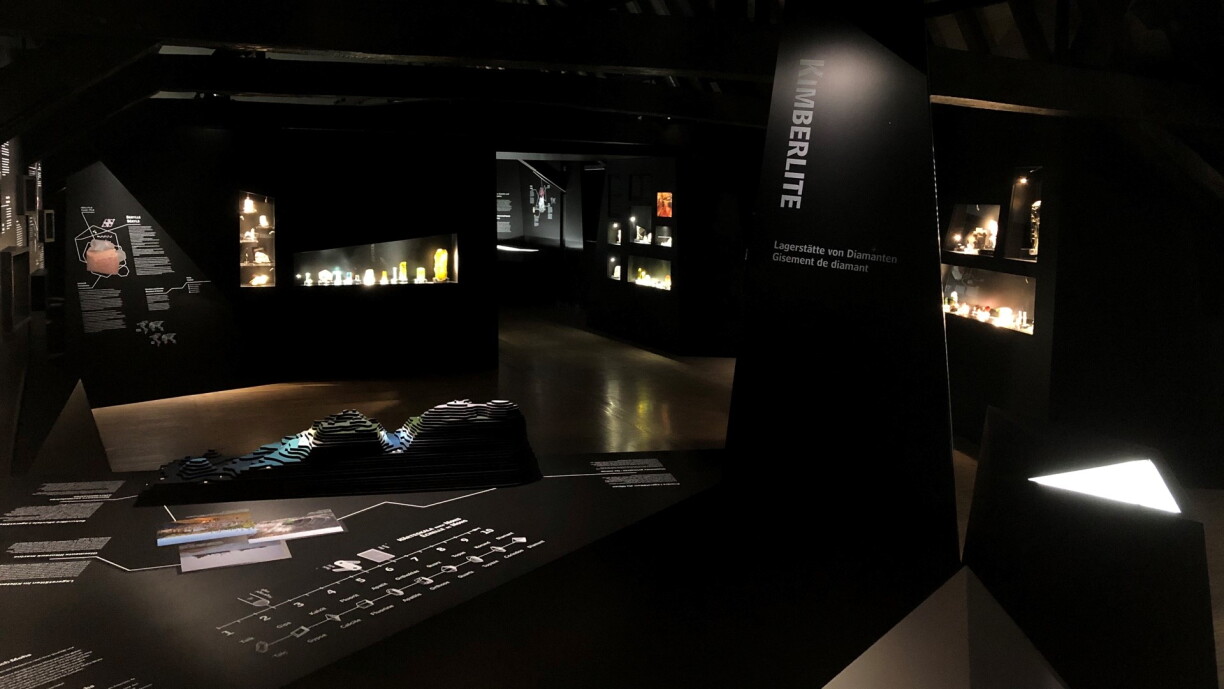
During the exhibition “From Dark to Light” visitors will dive, not into the centre of the Earth, but between 7 and 400 kilometres deep. They will see how different processes related to plate tectonics and particular conditions lead to the formation of diamonds, rubies, sapphires and topazes.
When did a human being pick up a stone for the pleasure of the eyes or adornment for the first time? Was the attraction due to its particular shape, colour or texture? The history of stones as ornaments is very old and goes back to time immemorial. From the very beginning, the shaping of these utilitarian objects has shown an aesthetic trend through the use of decorative elements.
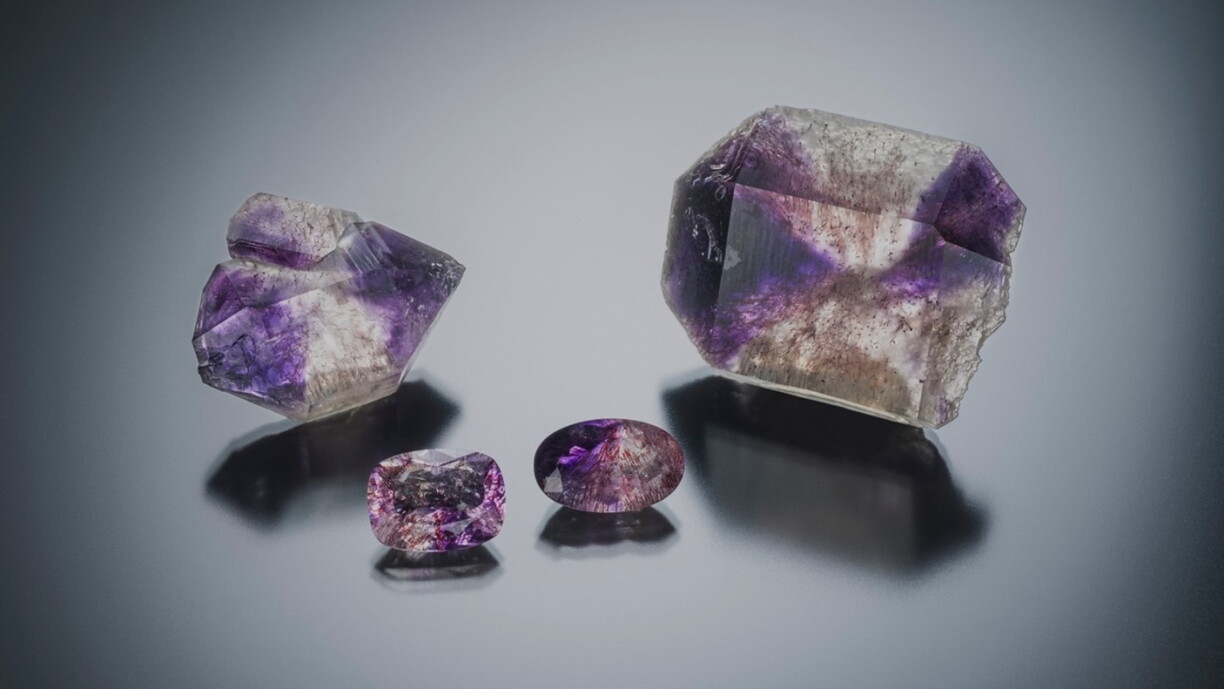
When man picks these ore flowers, when he gathers or exploits them, they already have their full potential. Over time, man has learned to transform, enhance, and cut them so as to sublimate and polish them to make them shine.
They then shine with a thousand lights.
They attract by their colour.
They fascinate.
Amethysts, citrines, sapphires, emeralds, opals, diamonds and so many others belong to a vast world where it is easy to get lost and sometimes difficult to distinguish the true from the false.
They are often shrouded in mysteries, legends and the occult. Few people know where they really come from, how they are found, what they may look like in their natural state and why they captivate men and women so much.
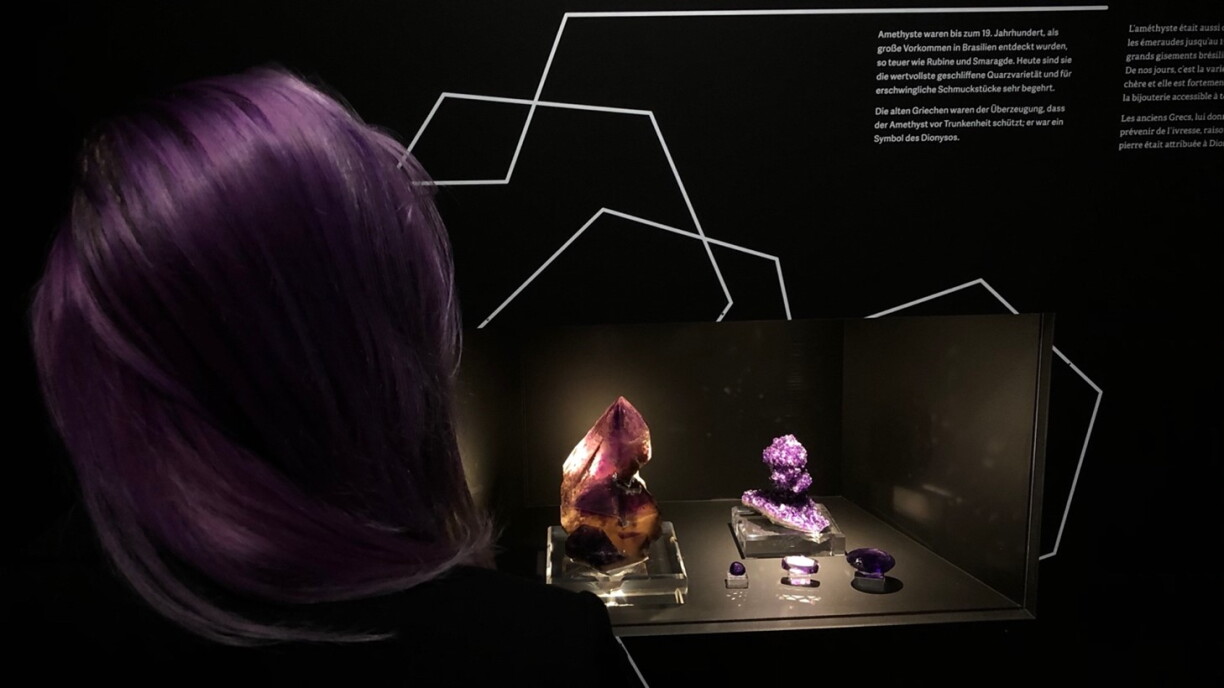
Objects of adornment, appearance, social positioning, charm, and even of affirmation of power for millennia, their colour, beauty, mystery, and value have fascinated men and charmed women, even if yesterday's tastes are no longer those of today, nor what they will be tomorrow. Gems and precious stones are objects of desire, of power but also of fashion. What are your tastes and how do you look at them? And will that view have changed by the end of this exhibition?
The exhibition is designed and produced by the National Museum of Natural History in Luxembourg with numerous exhibits on loan from private collectors, jewellers and designers.
From Dark to Light
Minerals & Gems
from 23 October to 6 June 2021
Tuesday– Sunday : 10 h 00 – 18 h 00
In these times of social distancing, favour a visit during the less busy hours (on week days or between 10 a.m. and 2 p.m. on holidays and weekends).
National Museum of Natural History – ‘natur musée’
25, rue Münster ; L-2160 Luxembourg
www.mnhn.lu
3D tour of the exhibition: https://my.matterport.com/show/?m=nX6FUESYvuN





