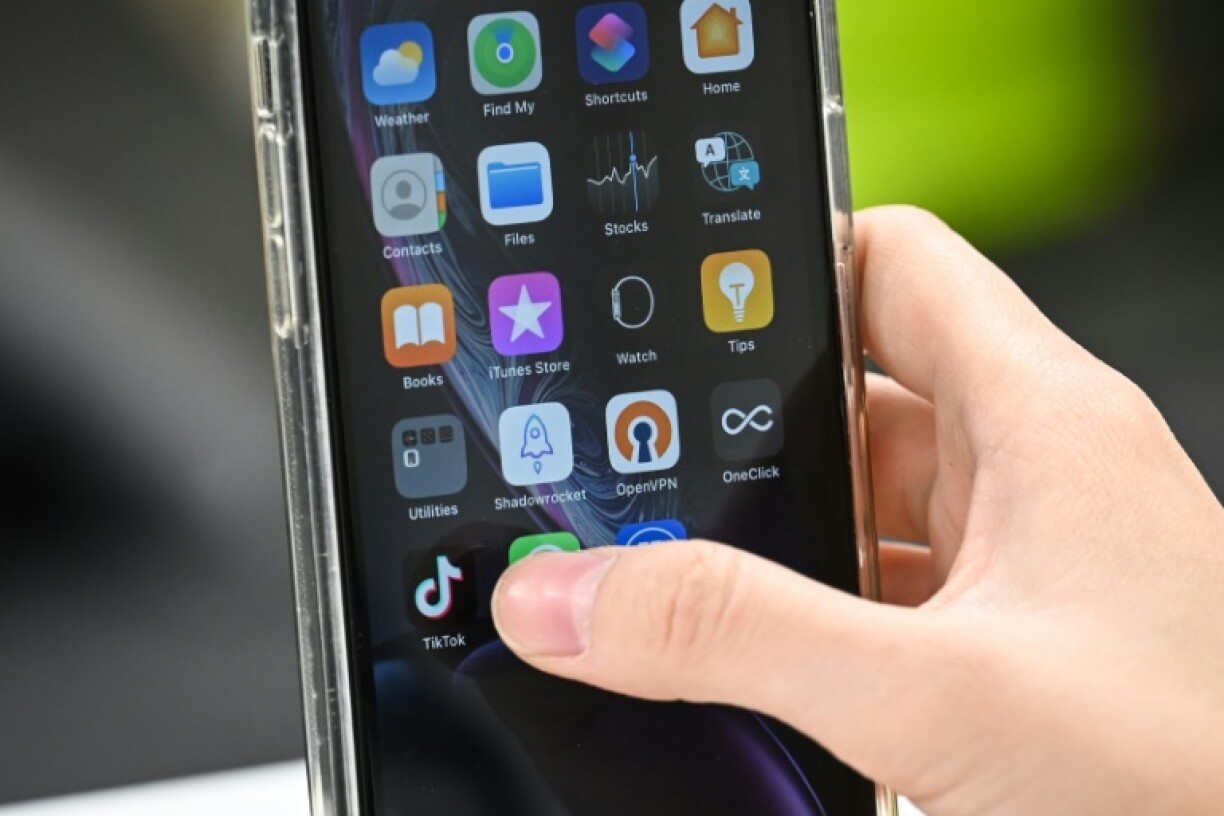
Back in April, as part of the government's Screen Life Balance (SLB) campaign, smart phones were banned in Luxembourgish primary schools. Not long after, a partial ban prohibiting their use in classrooms was introduced across secondary education.
If reports from the European School and the Lycée Aline Mayrisch, both imposing similar restrictions before the campaign, are anything to go by, the regulation – conceived to combat mental health issues, curb screentime, and improve academic performance among students – seems to be yielding positive results. Some students even reported recognising the benefits of this type of policy within a week of its implementation.
Education Minister Claude Meisch, the legislation's lead architect, seems on track to achieve part of his desired "balance between the digital world and the real world" during school hours.
If that is the case, it would represent a rare victory globally for legislators trying to amend and reshape law to meet the constantly evolving demands of the digital age.
In Australia, however, a more heavy-handed approach is being taken. 10 December will see the Social Media Minimum Age (SMMA) law come into effect, imposing a multiple platform ban for anyone under 16 on sites such as Facebook, Instagram, and TikTok.
Much like Meisch's ambitions here in Luxembourg, Anthony Albanese's Labor administration has put the mitigation of internet-related mental health issues in young citizens as the focal point behind the policy, in addition to countering related threats of cyberbullying and online grooming.
Despite a widely-accepted need for children to be safeguarded against online risks – in-country approval ratings for the law currently sit at 77% – digital rights advocates have pushed back.
In October 2024, 140 Australian academics, international experts, and civil society organisations signed an open letter, arguing the ban is "too blunt an instrument to address risks effectively and that any restrictions must be designed with care".
And, after Meta started pre-emptively shutting down accounts, two teenagers have secured a special hearing in front of the country's high court, where they will claim the measure infringes upon their constitutional rights and leaves the internet more dangerous for young Australians.
It is not just the Luxembourgish and Australian governments that have recently directed their attention to internet safety. Bulwarking children and young people online has grabbed the focus of several legislative bodies worldwide.
The UK passed, much to the ongoing ire of Wikimedia, its 2023 Online Safety Act; France followed suit with a 2024 Law on Securing and Regulating the Digital Space; and, in the US, last May saw the latest version of the Kids Online Safety Bill introduced to their senate.
After 35 sparse years of meaningful digital stewardship, and the numerous hidden mental health crises born from the lawlessness of the internet's advent, policymakers are now putting pen to paper.
In the context of children and young people online, they have little to no choice.
In 2024, the WHO found that globally one in ten adolescents showed signs of "problematic social media behaviour, struggling to control their use, and experiencing negative consequences", and that one in six school-aged children have endured cyber-bullying. In instances of online grooming and other forms of sexual exploitation, more than 300 million cases occur per year.
If select platforms are removed altogether, as the SMMA intends, so are their immediate risks.
But complex societal issues require considered legislative answers. Australia's response – unlike Luxembourg's nuanced and tailored SLB campaign – is a "quick fix" that is on course to create plenty of future challenges.
The potentially harmful impacts of imprecise digital lawmaking pose the greatest threat to two interconnected areas: user experience and the capability to hold platform providers accountable.
Young Australians affected by the ban stand to be "left behind", when it is increasingly difficult to distinguish between virtual and digital reality, as both progressively seep back and forth into each other on a near-constant basis.
For the generations who only know a world bound by the internet, most aspects of communication are inextricable from the digital spaces provided by social media. Prohibiting access to the platforms that facilitate not only day-to-day connection, but also global exchange, will lead to immeasurable cultural loss.
To suggest that the ban will not push dangers to less-visible spaces online, making it harder to detect and remedy, would also be naïve. When this happens, the law will have the opposite of its intended effect: children and young people will continue to be quietly exposed to harmful content they are not equipped to handle, and then thrown into an "expanded" internet at 16, where the same risks are present on an even larger scale.
Due to the vagueness of the law, how each site verifies age will differ. Suggested methods include a combination of users entering their details, face-scanning technology, and inference from online activity elsewhere.
Moving past initial data protection fears, the combination of these approaches presents plenty of opportunities to circumvent the ban, and inevitably there will be a sizeable number who will find other ways around the new restrictions.
Gulfs in digital literacy within Australia will persist, and at worst, widen, as some follow the rules and others do not.
When it comes to holding companies accountable in protecting younger users on their platforms, Australia's approach provides little as a deterrent, speaking to the immense unchecked influence these entities now wield.
Fines for not taking "reasonable steps" in assuring the ban is met can be up to $49.5m (AUD) (€28m), a small drop in the ocean for the likes of Meta, with their latest net worth estimated at $1.6tn (USD) (€1.4tn). As "reasonable steps" also remain loosely defined, there appears to be plenty of potential wriggle room to avoid punishment – a skill already well honed by tech's big players.
Laws stand in place protecting children and young people from abuse, harassment, sensitive material, and sexualisation. The current attempts of governments to compel social media companies to follow related regulation and legal custom mainly stem from their failures to already do so.
Unfortunately, instead of ensuring pre-existing legislation is followed on their sites, policy is forced to bend at the might of companies commanding the data capital and accompanying power few countries could ever hold.
A reality, especially striking considering proposed age verification processes, which will only lead to users – already numbering in the billions – handing over more personal information.
Australia's SMMA will deliver some immediate results: lessening contact with harmful content, digital "stranger danger", and social pressures surrounding banned platforms. It may momentarily and marginally level the socioeconomic playing field, diminishing some advantages young Australians with unhindered access to the internet have over their peers at the other end of the technological divide.
Disconnection on this level, however, is mostly going to widen digital fault lines already present within and between countries, pushing those trying to bridge these to darker, less regulated, and more dangerous spaces online.
An "enforced" age limit does not ease anything. Australians turning 16 will be comparatively ill-prepared for social media platforms – their norms, etiquette, and dangers – after being previously shielded from the opportunities to connect with all sorts of global communities. This will similarly deepen domestic divides between those who choose – and have the digital literacy – to evade the ban and those who do not.
The Albanese government, and others aiming to nurture healthy norms around social media and screentime in general, could learn a thing or two from Luxembourg's approach.
Prioritising appropriate device use and educating young people on how to navigate digital spaces responsibly, rather than locking away troublesome aspects until a later date, seems the reasonable response in a world so interconnected by social media that it now serves as a fundament to its existence.





