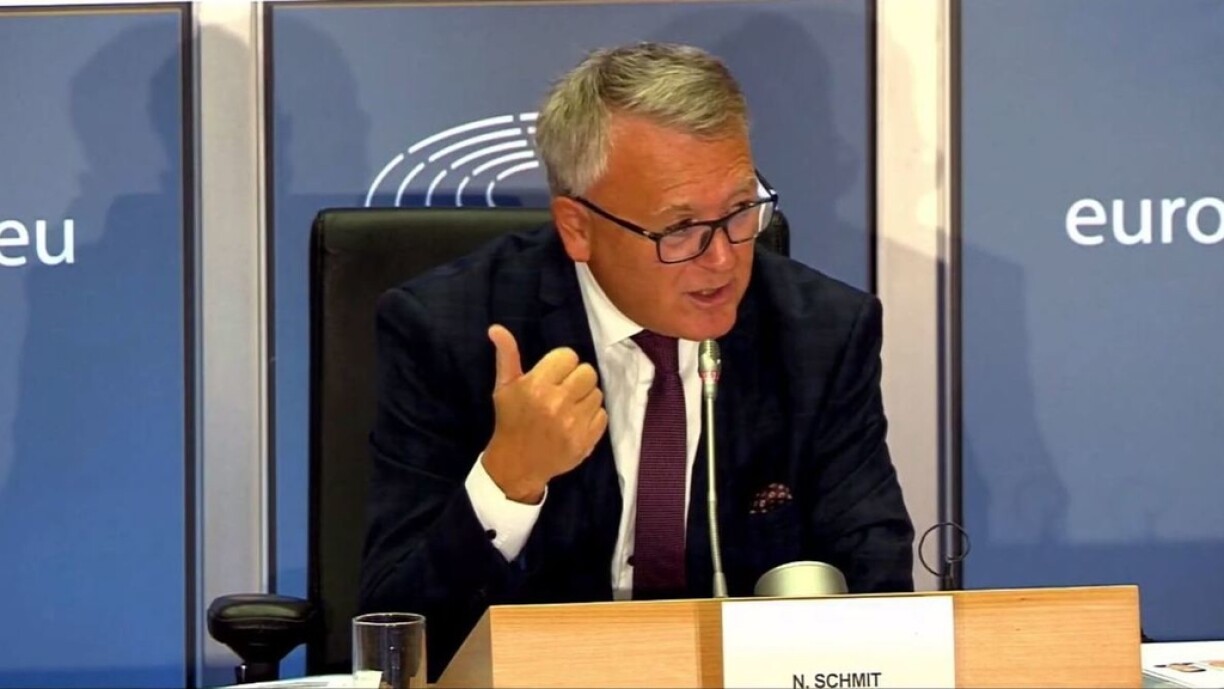
The former LSAP minister will hold the jobs portfolio under Ursula von der Leyen's European Commission. In his introductory speech, Schmit outlined his experience in work and social affairs.
Schmit vowed to boost employment and in turn promote a skilled workforce. At the heart of his vision lays the concept of social inclusion. Above all, Schmit hopes to introduce high standards for the European jobs market and look for new means to maintain the labour market's stability. For this latter point, Schmit will remain in constant communication with the European Parliament to deliver this.
Another issue the commissioner-designate hopes to prioritise is workplace security, highlighting that employees should not experience risks at work in 2019. The former Luxembourgish minister wants to promote a socially-inclusive Europe and reinforce social dimensions. He stressed the need to guarantee that men and women are able to secure their futures, for them, their children, and their families.
Schmit presented an ambitious programme to MEPs. During his speech, the nominee reminded MEPs that his list remains incomplete and that he will always be prepared to pursue new directions in the ever-changing world.
The former Luxembourgish minister assured MEPs he will cooperate closely with the European Parliament in the next five years, and will listen to them. He highlighted the importance of working together to ensure trust in the European Union, stating that Europe is the best area in the world to live and work in.
Schmit spoke for 25 minutes before responding to questions.
Wrapping up with the Employment and Social Affairs Committee, Schmit pointed out that he did not suffur during questioning, but that it had been difficult. During the course of three hours, he argued for more social rights for employees whilst respecting the sovereignty of each member state and providing guidelines rather than concrete propositions. Schmit spoke mainly in English, but on occasion changed to French and German.
In respect of guidelines, Schmit stated he does not plan to enforce a European minimum wage, explaining that many member states have salaries fixed by collective agreements. He vowed to research instruments which could guarantee living wages in the entire European Union, stating that if citizens are not guaranteed a decent living, they will turn their backs on politics.
The next step in the process to approve the new European Commission will see the committees supply recommendations to the Conference of Presidents, who will decide by 17 October whether the European Parliament has had enough information in order to vote on the Commission. If approved, the European Parliament in Strasbourg will vote on the Commission as a whole on 23 October.





