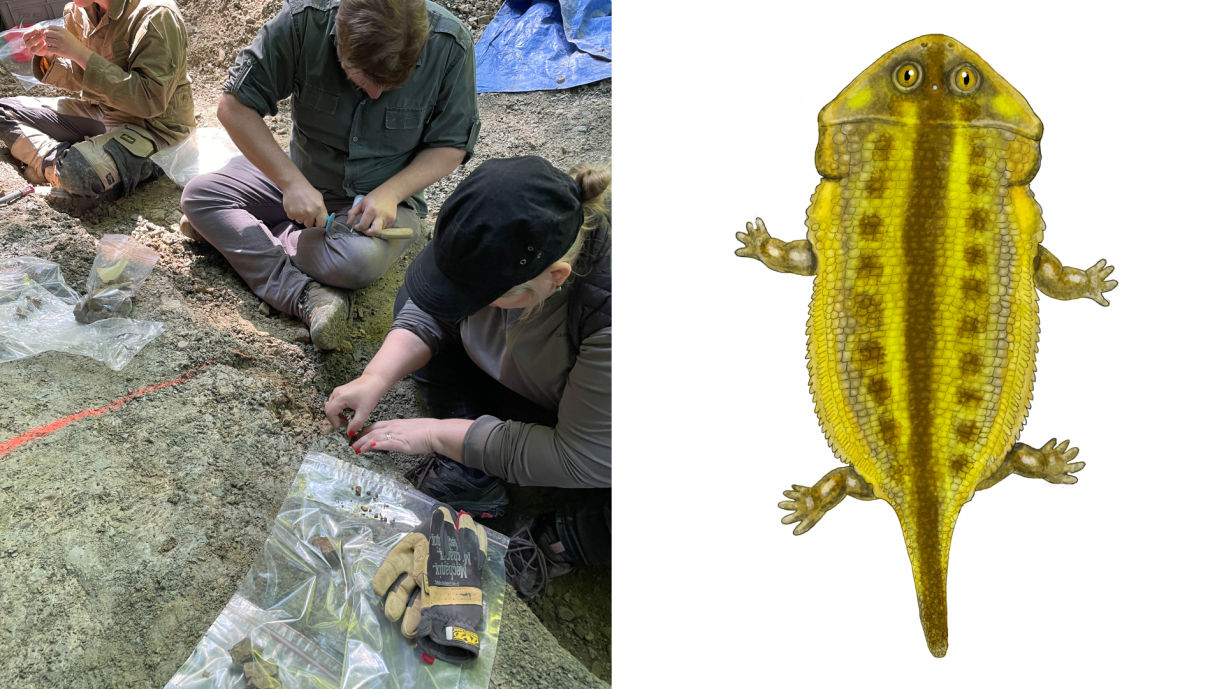
The National Museum of Natural History (MNHN) has announced an "exceptional" discovery of ancient bones on Luxembourg soil, shedding new light on the region's prehistoric past. The find, made during excavations near Larochette in 2024, includes remains of two giant amphibians that roamed the area approximately 210 million years ago.
The discovery was the result of a collaborative effort involving researchers from the MNHN, experts from Germany's Teufelsschlucht Dinosaur Park, and the Palaeontologica Belgica association. The bones were found in a layer of rock dating back to the Upper Triassic period, a time when the region was covered by marshes and ponds.
Among the findings are individual bones from several species, including Gerrothorax, which measured about 1m in length, and Cyclotosaurus, which could grow up to 4m long. According to Dr Ben Thuy, a palaeontologist at the MNHN and head of the excavation, the bones were likely gathered during a flood and subsequently buried in mud, creating what he describes as "a veritable graveyard of giant amphibians".


While the discoveries did not yield complete skeletons, they provided a wealth of bones and teeth, offering valuable insights into these ancient creatures. "The giant amphibians were among the largest predators in the ecosystems of the Upper Triassic period. Although they are part of the amphibian family, their lifestyle was similar to that of present-day crocodiles", Dr Thuy explained in the museum's press release.
Recovering the fragile bones proved challenging for the team, but they successfully collected more than 100 specimens. In the coming months, the remains will be prepared and analysed by specialists at the Teufelsschlucht Dinosaur Park before being unveiled to the public at the Luxembourg museum.





