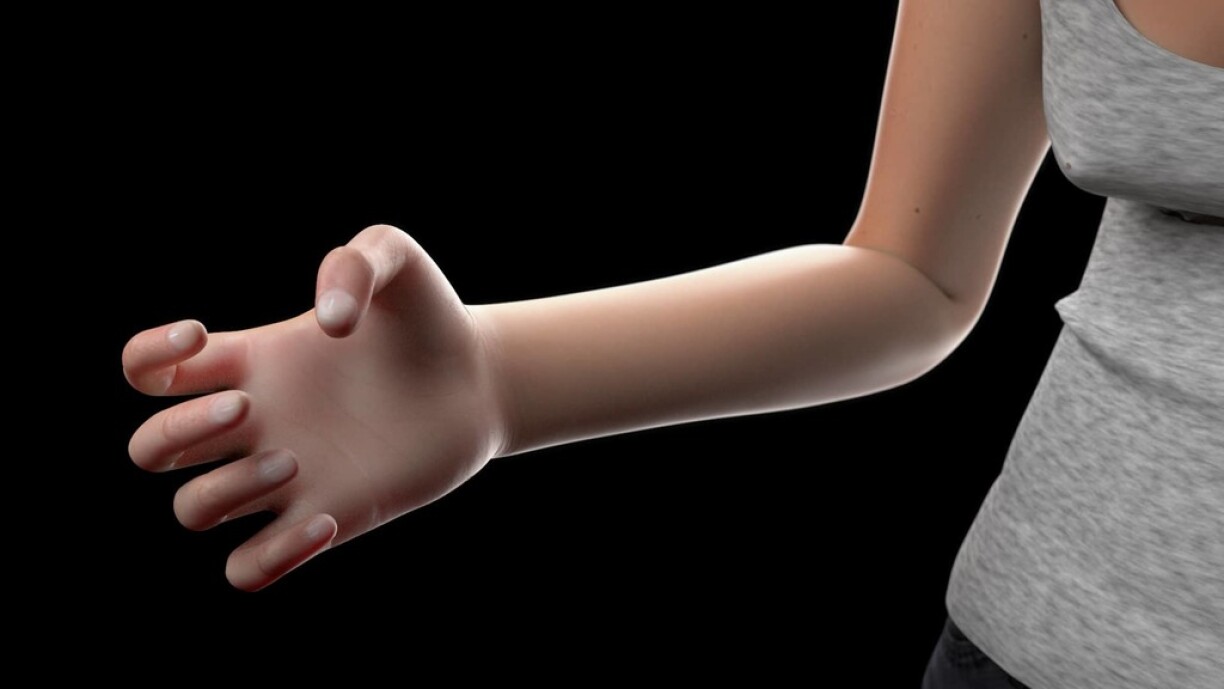
In a kind of photo-fit make up of a random attacker, the virtual human of the future, aka Mindy 3000 is a 3D-model of what scientists envisage human beans (Dahl-ism) may look like in a few hundred years.
The reasoning behind this striking imagery is the use of technology and its impact on the physical form.
Straining your neck to peer at your digital device is well known in recent medical studies* and these instances below are further examples of what may lay in store for those that swipe a little too often (apologies for the unintentional irony if you are reading this on your phone):
Text Claw: derived from the constant gripping of your smartphone, curling your fingers round into an unnatural position for long periods of time.
Tech Neck: the muscles in your neck have to expend extra effort to support your head. Sitting in front of the computer at the office for hours on end also means that your torso is pulled out in front of your hips rather than being stacked straight and aligned, as it should be.
Thicker Skull: In 2011, the World Health Organization classified smartphone radiation as “possibly carcinogenic to humans”. After a 2018 study suggested smartphone radiation may affect memory performance, questions were raised over its impact on other cognitive areas too. Thus in this ‘study’, Mindy has developed a thicker skull with which to propel errant waves.
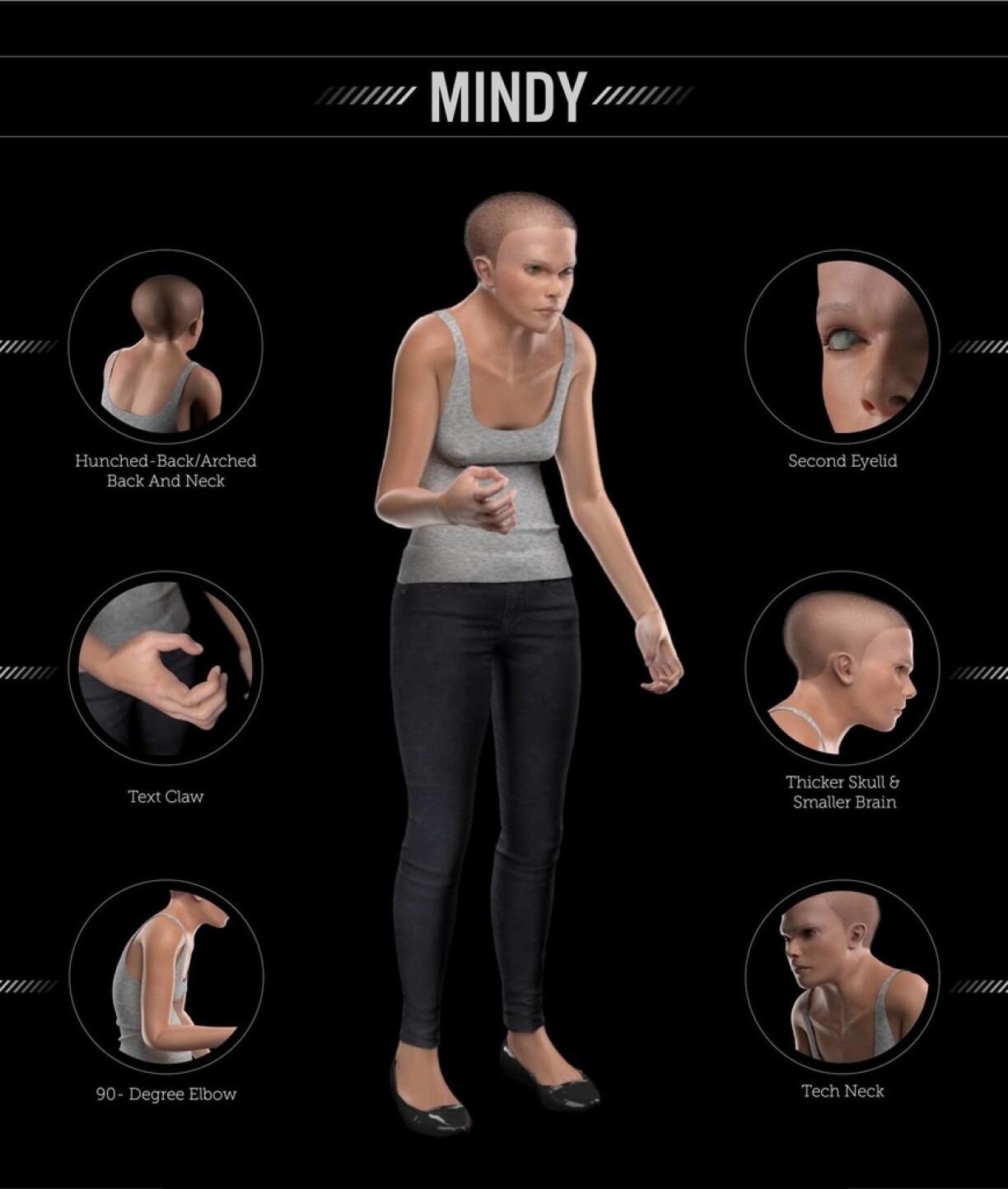
Smaller Brain: idiocracy theory (see video below) - the theory of evolution would point to a smaller human being in the future. This is largely due to the fact that survival no longer depends on being the largest, strongest person in the species. Human brains shrunk between 1.9 million and 10,000 years ago.
A Second Eyelid: Humans may develop a larger inner eyelid to prevent exposure to excessive light, or the lens of the eye may be evolutionary developed such that it blocks incoming blue light but not other high wavelength lights like green, yellow or red (this is spurious to say the least).
*This is all conjecture based upon an article nabbed from thew outer reaches of the webi-verse and has little to no scientific proof at this stage.





