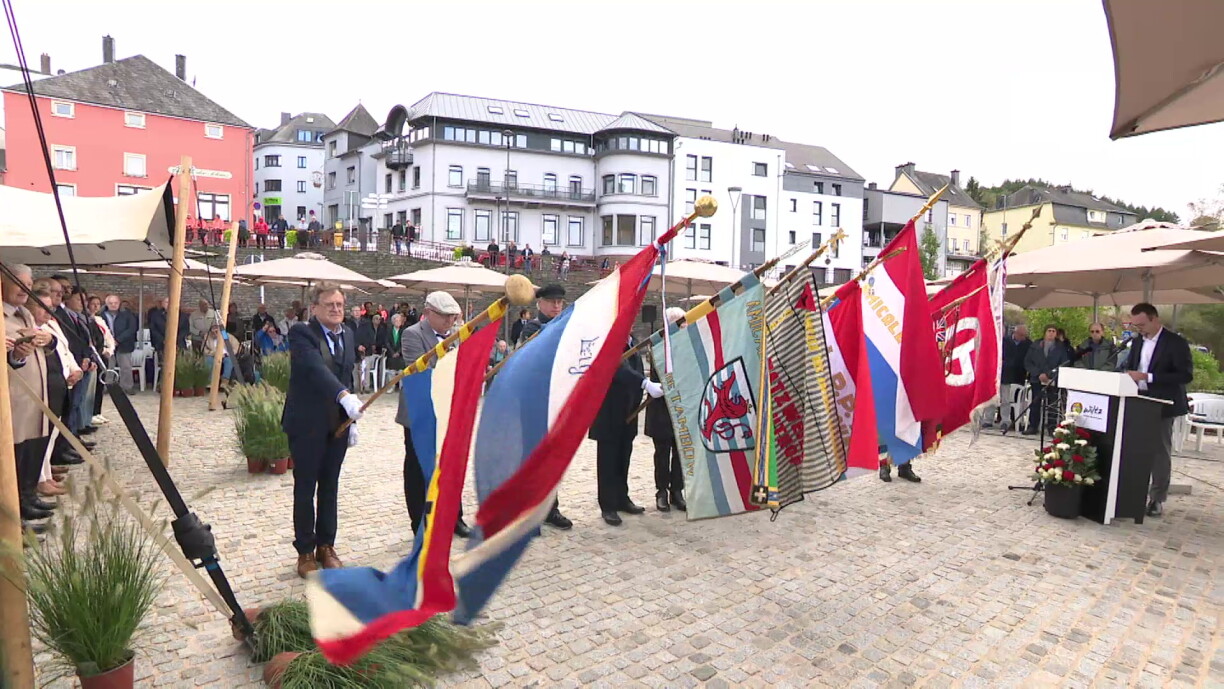
On Monday, Luxembourg marked 84 years since the general strike against forced conscription under Nazi occupation, one of the most significant acts of resistance in the country's wartime history.
The strike began in Wiltz on 31 August 1942, where government and municipal representatives gathered to commemorate those who took part and those who lost their lives.
Sirens sounded across the town as the ceremony recalled the morning the protest began. On 30 August 1942, Gauleiter Gustav Simon had announced compulsory military service for young Luxembourg men born between 1920 and 1924.
At around 5.30am the following morning, workers at the former leather factory in Wiltz downed tools in protest. News of the action quickly spread across the country, with railway workers, steelworkers, civil servants, teachers, and pupils joining the strike.
Historian Luca Wiltgen described the events as the tragic culmination of a chain of developments set in motion by Simon at the end of August 1942. The war, which until then had seemed distant to many people in Luxembourg, had suddenly become a direct reality for thousands of families, Wiltgen said.
The Nazi regime responded brutally. Twenty-one people were sentenced to death and executed following the strikes, while others were arrested and entire families were forcibly resettled.
The protests ultimately failed to stop forced conscription, but went on to become a powerful symbol of Luxembourg's resistance to Nazi occupation.
Monday's ceremony at the National Strike Monument in Wiltz focused not only on the events of 1942, but also on what courage, solidarity, and resistance mean today, at a time when war has returned to Europe and democratic values are again under pressure.
Wiltz Mayor Patrick Comes said remembering the past also meant reflecting on the importance of standing together in difficult times.
People should not forget what happened generations ago, he said, adding that society needed to rediscover a stronger sense of solidarity and mutual respect. "That is the most important message our society needs to take on board", Comes said.
Juna Simoes Marbes, from the project How to make Peace, an international youth exchange using creative activities to explore peace, resilience, and the legacy of conflict, also reflected on the meaning of resistance, describing it as refusing simply to accept something that is wrong.
For her, resistance meant "setting a boundary, finding your voice and saying: 'no, I don't want this, I can't let this continue'".
She stressed that resistance was not only about opposing something, but also about protecting others.
"We can stand against injustice, but we can also protect another person. We can stand against hatred, but we can also spread love. We can confront the mistakes of the past, but we can also learn from them", she said.
By the time Luxembourg was liberated on 10 September 1944, almost 11,000 people had been forcibly conscripted during the German occupation. Around 1,800 were killed in the war, while approximately 2,000 remain listed as missing.
What began in Wiltz 84 years ago therefore remains an important part of Luxembourg's national memory: the story of people who were prepared to stand up publicly for their convictions despite the consequences.





