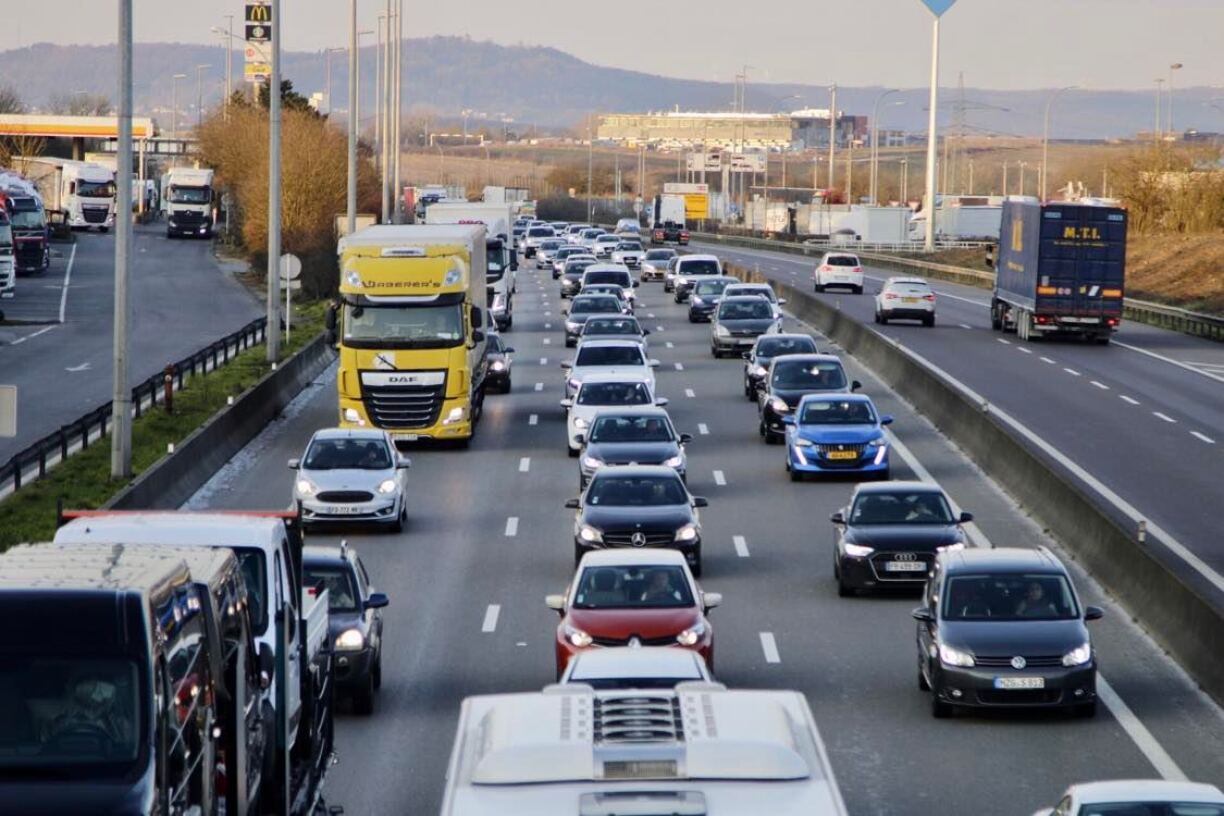
Luxembourg and traffic jams - a ceaseless issue plaguing motorists around the country and beyond. A recent study by satnav manufacturers TomTom successfully pinpointed the worst day for drivers in 2023 in the Grand Duchy's capital.
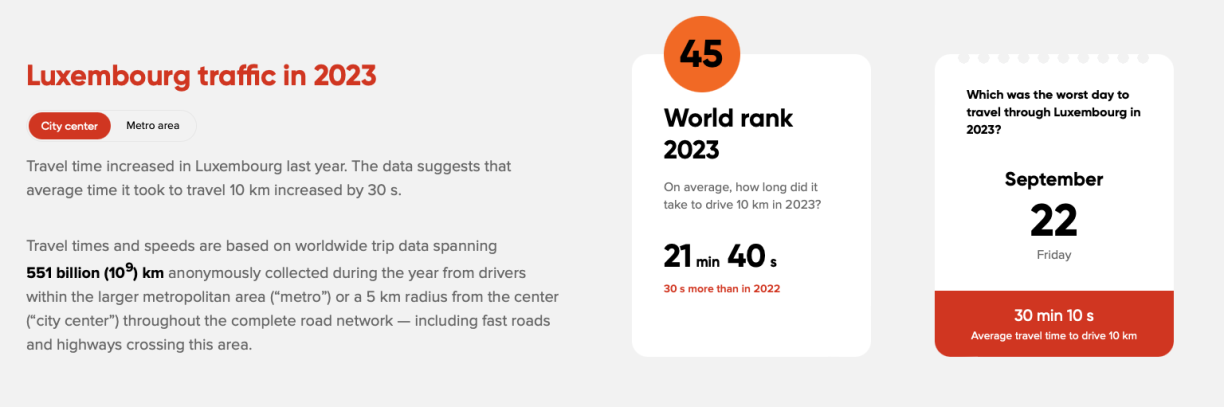
The cursed day fell in the autumn, mere days after the new school term began, on 22 September 2023. According to the study, it took an average of 30 minutes to drive just ten kilometres due to a number of difficulties on Luxembourg roads. The average duration of a ten-kilometre drive around the capital is around 22 minutes. But this is not all that the Luxembourg traffic report reveals.
In 2022, the worst day for drivers was 5 October.
The data shows that the most challenging period to drive in the capital is between 8am and 9am on Tuesday mornings, slap bang in the middle of rush hour.
Luxembourg City is ranked 45th in the world in terms of traffic, with travel time increasing by 30 seconds per kilometre since the year 2022. However, this increase is not necessarily representative of Luxembourg's traffic problems, which is why it is imperative to focus on the time Luxembourg motorists spend in traffic jams. This figure reached 79 hours per year in 2023 for motorists undertaking a daily journey of around 10 kilometres each way, although the value escalates depending on the length of the overall journey.


In comparison, motorists who undertake a 50km commute each way spend around 396 hours per year - or a whopping 16 days - in traffic jams, costing up to €2,899 in fuel on an annual basis.
With this in mind, it is interesting to explore the impact of working from home on people with longer commutes. A single day of working from home each week has the potential to save motorists 203 hours of travel time each year, representing a financial saving of €578 annually.
The study also calculated the effects of working from home on the environment, estimating that if regular car commuters worked from home every Tuesday, they could save 164kg of CO2 per year - on top of saving 40 hours of commuting, and €116 in fuel costs. Those who work from home three days a week could save even more, getting back 121 hours of free time each year, saving €345 on fuel and cutting down annual CO2 emissions by 490 kg.
All the data canbe viewed on the TomTom site here.





