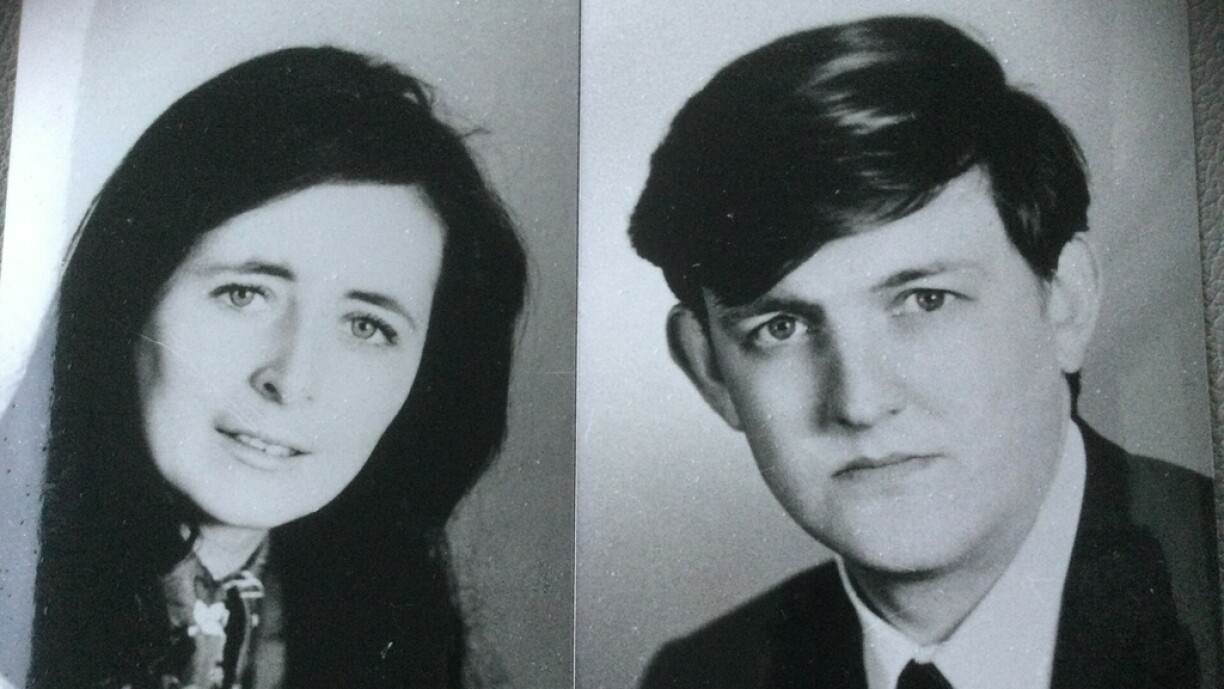
Alzingen residents Tom and Mairéad Cranfield had an initial plan of "going abroad for a while, one to two years" when they relocated to Luxembourg in 1973. Fast forward 50 years and they are still enjoying life in the Grand Duchy.
Originally from Dublin, the couple were in their early twenties when they made the adventurous decision to move to Luxembourg, but it wasn't without some trepidation.
It was certainly a road less travelled in 1973 and the newly married couple had their work cut out for them to integrate into a mostly Luxembourgish society.
With a tiny expatriate community by today's standards, the social and economic landscape looked very different.
Some fun facts of this year were Luxembourg's triumph on the world stage with its two consecutive Eurovision Song Contest wins. It was also the year that future prime minister Xavier Bettel was born.
On the economic front, the common market was in its infancy with Ireland, UK and Denmark becoming the first countries to enter the EC (European Communities) in 1973, joining Luxembourg, Germany, France, Italy, Netherlands and Belgium.
The booming financial sector of today was yet to be kick-started, but attractive opportunities were starting to open up at the EU institutions.
It was September 1972 when Tom recalled spotting a job advertisement in an Irish newspaper for a role in the personnel division at the European Investment Bank (EIB), then located in the city centre close to Hamilius. His application was ultimately successful and the rest, as they say, is history.
Tom joined the EIB as employee number 126. Today there are over 4,000 staff.
There were very few expatriates at that time. There were only 13 or 14 Irish people compared to over 2,000 now. Most people here had never met an Irish person or even knew where Ireland was. There were hardly any English speakers and there were hardly any frontier workers," Tom recalls.
Mairéad describes their maiden voyage here as clear as it were yesterday. Making the trip by ferry and car, the couple arrived in Luxembourg via Longwy on the night of 31 March 1973.
Awestruck by the sight of the roaring open steel furnaces that dotted the border town, the night sky was a vivid orange as they passed through, all the while wondering what their destination would resemble.
Renting their first apartment in Howald, considered in the sticks in those days, they describe having to soldier through those initial weeks as renters. "There weren't even any light fittings in the place, no cooker, no furniture. We were six weeks without anything waiting for our container to arrive from Rotterdam."
In the early days Mairéad spent her free time "walking and wandering" the city and recalls with amusement a run-in with a municipal traffic policeman. The culture shock of being accosted for jaywalking across a street, before being threatened with a fine of 49 francs is an experience she hasn't forgotten.
The couple, who have three daughters, have nothing but praise for Luxembourgers and how they often assisted where they could. Integration became easier through learning Luxembourgish as well as the various activities their girls were involved in, they agree.
"They were really amazingly tolerant and helpful. They were quite brilliant. They facilitated integration by making grounds available for the different sports. They went out of their way," Tom recalls.
But there were also unpleasant aspects to grapple with, namely the lack of freedom of movement between the border countries that people enjoy these days.
Hard borders coupled with intimidating security checks was what greeted them each time they attempted to travel as close by as Trier or Metz. Unthinkable in today's world but there was no such thing as a leisurely jaunt over the border back then.
Mairéad and Tom recall the routine brusqueness of border police who would search both them and their car while being ordered to produce their passports.
With the single currency still a pipedream back then, going about your business often required a plethora of currencies - Luxembourg francs, French francs, Deutsche marks, Belgian francs as well Dutch guilder and Swiss francs for trips further afield.
Air travel was more a luxury then and flights were much less frequent, and expensive, with just three propellor planes operating weekly to Heathrow. Findel airport was a fraction of its current size with passenger numbers to match, Mairéad remembers.
Another constraint was that shops only opened between 8am and midday and from 2pm- 6pm. "It was really impossible for a working person to do their shopping. While a home delivery service for groceries did exist, you had to be home to receive it. There were no shopping centres and only one supermarket on Place de Strasbourg. We did our shopping every Thursday evening in Arlon," she adds.
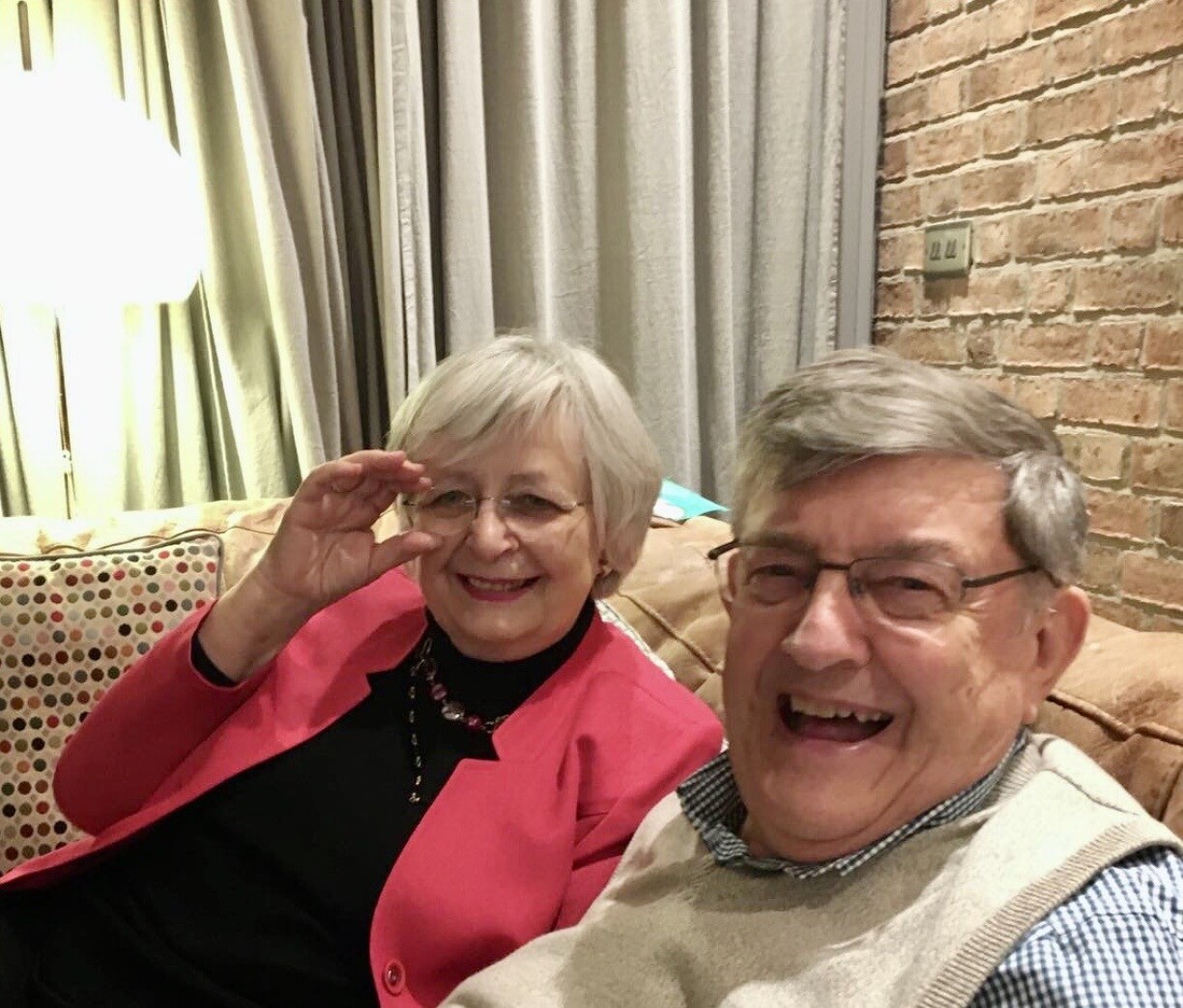
Tom and Mairéad, who are both Luxembourg citizens, enjoyed interesting, progressive and fulfilling careers in the European Institutions.
Tom was to spend 17 years working in the EIB, followed by a decade in the European Court of Justice. In later years he held the position of Director General of the Publications Office of the European Union before his retirement. Mairéad , who began her career as a teacher in Ireland, worked 35 years in the European Parliament, finishing her career as head of the recruitment service.
"We were very lucky to be working in environments that were growing. It was extraordinarily interesting. They were exciting times. We were working for the common good."
Tom was instrumental in the design of the first EIB office built in Kirchberg that officially opened its doors in 1980. As the story goes, Kirchberg was indeed a rural outpost of the city consisting of mostly cattle and sheep grazing fields with a few buildings punctuating the rural landscape, Tom confirms.
Despite being an expat over such a long period, the couple have lifelong friends with whom they never lost contact in Ireland. They equally value the importance of a good network here as well as contributing to society. The well-known couple are very active and engaged members of the international English-speaking Catholic Church of Luxembourg.
On the flip side they lament the difficult housing situation that expats are facing nowadays as well as the less favorable employment market.
Looking back on their early days in Luxembourg, they would say that being proficient in French certainly eased their integration.
Tom maintains that even today the linguistic element is crucial to having a successful experience in Luxembourg: "A primary condition in coming here is to have at least one of the languages. Otherwise, you are condemning yourself to a limited existence."
Creating a life here, over five decades, rich in fulfilling experiences, Tom and Mairéad are trailblazers who have inspired many within Luxembourg's expat community.
Do you have a story you'd like us to report? Someone you think we should talk to? Reach us via contenttoday@rtl.lu.





