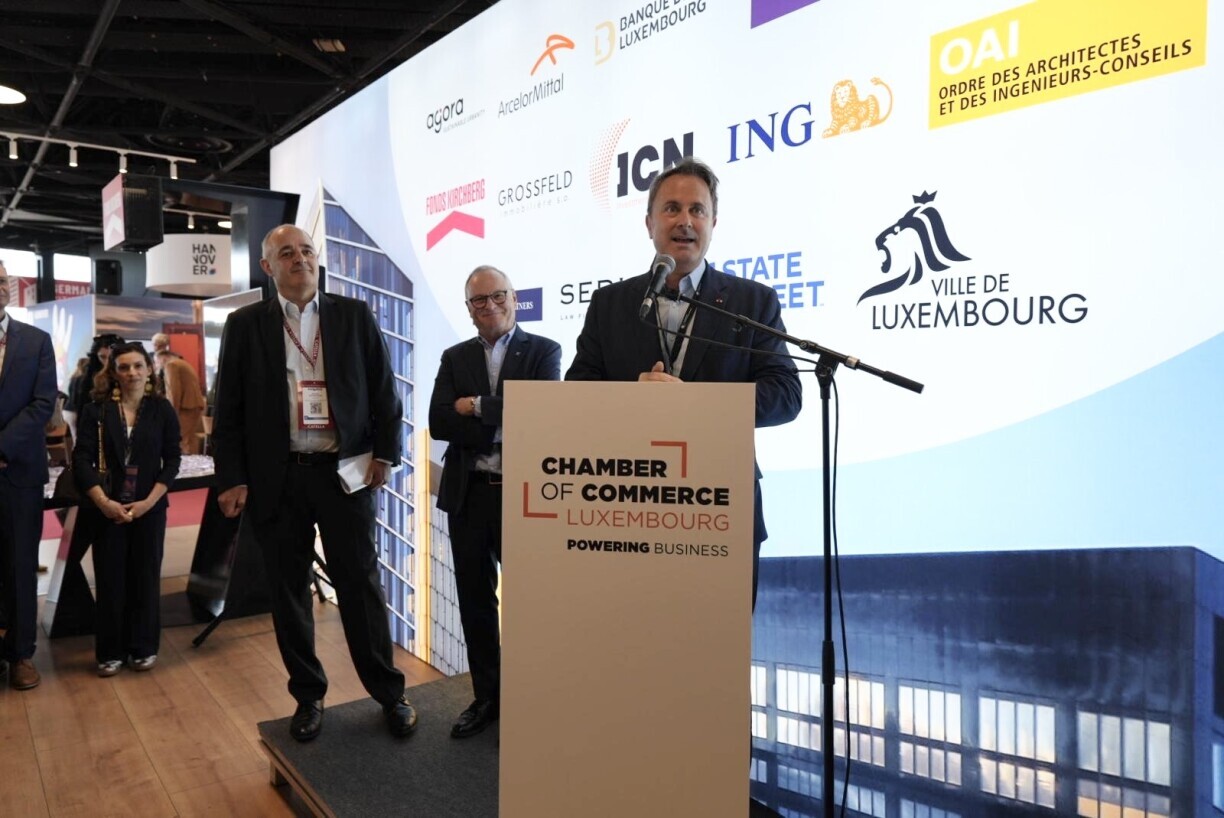
The annual property trade show MIPIM (Marché International des Professionnels de l’Immobilier) is held in Cannes every March, bringing together representatives and stakeholders from the global real estate world. This year saw over 20,000 visitors from 90 different countries, with investors, architects, developers, and politicians.
Over the five-day conference, visitors gather to discuss the future of urban development and the housing sector, presenting construction projects, and seeking investors for new projects. Luxembourg was represented by foreign minister Xavier Bettel and a delegation of representatives seeking to build trust with international investors after a troublesome few years in the country's housing industry.
Bettel said their main aim was making the Luxembourgish market more attractive to outsiders:
"If we want to build large projects, we need money, and if we can get that money from outside, encouraging people to invest in Luxembourg, then it's in our interest to build new homes, preserve jobs, and increase the number of taxpayers. It's a win-win-win-win situation."
At the same time however, the housing crisis is the key challenge at the heart of all conversations. Experts at international organisations have called it a global crisis. According to UN estimates, three billion people are living in inadequate housing conditions. In Europe alone, property prices have risen by 60% since 2015.
International political tensions, from wars to trade conflicts, have driven up energy prices and had repercussions on construction and housing sector costs, as Marc Widong, director of the Kirchberg Fund, explains.
"We've seen similar repercussions in Luxembourg during the pandemic. Interest rates could go up, and energy prices could increase further, pushing up building costs. What do we do if the building index and interest rates go up? We can't do much about interest rates but the building index, we could cap prices to stop people buying elsewhere."
These issues primarily affect bigger cities where demand for housing is constantly increasing. For many people, rent or purchase prices are becoming more unaffordable. At MIPIM, there were presentations for new projects, but also solutions for affordable housing. Carlo Thelen, of the Luxembourg Chamber of Commerce, said:
"If we just look at residential needs in Luxembourg, the market should have 6,000 to 7,000 units. We have only managed 3,000 to 4,000, causing a huge discrepancy between offer and demand. At the moment we only have around 900. So we are at a very weak level and we must hope there is a boost for the housing market, notable with tax measures, to offer tax incentives to encourage private investors to return to the market."
The trade show also covers the future of the property sector. There is a clear trend towards more sustainable and energy efficient buildings, more digitalisation in the sector, co-living models, urban living and other infrastructure projects. Sustainability in particular plays a large role in housing politics. Some countries such as Japan are pushing for green transformations of cities. Modern buildings should be more energy-efficient in future, reducing carbon emissions.





