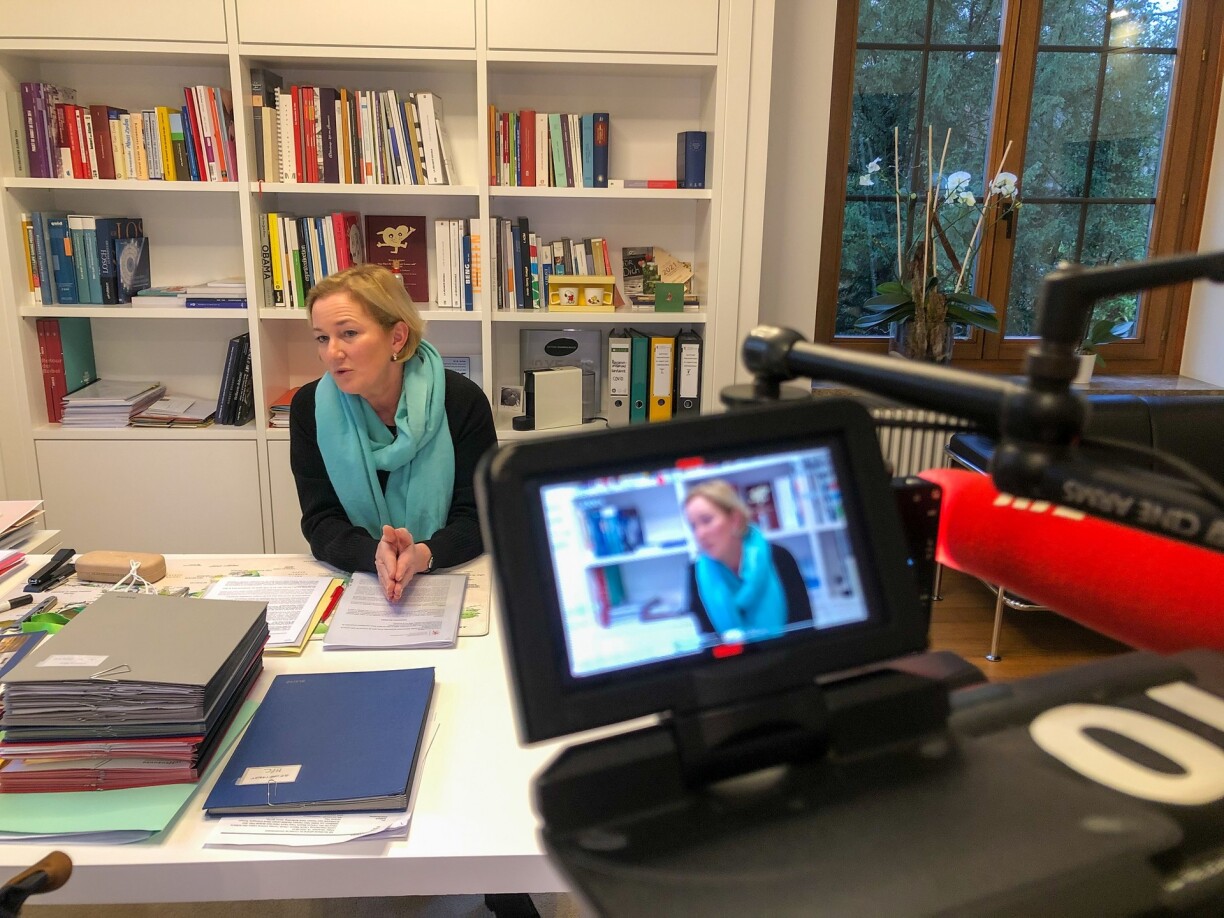
She is at the head of the ministry most directly linked to the crisis: Paulette Lenert, Minister of Health, was propelled into the spotlight in early 2020. A former magistrate, she says she coped with the crisis with "common sense", something that was not easy at start.
"In spring there was the surprise effect, a state of shock. I quickly tried to surround myself with the right people to manage this task. There were a lot of things to organise, it was like a beehive here in the ministry", she recalls.
Despite the urgency of the first lockdown and the unknown in which everyone plunged into, Luxembourg is generally remembered as a country that managed the start of the crisis well. Even though exit bans and border controls raised fears of shortages in cross-border health staff, hospital supply remained sufficient. "We were fortunate to have never really been out of stock. We had enough, even though there were savings plans to use the material well and not waste unnecessarily."
After the "normal" drop in spring, fall and the onset of winter turned out to be more complicated. "The objective is to maintain a certain normality. Economic life had resumed, school too. And so we experienced this rather impressive proliferation in two weeks (end of October, editor's note). Like all neighbouring countries elsewhere. "
Between the end of September and the end of December, i.e. three months, more than 370 people lost their lives and thousands of residents were infected, thus increasing the number of hospitalisations. Even today, Luxembourg is trying to catch up with this rapid rebound of the pandemic - through the curfew, then the closure of restaurants, and finally the lockdown of non-essential businesses and the restriction of contacts for the holidays. "It's a painful decision, it doesn't make anyone happy. But we've learned that you really have to be careful."
According to Lenert, a "recrudescence [of cases] can occur overnight". Worse, it is in "family celebrations or with friends, even on small occasions, with less than five people" that the virus is spread. "We feel safe, but it is a false sense of security", the minister explains.
Fortunately, the last two weeks of December look to be encouraging: despite "postponed" measures, its effect are manifesting. The result is a decrease in infections and hospitalisations.
The Grand Duchy's vaccination campaign began Monday, a historical turning point in this crisis. Over 1,200 hospital staff received their first Pfizer/BioNTech jab. It is a step seen as "a vector for the end of the pandemic" by Kevin Nazzaro, one of the first nurses vaccinated, but it will take time to ensure real protection for the population.
"It is certainly the start of the way out of the crisis, but there is still a long way to go", Lenert says. "We don't have a huge stock of vaccines, it's not going to save us now." Except it is precisely "now", during the winter months, that the virus circulation is strong. "But yes, it is a ray of hope. We were expecting it and I hope it will give people courage." Provided, of course, that the population agrees to be vaccinated: only 55% of residents are ready, according to a study published by science.lu.
How to convince the sceptics to be vaccinated and achieve a sufficient immunity? Many citizens are alarmed by the speed at which pharmaceutical groups have managed to develop and market a vaccine. In short, the mistrust is at least as great as the expectation of better days. (A non-representative LNS survey concluded that only 55% of participants would get the jab).
"Just that this vaccine was quickly put on the market does not mean that the procedure has been less strict. It is simply that we put a lot more resources into accelerating it. But the quality requirements were the same", Lenert underlined. She assures we can have "full confidence" in the European Medicines Agency.
One big question remains: when will we finally be rid of this virus? "It's hard to say how long it will take, because there are a lot of unknown factors, but we hope to get out of this crisis next year."
Further projects await the ministry, including closing third party payment, the "ambulatory shift" in hospitals and the development of the national health plan. "It will be with pleasure that we tackle these files once the crisis is over."
Read our other interviews:
Franz Fayot: "We cannot open the financial floodgates forever"
Xavier Bettel: "The fight against the virus is not a sprint, but a marathon"
Lex Delles: The strength of small businesses is their "impressive spirit of questioning"
https://5minutes.rtl.lu/photos-et-videos/5-questions-a/a/1617600.html





