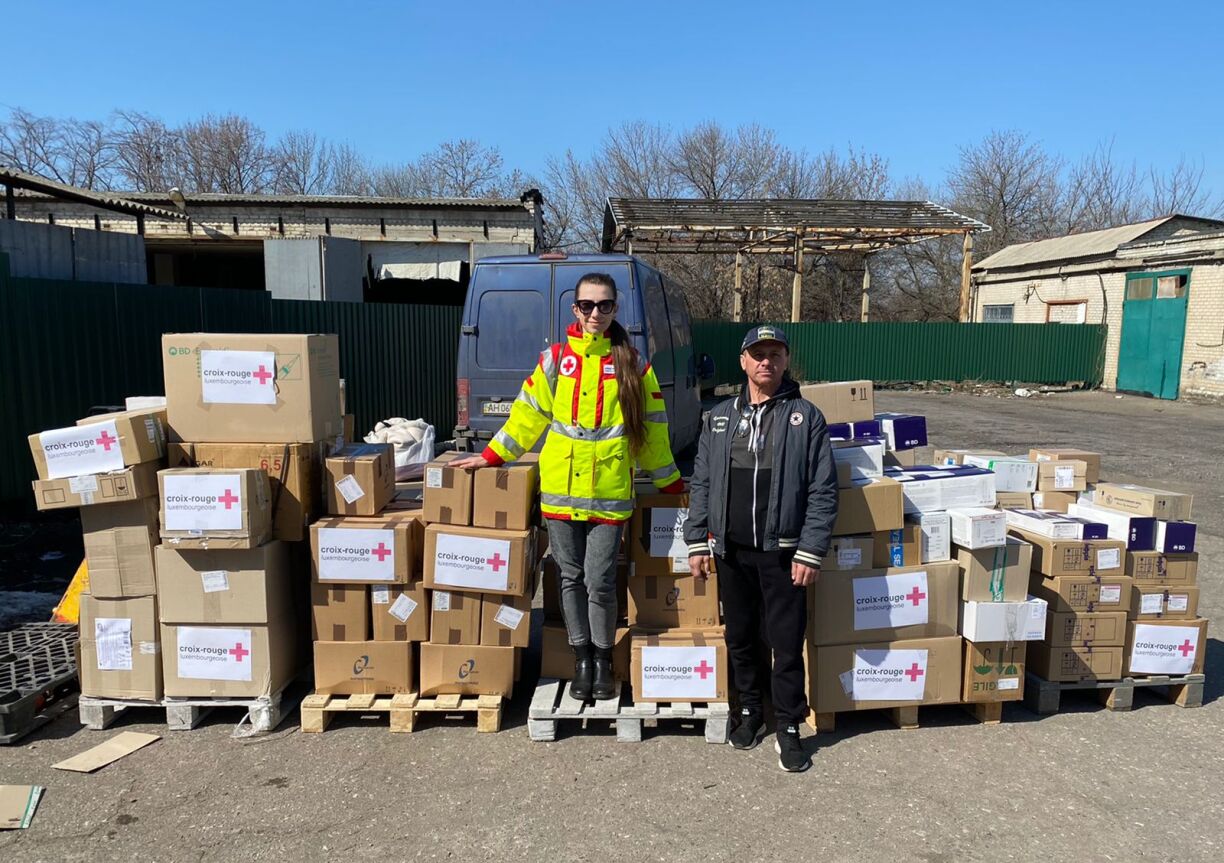
"It's highly precarious. We must be the only ones in this area in Ukraine, but I'm not sure," says Rémi Fabbri, director of the Luxembourg Red Cross, knowing that he is on the verge of succeeding in a daring gamble: re-establishing a direct link between Luxembourg and the region around Kramatorsk-Donetsk, in eastern Ukraine, in the Donbass region so coveted by the Russian army.
A major offensive is expected in the east of the country, now a priority target for the Kremlin. Along a road linking the Russian-controlled town of Izum to the twin towns of Sloviansk and Kramatorsk, the capital of the Kiev-controlled Donbass, Ukrainian forces are preparing for the offensive, AFP reporters noted on Wednesday.
The Luxembourg Red Cross is about to deliver three lorries filled with food, hygiene products, bandages, etc., and not for the first time. "We have been present in Kramatorsk for eight years," Fabbri explains. In Kramatorsk, the Luxembourgish branch is carrying out projects to rebuild hospitals and health centres. For several weeks now, the war has scattered its team in Kramatorsk, but its key member, Aleksandra Kalinovskaya, a native of the town, has never given up.
Thanks to Kalinovskaya's commitment, and even if the situation was quite tense until recently, "we never left this base point. Aleksandra has always been there," Fabbri says. The Red Cross has resumed its commitment: it has just hired a handful of people to travel from Kramatorsk to Donetsk and purchase a large van "to buy materials on the spot because it is extremely difficult to bring anything to Ukraine nowadays," says the director of the Luxembourg Red Cross.
The team on the ground is sourcing food, first aid kits, but also boards and other materials to seal blown out windows in hospitals. All of this while awaiting the arrival of all of the donations collected and purchased in Luxembourg. "The three lorries are scheduled to arrive in Ukraine on 11 April. An agreement has been signed with the ICRC and the Danish Red Cross for the arrival of the stocks in Dnipropetrovsk", not far from Kramatorsk. And as "the needs are immense in Ukraine", "we are negotiating to send lorries every fortnight", Fabbri explains.
The generosity of the Luxembourgish public has been immense since the invasion of Ukraine by Russian troops. Several NGOs such as Caritas, Unicef Luxembourg, and the Luxembourg Red Cross have seen record numbers of donations in recent days.
Luc Scheer, head of fundraising at the Luxembourg Red Cross, told our colleagues from RTL Télé on Monday that the NGO has committed €250,000 for a programme in the Donetsk region and needs a further €100,000 per week to keep it running until the end of July. In addition, the Luxembourg Red Cross has also pledged €500,000 for the reception of refugees in Moldova. The organisation has collected €2.2 million over the past five weeks in Luxembourg.
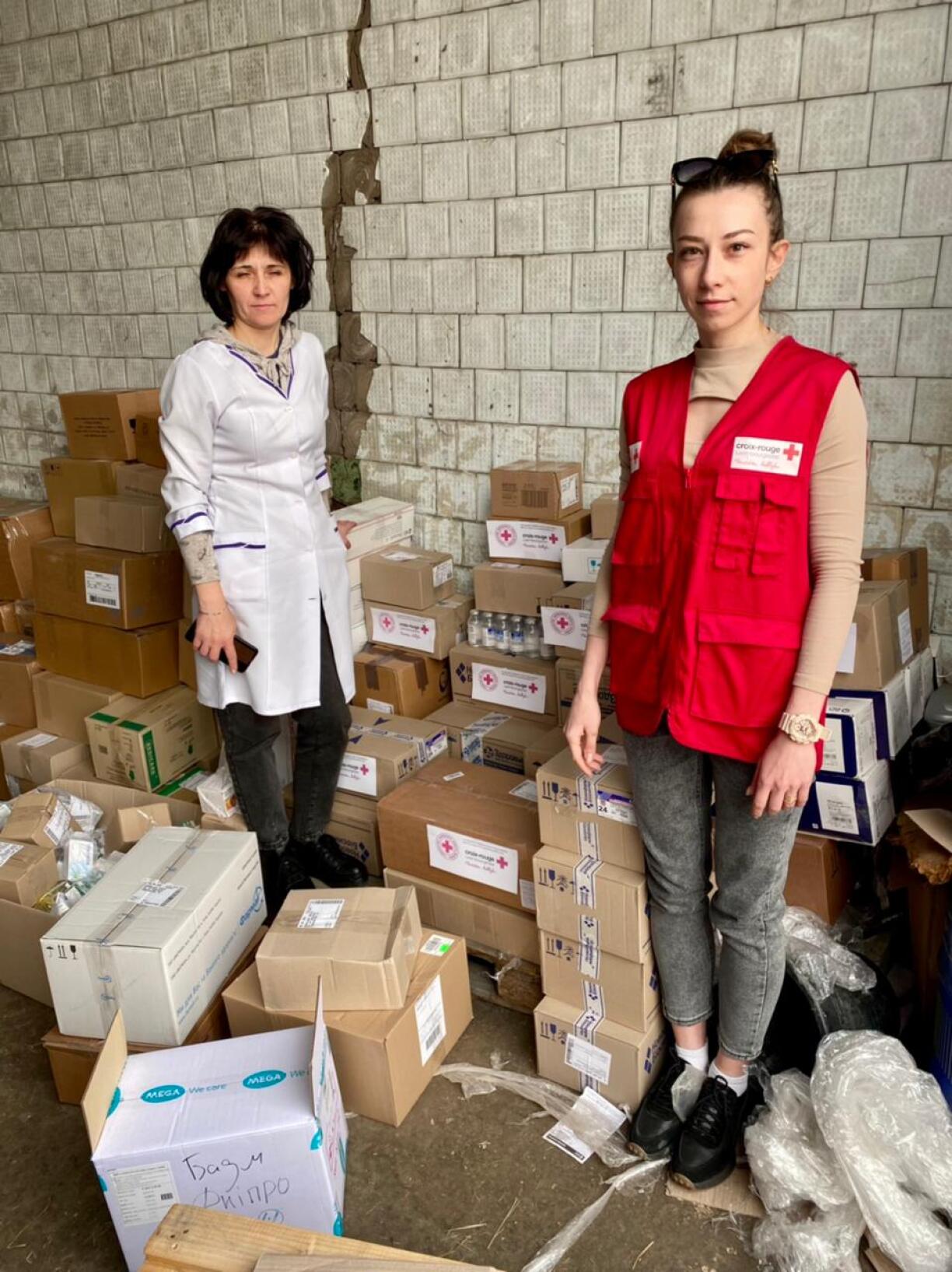
"If the Russian attack is confirmed in southern Ukraine, we will have a series of problems in Moldova," warns Fabbri, who was there three weeks ago. He warns that even more people would start fleeing Ukraine. Since then, the Luxembourg Red Cross has signed an agreement with its Swiss counterpart to open a joint office there and meet the very specific needs of refugees arriving at the borders.
To better illustrate the scale of the phenomenon currently taking place in Moldova, Scheer recalls that Moldova is a country of 2.6 million inhabitants "which has received 400,000 refugees. It is as if we had 100,000 in Luxembourg and not 4,000. And it is the poorest country in Europe".





