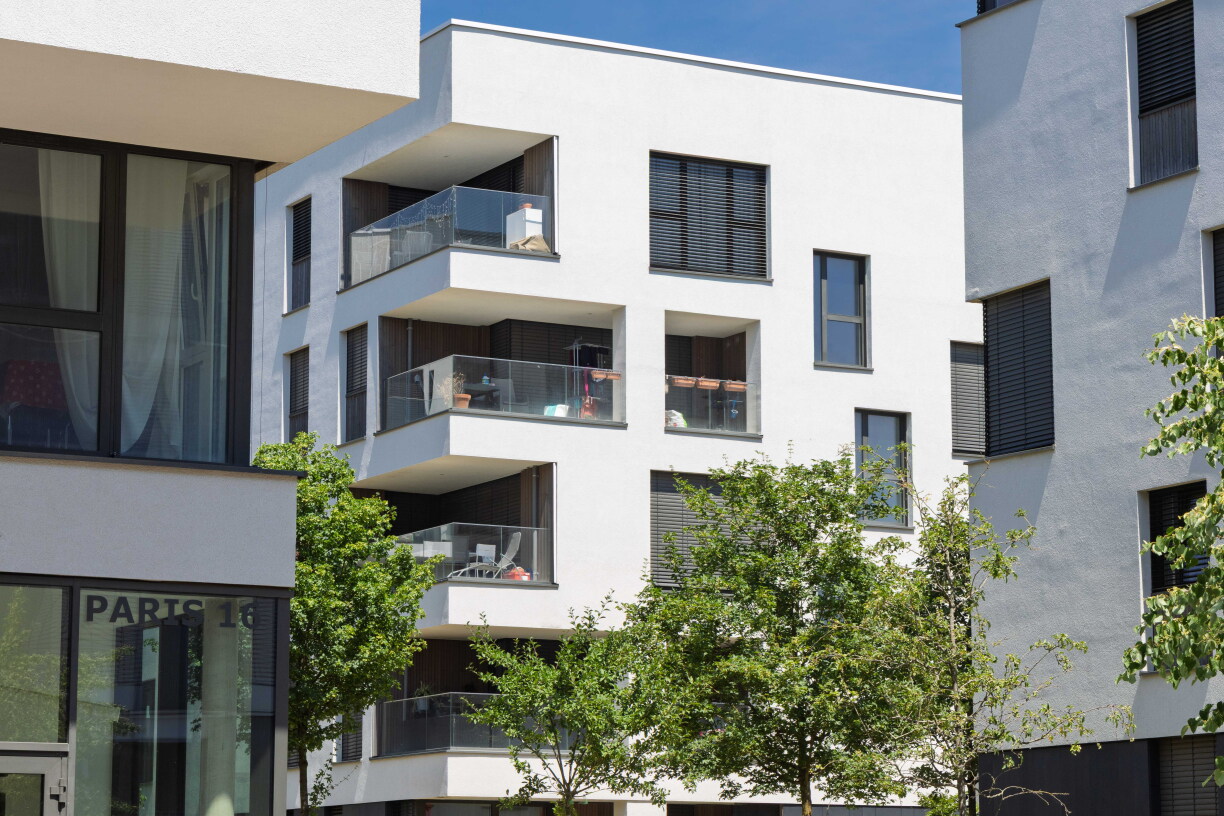
Luxembourg's housing situation continues to dominate public anxiety, as revealed in the new Politmonitor survey carried out by Ilres for RTL and Luxemburger Wort. The findings show that concerns over affordable housing are at an all-time high, with the issue topping the public agenda for several years. Survey respondents were also asked to evaluate the competence and likability of political figures, while sharing their biggest worries and views on current affairs.
70% of respondents said they are concerned about access to affordable housing – a figure that has risen slightly compared to the last poll. This is followed by worries about the current global situation and, in third place, traffic congestion. Climate change and the rise of right-wing extremism round out the top five concerns.
In contrast, subjects such as immigration and the economic situation were cited as major concerns by less than one third of those surveyed. The survey also found that supporters of the Christian Social People’s Party (CSV) are the least worried about housing, whereas Luxembourg Socialist Workers’ Party (LSAP) voters are the most concerned. Young adults between 18 and 24 are less troubled by traffic issues than other age groups.
Survey participants overwhelmingly believe that access to affordable housing, climate change, and security are the top three issues that politicians need to address urgently. Despite this, security only ranked fourteenth among the public's stated concerns. Notably, many feel that decision-makers are failing to do enough to address the housing crisis, which has remained the number-one priority since at least June 2021, according to Ilres data.
When asked about the recent tripartite wage agreement reached in Senningen, 49% of respondents viewed the negotiations positively, while 31% were negative and 20% gave no answer. Younger people are generally more sceptical of the agreement compared to older respondents.
CSV voters showed the strongest support, especially compared to those backing the Democratic Party (DP). Supporters of The Greens (Déi Gréng) were more favourable than LSAP voters, while the least support for the tripartite events came from Alternative Democratic Reform Party (ADR) supporters – almost half of whom assessed the talks between government and social partners negatively.
Half of those surveyed said they would be willing to forgo a wage indexation. This willingness was highest among CSV voters (69%), followed by The Greens (66%), the DP (49%), the LSAP (48%), and the ADR (43%).
Older respondents were more likely than younger ones to accept this trade-off. Meanwhile, 48% of respondents said they would accept higher contributions to the national health fund, with support highest among Green supporters (72%) and lowest among ADR voters (76% opposed). Here, older people appeared slightly more reluctant than younger participants.
70% of respondents feel that the recent increase in the minimum wage does not go far enough. This sentiment was strongest among supporters of The Greens, while a slight majority of CSV voters felt the hike was sufficient. As in other results, older people were more likely to consider the increase adequate, whereas most younger participants disagreed.
As usual, detailed results are available at Alia.lu.
The Politmonitor was conducted by Ilres at the request of RTL and Luxemburger Wort, using a representative sample of 1,020 people. Interviews took place between 16 and 26 June, both by telephone and online via Ilres' MyPanel platform.
Further information on methodology and the questionnaire can be found at Alia.lu. Minor differences in results may occur due to rounding.
If you have not accepted cookies, you may be unable to view the graphics.





