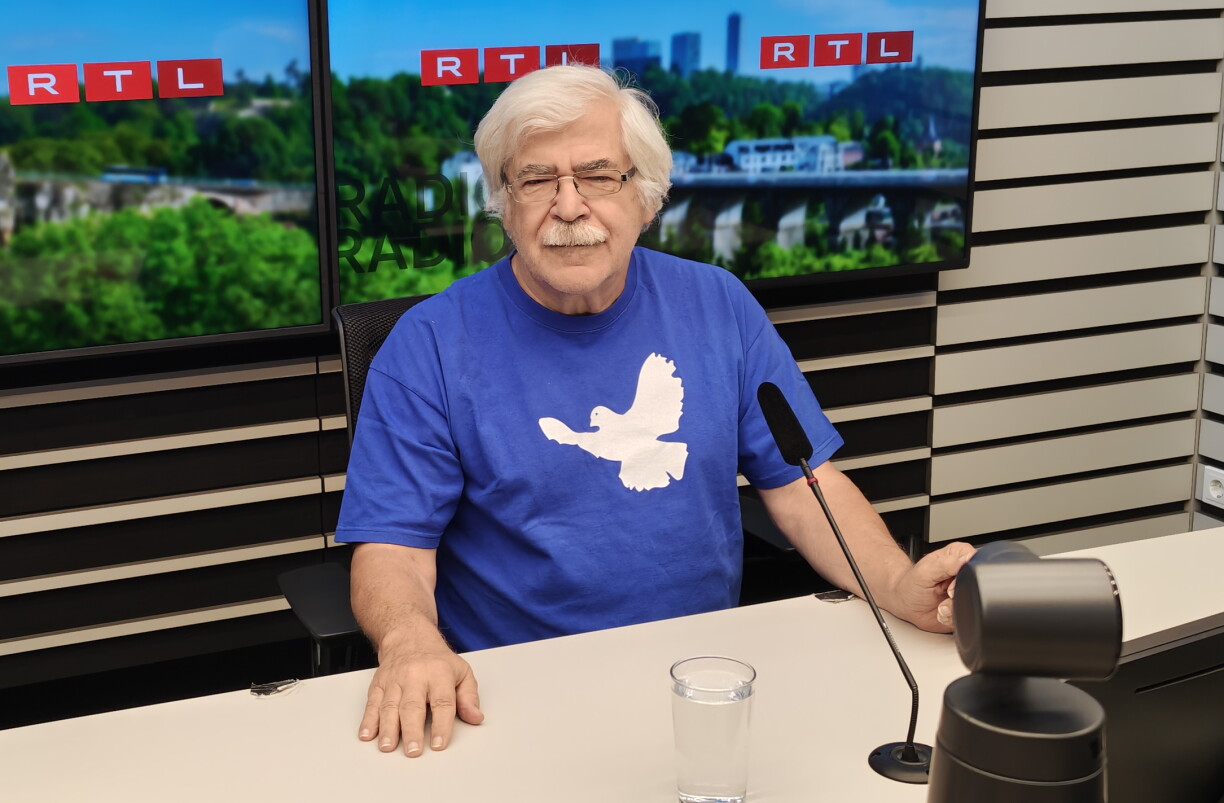
After 27 years at the head of the Communist Party of Luxembourg (KPL), Ali Ruckert will step down from the role in the autumn. He weighed in on the current severe forest fires as a consequence of misguided policy and hailed the tripartite agreement as a success for the unions.
Ruckert did not want to speculate about who could succeed him as KPL president. His own opinion, he said, does not carry particular weight, since in the end the central committee, which currently has 16 members, takes decisions collectively. He would rather focus on political content, he added, all the more since the Communist Party does not often get a chance to do so with the media.
The large forest fires that have been raging across Europe in recent weeks, and the difficulties in bringing them under control, are, in Ruckert's view, the result of policies that set the wrong priorities. When the major fires in France broke out, he said, it emerged that a large share of the vehicles the fire service had at its disposal could not be used at all, and that some of the protective clothing did not work properly, meaning firefighters could not safely enter the flames. That, in his view, is down to the fact that money is being spent on other things, such as defence spending for instance. On top of that, he added, a large share of the forests are in private hands, and the way they are managed is above all geared to profit.
Asked whether the unions had extracted anything useful for workers from the tripartite negotiations, Ruckert said he was quite satisfied with the outcome. This had been the first tripartite, he said, following the large demonstration, at which there had been no social regression, and in which the government had been forced to make improvements. That, he added, was why the KPL still saw the value in the approach of negotiating with the government and with employers. If, however, matters did not keep moving forward, another large-scale mass demonstration would be needed in order for working people to assert their interests.
The Christian Social People's Party (CSV) and Democratic Party (DP) government, taken as a whole, is in Ruckert's view a neoliberal government intent on pushing through very negative structural changes in the country, including stripping unions of the right to negotiate collective agreements at company level. That would come as no surprise, he argued, since this was a "government for the employers and by the employers".





