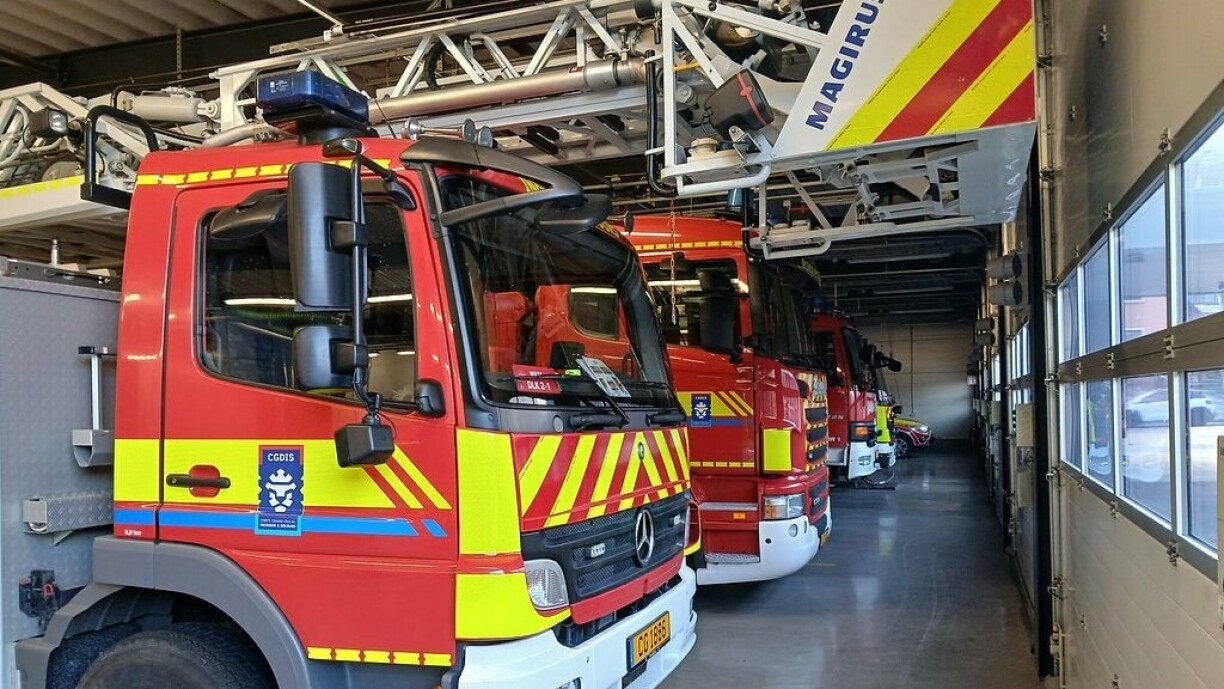
The delayed emergency service response to a fatal car crash in late January has brought a number of structural challenges faced by the Grand Ducal Fire and Rescue Corps (CGDIS) to light, particularly in the north of the country. The team in question had driven to the wrong location and only arrived at the scene of the accident after an additional 27 minutes, a failure that officials are now analysing to prevent from happening again in the future.
Emergency services generally face bigger distances in northern Luxembourg, the largest but least populated of the country's four districts. The National Rescue Plan aims for a maximum response time of 15 minutes across Luxembourg, which CGDIS teams in the north usually manage in average time of 14 minutes, though this is still above the national average.
According to Alain Weisgerber, who oversees ambulance services in the north, the situation is further exacerbated by the great distances to the Ettelbruck hospital and the Luxembourg City paediatric unit, which often means that ambulances are occupied for an additional hour. In conversation with RTL, he explained that northern emergency services during that time rely on support from other units to cover the absence, which then often engenders longer response times.
"And then we definitely risk not being able to guarantee the 15 minutes", Weisgerber observed.
While the CGDIS centre in Witz, in use for about 12 years, is still considered to be of standard, the one in Troisvierges has been facing infrastructure problems, with parts of the safety equipment already having been stored in a tent for four years.
However, a new building is being planned, the same for Clervaux where the current CGDIS home has been in use for close to 35 years. Centre chief Sven Arend asserted that the relocation to the roundabout in Marnach is strategically wise, given that Clervaux is located in a valley.
Officials also believe that the north is less attractive for firefighters, which the absence of professional brigades in Troisvierges and Hosingen reflects. Arend contended that the rural landscape with fewer deployments and greater distances makes the profession less exciting than Luxembourg's urban and more densely populated parts.






