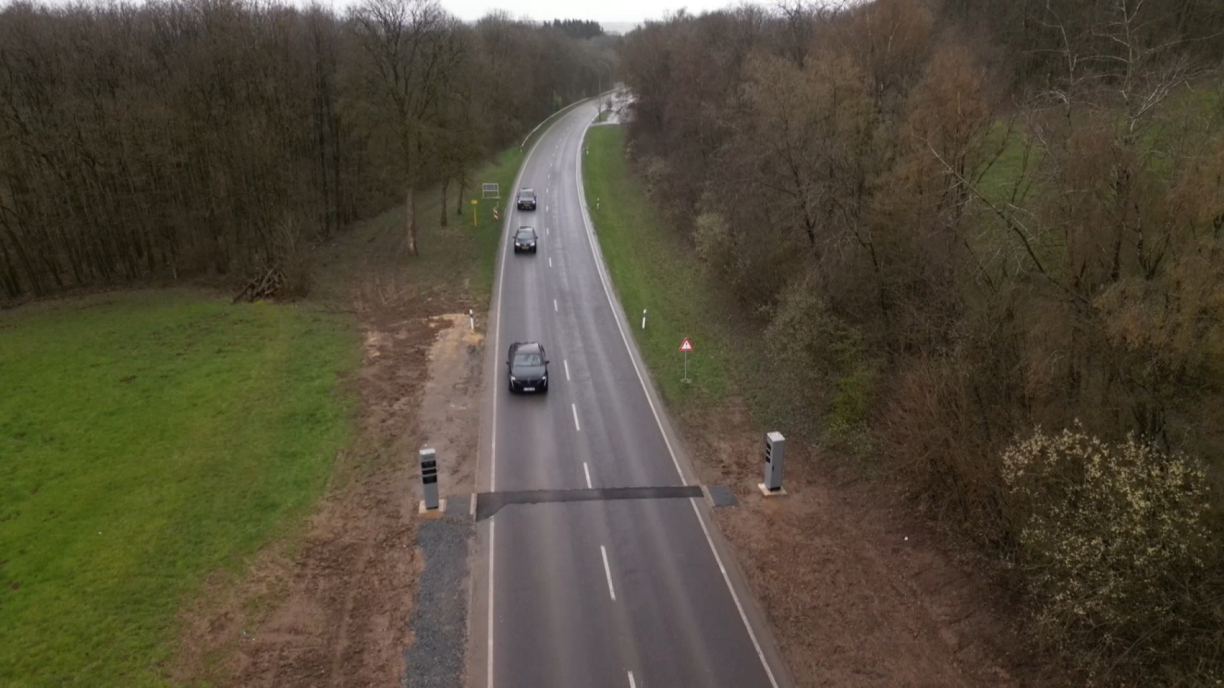
The new radar towers are already visible from a distance, and drivers will soon be required to slow down on the N15.
Just over six months after a head-on collision on the N15 claimed the lives of five people in early September 2025, a section-based speed camera has been installed between Niederfeulen and Fuussekaul. The trial phase is expected to begin shortly.
The installation follows the fatal crash and is intended to improve road safety. According to Minister for Mobility and Public Works Yuriko Backes, the stretch of road is particularly prone to speeding, which increases the risk of accidents.
She explained that the road’s layout encourages drivers to exceed speed limits, making the installation of a speed camera a logical step. Following the accident, she instructed the relevant authorities to assess whether such a system would be feasible. Experts from the Ministry, the National Roads Administration, and the police subsequently approved the project shortly after.

Rather than installing a fixed speed camera at a single point, authorities opted to monitor the entire stretch of road. Backes noted that the section includes several risk factors, such as bends, inclines, and multiple dangerous spots, making average speed monitoring more effective in encouraging safer driving.
Unlike other section speed cameras in Luxembourg, this stretch of the N15 includes a single overtaking lane, primarily used by lorries and agricultural vehicles. However, the minister stressed that this would not pose an additional risk.
She said that speed cameras are intended to improve safety rather than cause accidents and confirmed that all relevant factors had been considered during the analysis.
The average speed will be measured over a distance of around three kilometres between Fuussekaul and Niederfeulen in both directions. The speed limit on this section is 90km/h.
While the system is not yet operational, the trial phase is expected to begin in late March or early April, although no exact date has been confirmed. The National Roads Administration will announce the official start.
The section-based speed camera is expected to be fully operational before the end of the year.
Backes also emphasised that there are no plans to install large numbers of speed cameras across the country. Instead, such measures will be implemented selectively, where they are deemed necessary to improve safety.
Plans to install a speed camera at Pulvermühl near the traffic lights, initially decided by the previous coalition, remain in place.
Meanwhile, another hazardous stretch of road in northern Luxembourg, the N7, is also set to undergo safety improvements. Work on the first section after Fridhaff is due to begin soon. However, Backes clarified that the N7 will not be widened to four lanes.





