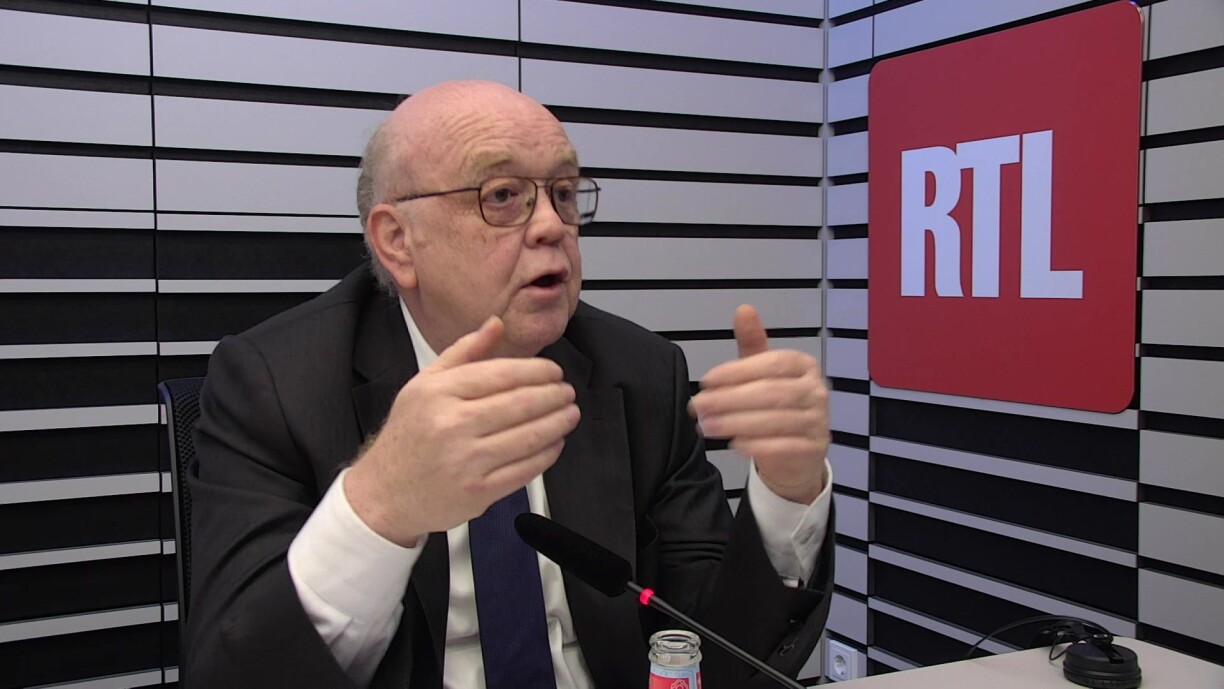
The main interest rate rises by 0.5 percentage points from 2 to 2.5%. Gaston Reinesch sits on the Governing Council of the European Central Bank. The Council sets the key interest rate in the Eurozone, determining how commercial banks borrow and invest.
Talking to our colleagues from RTL Radio, Reinesch explained why this step was necessary. "Looking at the estimates, we find that we had 8.4% inflation this year," Reinesch said, adding that "what's important now are the projections for the coming years." The latest figures suggest inflation rates of 6.3% (2023), 3.4% (2024), and 2.3% (2025).
These predictions, however, should be taken with a grain of salt, according to the BCL president. Because of the war in Ukraine, it is unclear how energy prices will evolve in the following months and years. The development of the Chinese economy also has a significant impact on the world economy, and consequently on the European economy. However, Reinesch already hinted at further interest rate hikes in the medium term.
According to Reinesch, the most important interest rate at the moment, from an economic standpoint, is the one banks receive on reserves held at national central banks, which is now rising to 2%.
Elaborating on the concept of these reserves, Reinesch explained that banks must hold a certain amount of central bank money, known as "minimum reserves." This amount is determined by a bank's client deposits. The second reason for holding these reserves has to do with bank notes. Customers can currently only obtain central bank money in the form of paper money. This means that when clients request banknotes, banks must purchase them from the central bank, and they can only do so with central bank money, the BCL president said.
The most important reason in terms of volume, however, is that banks owe each other money and can often only pay their debts with money from the central bank. The fact that the ECB Governing Council opted to raise the main interest rate by "just" 0.5% this time, according to Reinesch, is due to the initial situation. He pointed out that at the beginning, this interest rate was still negative, -0.5% to be precise. "Because of what happened, the inflation caused by the war in Ukraine, we had to react, which is why we raised the interest rate by 0.75% twice," the BCL president recalled. This time, the governing council decided to go with a 0.5% hike, but with the message that there is "more to come over the next few months."
Inflation is anticipated to reach 6.3% next year and 2.3% by 2025. The ECB's inflation target is about 2% as it's the best way to guarantee price stability.





