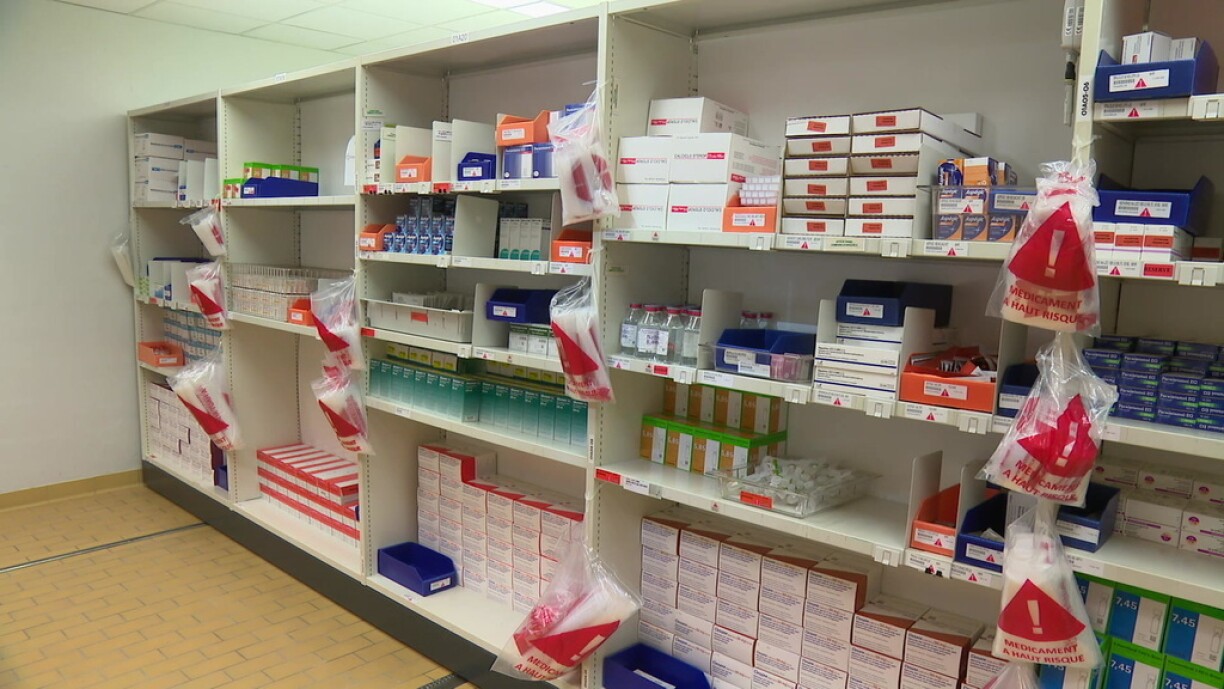
As in Belgium and Germany, some important medications are becoming more and more scare as the years go on. The causes are numerous: pharmaceutical companies are reducing production as saving measures, there are issues with raw materials, or errors during productions. However, one thing remains clear, which is that the consequences of all these causes are being felt in Luxembourg at the expense of patients.
Medicine shortages have existed for some time, but have usually been seasonal. It was typical for both local and hospital pharmacies to have some empty shelves in summer. However, the trend has no longer been seasonal for the past five years and has become routine in the health sector. The list of unavailable medicines is becoming longer, but pharmacies crucially do not receive any information about shortages from suppliers.
Gregory Gaudillot, the president of the Luxembourg Association of Hospital Pharmacists (APHL), told RTL that he has been arguing with suppliers for five years now to get them to inform the association the moment a shortage occurs. Usually, pharmacies only find out about medication shortages when they are unable to place further orders. As Gaudillot explained, pharmacies are unable to prepare themselves, let doctors know about shortages, and clarify the issue to patients. The ABHL's position is clear, in that there are critical communication issues on the side of suppliers.
So far, the medicines that have been subject to shortages include hypertension pills, antibiotics, and cancer medicines. How long they have been unavailable varies, and can range from several days to weeks and months.
Given the incredibly short notice, pharmacies are the ones who have to scramble to replace medications, which, as Gaudillot explained, is a complicated procedure. For some medications, the pharmacies either swap over to generic medicines or do the opposite, if the generic medicine is the one unavailable. In other cases, they have to offer different medications, which may be similar but contain different molecules or classes. This is where it gets rather complicated for the affected pharmacists.
Earlier this week, the Minister of Health Etienne Schneider revealed that the ministry is prepared to intervene, stating that he is considering a permanent national reserve.
"A real problem": Worrying shortage of medicines in LuxembourgHowever, the APHL remained unconvinced that this is the correct solution. Gaudillot pointed out that the topic has been discussed abroad, but for the Luxembourg case, it should be remembered that 90% of the Grand Duchy's medication comes from Belgium. Consequently, if Belgium experienced a shortage and Luxembourg has a stock of these medicines, then the stock would be used in sharing it with Belgium. In the end, Luxembourg would again be faced with a shortage.
The CHL also estimated that it would be difficult to build up a reserve of the 1,500 medications regularly used in hospitals.
The pharmacists' association generally highlighted that there appears to not be a solution to avoid such shortages in the future.





