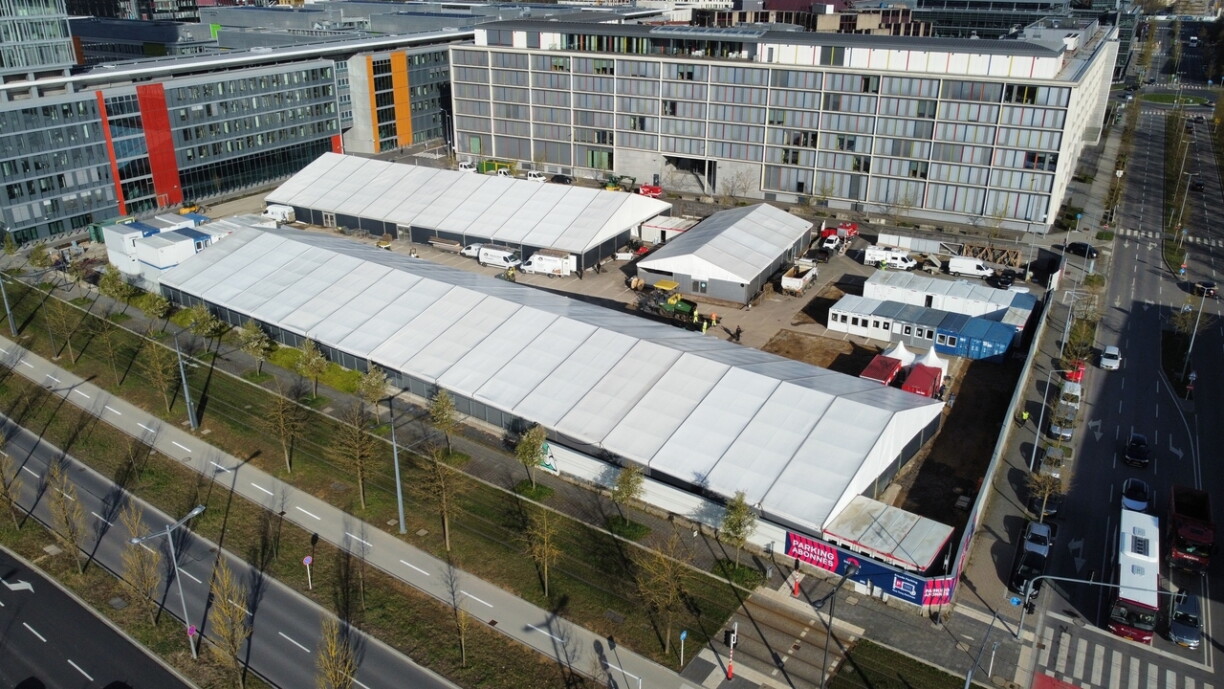
The shelter in Esch is undergoing renovations, while around 40 refugees housed there have been moved to other accommodation. But the problem is that many centres are full, and there is a lack of empty beds. Some of the residents were forced to spend a longer period of time at the Tony Rollmann centre in Kirchberg, a warehouse of tents. Recently, a group of these addressed an open letter to the government seeking assistance.
Osman J. spent four months in the emergency accommodation in Kirchberg. After the fire in Esch, he was brought to Kirchberg "provisionally", says the 21-year-old asylum seeker from Sierra Leone. In the beginning he was told it would only be a few days, but it quickly became clear his time there would be extended. He received very little communication from the National Reception Office (ONA).
Now in a centre in Diekirch, Osman asked the government when they would be returned to their home in Esch-sur-Alzette. He said he was struggling with the changes. In Esch, he had his own room, could cook for himself, and benefited from regular meetings with his social worker. Now, that has all been taken away. His time in the Kirchberg accommodation pushed him to his physical and mental limits, he explains.

When asked by RTL, Minister Max Hahn was unable to say how long the renovations in Esch would take. In general, he described the refugee accommodation situation as a "permanent emergency". 98-99% of beds are occupied.
He emphasised that an ONA centre is a temporary living option and not paid-for accommodation, so refugees should make efforts to try to learn the languages and find jobs as soon as possible in order to move on. For people seeking international protection in the Grand Duchy, access to the labour market was simplified two months ago. Refugees may now seek work after four months in Luxembourg and no longer need authorisation (Autorisation d'occupation temporaire).
While Osman speaks French and English, he has not yet been able to secure a job. At 17 he left his home country, moving from Turkey, to Greece, and France, before arriving in Luxembourg in early 2024. His first request for asylum was refused, but he contested the decision and is waiting for a response. This puts many employers off, he says.
In order to ease pressure on the existing centres, Minister Hahn is counting on the municipal councils to step in. He says it is not the goal to create endless beds in Luxembourg, but to be able to close down older centres and make way for more spread out, smaller centres across the country.





