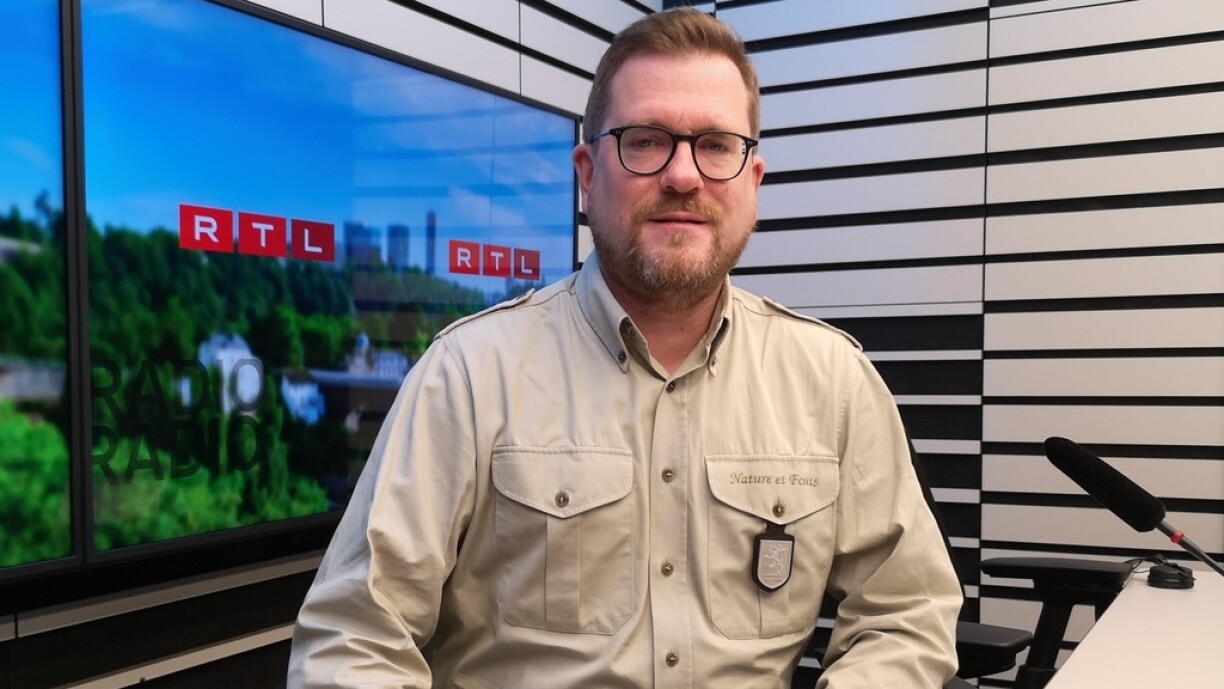
Specifically, Schley identified issues with the boar and deer population, emphasising that this phenomenon is not unique to Luxembourg but is observed across the European Union.
Schley outlined several contributing factors to this situation. Firstly, the absence of natural predators like lynxes and wolves allows wildlife numbers to flourish. Additionally, milder winters due to climate change contribute to fewer animal fatalities.
While not a hunter himself, Schley advocates for targeted measures, especially regarding red deer. Red deer, he noted, pose challenges by consuming young and old plants, hindering the natural rejuvenation of forests.
Quantifying the game population is a complex task, according to Schley, relying on factors such as shooting figures. In the 2022/23 hunting year (hunting years run from 1 April to 31 March of the following year), 6,700 roe deer, 6,200 wild boar, and 400 stags were shot. However, Schley suggested that these efforts are not enough to significantly reduce the wildlife population.
Exploring alternatives to hunting, Schley dismissed the idea that the return of predators, like wolves, would provide an immediate solution. He explained that it would require a pack to settle down, emphasising that individual animals would not suffice. Drawing on the Swiss example, Schley noted that the positive impact on young forest growth would take several years to manifest.
Schley stated that the Nature and Forest Agency sets minimum shooting guidelines. According to the deputy director, the most effective method for culling a substantial number of animals in a single day is through a "battue."
Schley explained that if hunters were limited to shooting from high seats, nearly every hunter would need to be in the forest every day of the year, and the success rate would be uncertain.
To further increase the number of animals shot, Schley suggested exploring the possibility of allowing the shooting of roe deer during the extended wild boar hunting season, which runs until the end of January. While this has not been authorised yet, discussions are underway to consider this option.
Addressing concerns about the impact of battues on animals, Schley acknowledged critics who argue that this hunting method can be disproportionately stressful. However, he argued that being stressed is a "normal situation" for game, comparable to the conditions they would face when evading natural predators. Schley suggested that adapting hunting methods to the terrain is crucial for minimising stress, citing examples of reduced reliance on noise during state hunts in the Grünewald forest.
Looking ahead, Schley underscored the need for exploring alternatives and adjusting hunting techniques to align with the landscape and specific animal behaviours.





