Earlier this year, the report had already been presented to the parliamentary budget control committee. Now, MPs are questioning those responsible to clarify several concerns.
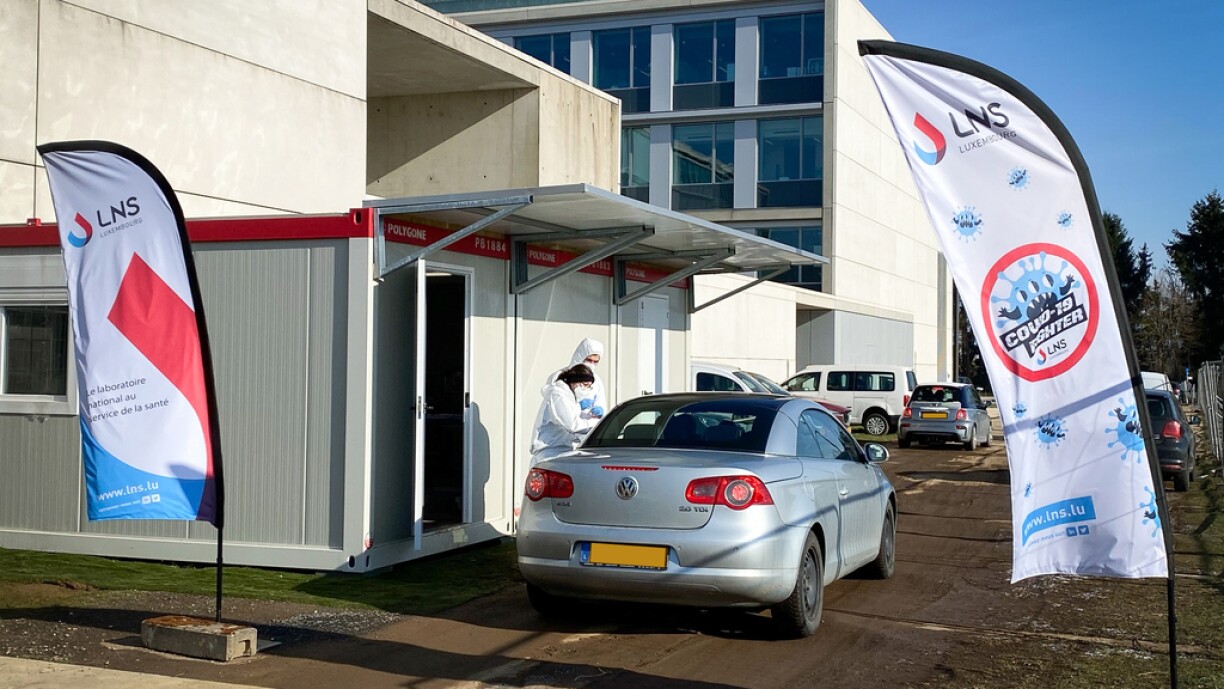
On Monday, representatives from the Higher Education Ministry and the Luxembourg Institute of Health (LIH) addressed the committee specifically about Phase 1 of the LST scheme. The focus was primarily on how public money was spent, given that the total cost to the state across the three LST phases reached €134 million (excluding VAT)
In Phase 1, the Ministry had tasked the LIH with managing the LST rollout. Several issues were identified, beginning with the selection of Laboratoires Réunis to carry out the testing. No formal public procurement process had been conducted – something permissible during emergencies, but only with a written justification, which, in this case, was not provided.
Stéphanie Weydert of the Christian Social People's Party (CSV), MP and co-rapporteur of the report, commented that although they received further explanations as to why Laboratoires Réunis had been chosen – highlighting the operational complexity involved – she still believed that, at the very least and even if just for the sake of formality, discussions should have been held with other potential providers to explore what support they might have offered.
Additionally, the LIH submitted a 25% surcharge for extra costs to the Ministry after the fact, which was not initially included in the contract. This amounted to roughly €300,000 that had not been planned for in the original budget but still had to be paid.
Franz Fayot of the Luxembourg Socialist Workers' Party (LSAP), MP and chair of the Budget Control Committee, acknowledged that while this was not ideal and should have been anticipated earlier, such retroactive cost increases are not unusual in research projects. He noted that this kind of post-hoc adjustment is also accepted in EU-funded research schemes like Horizon 2020.
Looking ahead, co-rapporteur Sam Tanson of The Greens (Déi Gréng) said the aim is to ensure clearer procedures are in place for future crises. She stated that the committee intends to debate the report this autumn – first in committee, then in plenary – emphasising that the real issue is learning how to manage public funds more effectively even under crisis conditions.
Upcoming sessions will review the findings from the second and third phases of the LST programme. The Health Directorate is expected to answer questions during those discussions.





