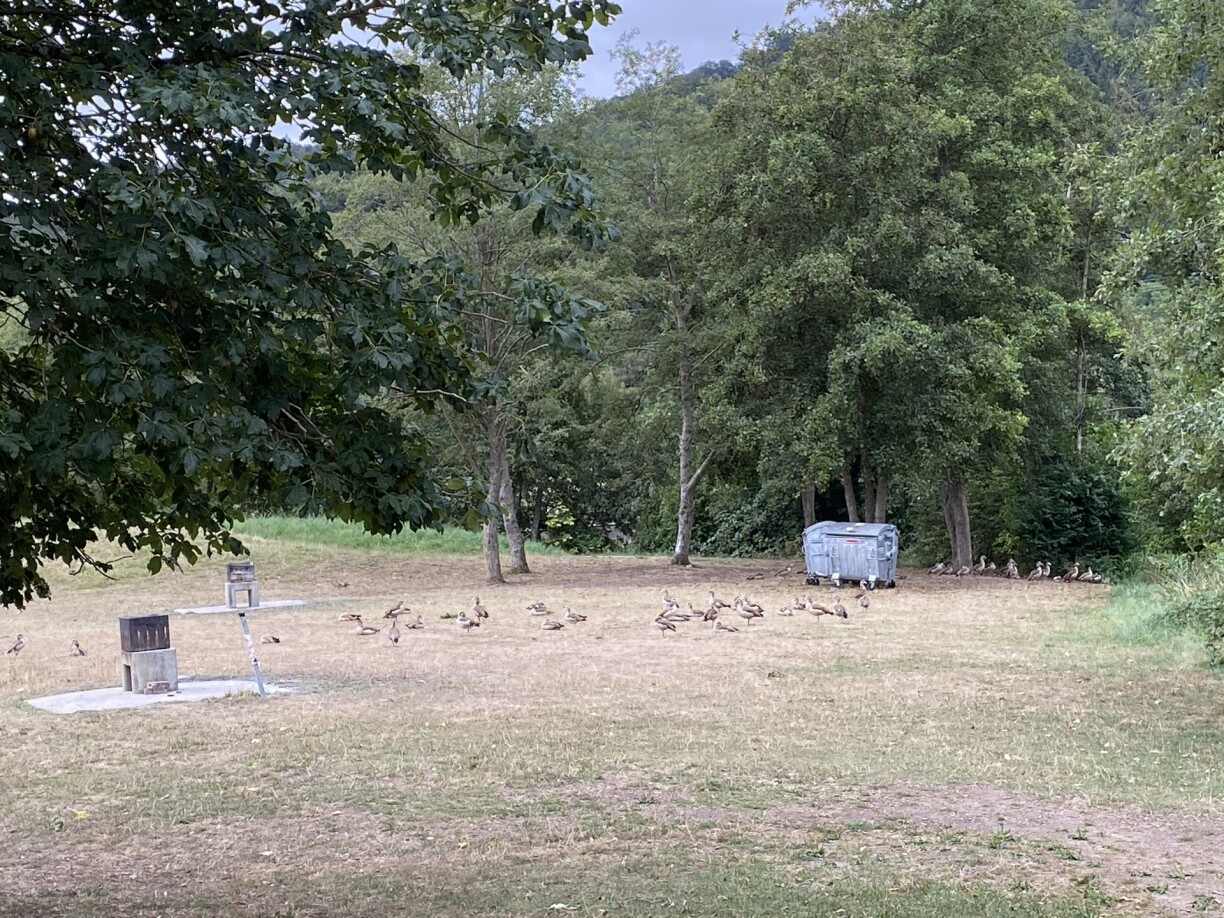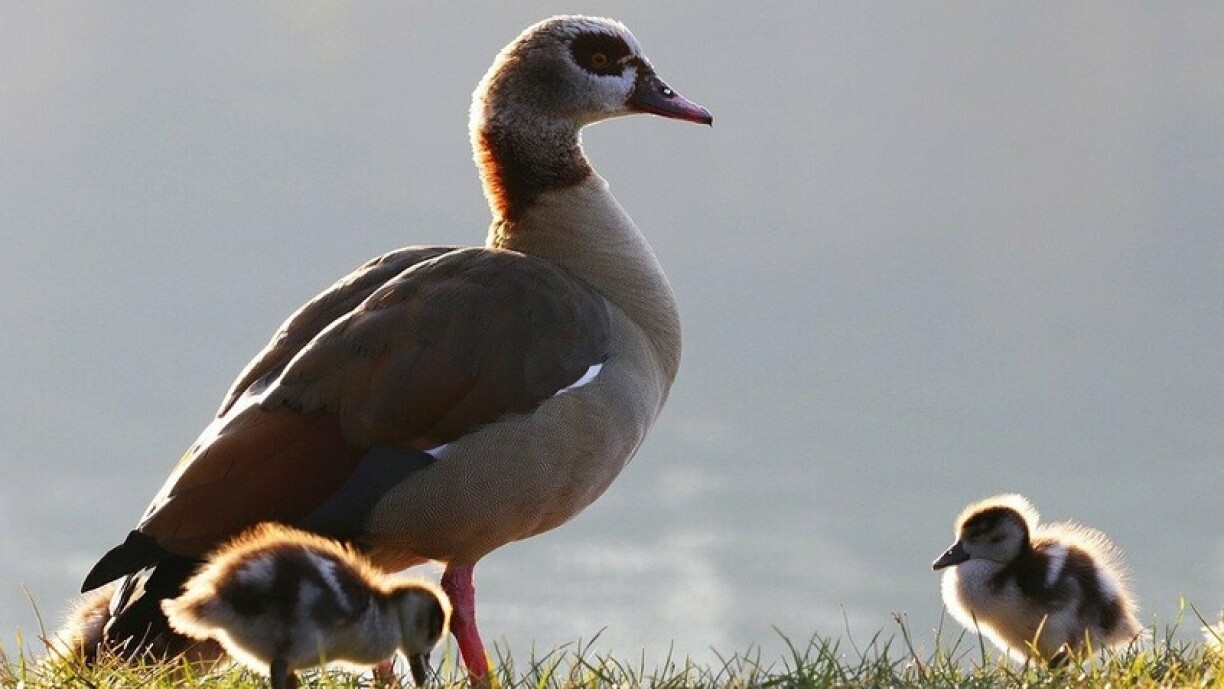
While Egyptian geese may look adorable, they are part of those non-native species which have turned out to be a real plague over the past years. The animals can often be observed alongside rivers like the Alzette or the Moselle.
Officials from municipalities in the country's eastern region know this issue all too well. The Ministry of the Environment intents to take action through the national action plan for the management of invasive exotic animal species which enter the country and proceed to breed.
Egyptian geese are part of those species which can particularly be found in parks, but also on football fields or grasslands alongside lakes, ponds, and rivers.
Besides the waste they produce, Egyptian geese also displace storks and other local bird, duck, and goose species. They can also damage local environments, and when they decide to live near airports, collisions with planes are almost impossible to avoid.
All of this information was provided by Minister for the Environment Carole Dieschbourg in an answer to a parliamentary question by Democratic Party MP Gusty Graas, who also asked which measures can be taken against Egyptian geese as it is currently prohibited to shoot them.
Besides raising awareness among the general population not to feed Egyptian geese, the Ministry is also banking on the sterilisation of their eggs. This is expected to be accomplished by destroying the eggs in the nests through perforation or shaking. The eggs will then be left in the nests, so that the geese will continue to breed them. A main problem, however, is locating the nests in the first place.
Civil servants from the Nature Administration will be tasked with this complex work. The project is expected to be very time consuming, with each public official requiring 18 days to take care of a defined zone in which nests have been located. The main area of interest is expected to be along the Moselle river.
Hunting Egyptian geese would only be effective, if hunters managed to shoot at least one third of the animals per year. However, because the geese are often living in parks or protected nature reserves, hunting them will remain prohibited in the future.
On the other hand, the minister also stated that it could be conceivable to allow trained civil servants to shoot particular animals in specified zones.
The overall costs of the management plan for invasive exotic animal species amount to approximately €500,000 and include regulating the species as well as the monitoring of the situation in order to contain any animal plague early on.