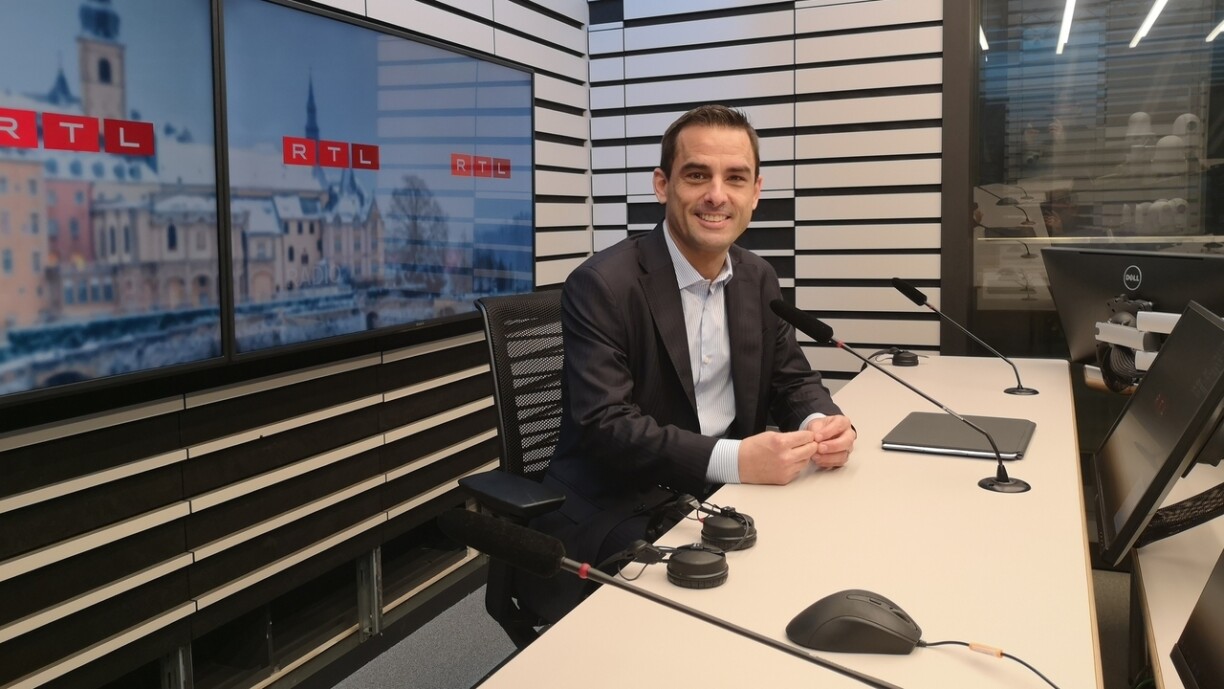
During the interview, Minister Hahn highlighted that the availability of beds in initial reception centres for refugees has dwindled to an unprecedented low of only 60. Managing the reception of refugees falls under Hahn's purview as the Minister for the Reception of Refugees, and he revealed that virtually all 8,000 beds in refugee centres are currently occupied. 3,900 individuals sought shelter in 2023, which the minister deemed a "new record."
To address the situation, a measure instituted by former Minister of Immigration and Asylum Jean Asselborn involves placing men who have submitted asylum applications in other countries on a waiting list instead of automatically receiving a bed. Hahn stressed that this measure is crucial to ensure available beds for families and children. Approximately 60 individuals are currently on this waiting list.
Minister Hahn acknowledged the need to maintain the current crisis situation and shared statistics, revealing that an average of 300 people receive beds monthly, while only between 150 and 175 individuals leave the structures each month. The vast majority of these people are unable to find housing on the open market, underscoring the housing challenges faced by refugees.
Looking ahead, Hahn outlined the government's proactive steps to address the crisis. Plans are underway to introduce approximately 200 new beds in the coming months, with a focus on improving the integration of refugees into society. Minister Hahn highlighted improvements in access to the labour market and announced initiatives such as compulsory language lessons and a course on "living well together."
In a bid to encourage private citizens to participate in refugee assistance, Hahn revealed that financial support would be extended to individuals who take in refugees privately.
The ongoing "Wanteraktioun," running from mid-November until April 15, is very popular, leading to an expansion in capacity from 250 to 300 beds, accompanied by the installation of heated tents, as disclosed by Hahn. In 2023, the initiative offered shelter to approximately 230 people daily. In 2024, the peak so far has been 287 individuals. Minister Hahn noted a growing demand, attributing it, in part, to the waiting list for refugees. He underscored that the Wanteraktioun accommodates everyone, including men on the waiting list.
When asked about the begging ban, Hahn replied that his main concern is "fighting poverty." According to the Minister, a sense of "helplessness" in politics influenced the decisions that were made. Like several other politicians, Hahn once again claimed that the ban specifically targets aggressive or organised begging. "With or without a begging ban," Hahn stressed that his commitment remains addressing the broader issue of homelessness.
-> Fact Check: Is the act of simple begging prohibited by Luxembourg's criminal law?
Minister Hahn disclosed plans for new structures, including the upcoming opening of a retirement home for the homeless in Berbourg. He outlined an ambitious goal to eradicate homelessness in Luxembourg by 2030.





