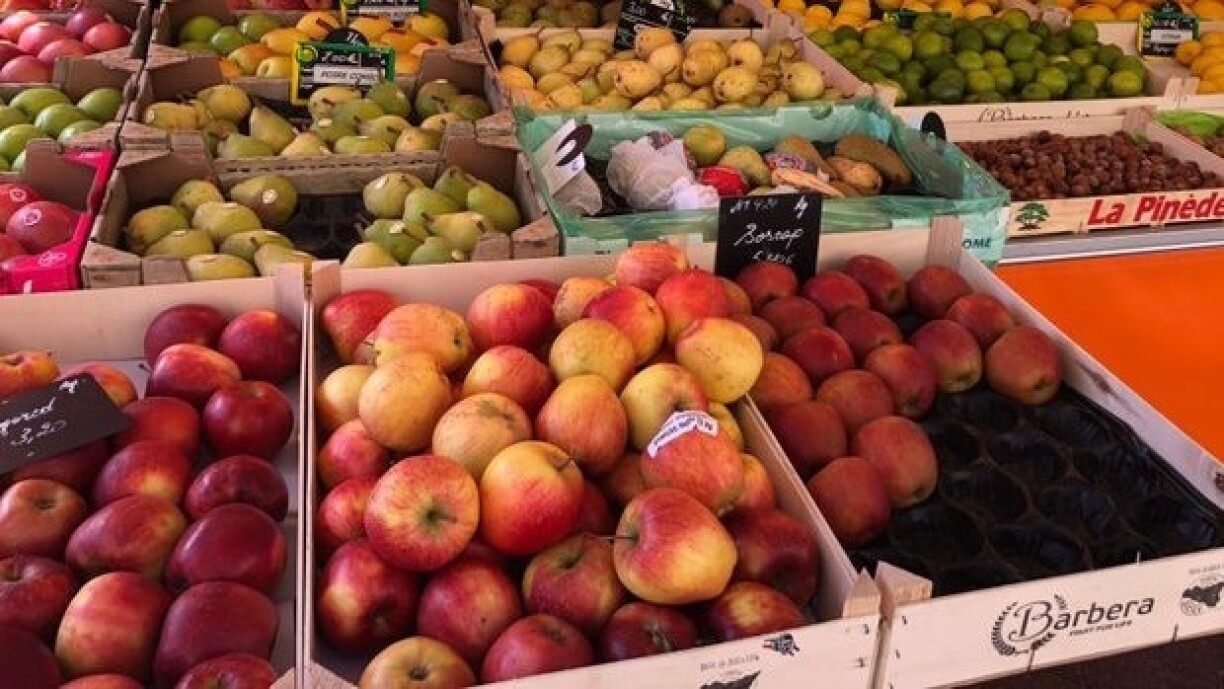
Following the publication of a report by Pesticide Action Network Europe (PAN Europe) and the Mouvement Écologique, the Ministry of Agriculture insists that apples produced in Luxembourg comply with all European standards and pose no risk to consumers, even in cases of multiple exposure.
According to the ministry, the thresholds cited in the study are not health-based limits but reference values linked to agricultural practices. Official checks carried out by the Luxembourg Veterinary and Food Administration (ALVA) show that none of the 182 apple samples analysed since 2009 have exceeded the legal residue limits.
The PAN Europe study challenges the long-standing image of apples as a symbol of healthy eating. Based on 59 samples from 13 European countries, the NGO found that 90% of conventionally grown apples contained pesticide residues. All three samples taken in Luxembourg, equivalent to around six apples, tested positive.
For Claire Wolff of the Mouvement Écologique, the findings are alarming. "What shocked me most is that PAN Europe concludes that conventional fresh apples are not actually suitable for young children", she said.
She points to what she describes as a double standard: processed foods intended for children must meet zero-tolerance rules for pesticides, while residues are permitted in fresh fruit. She advises parents to opt for untreated or organic apples for young children.

A key concern raised in the report is the so-called pesticide cocktail effect. Most samples, including those from Luxembourg, contained several different substances. While each individual pesticide remained below legal limits, the combined effects have not been sufficiently studied, according to the Mouvement Écologique.
This is particularly worrying for young children, whose immune, hormonal and nervous systems are still developing. Several of the substances detected are suspected of being carcinogenic or endocrine disruptors.
Blanche Weber, president of the Mouvement Écologique, said the issue goes beyond this single study. "We have discussed at length whether we should say that young children should no longer eat conventional apples. At some point, enough is enough", she said, pointing out that pesticides have also been detected in drinking water and even in the hair of children tested in Luxembourg in recent years. She criticised politicians for failing to take decisive action despite repeated warnings.
The organisation is calling for a greater proportion of organic food in nurseries, hospitals and retirement homes.

Fruit growers have sought to put the findings into perspective. Jean-Claude Müller, president of the Luxembourg Fruit Growers’ Association, emphasised that local apples comply with all legal requirements. "All products used are authorised and assessed by the European authorities", he said.
ALVA conducts regular inspections, and between 2009 and 2025, 97 Luxembourg-grown apple samples were tested without a single breach of authorised limits. The Ministry of Agriculture reiterated its position: "Luxembourgish apples are safe to eat".
Jean-Claude Müller added that producers invest in expert advice, alternative methods and biological pest control. The sector, he said, is committed to reducing chemical inputs while maintaining food safety standards.
The Ministry of Agriculture also highlights progress made in recent years, noting that pesticide use has fallen by more than 50% since 2016. In 2024, 89 hectares out of 198, nearly half of Luxembourg’s orchards, were cultivated without fungicides or insecticides.





