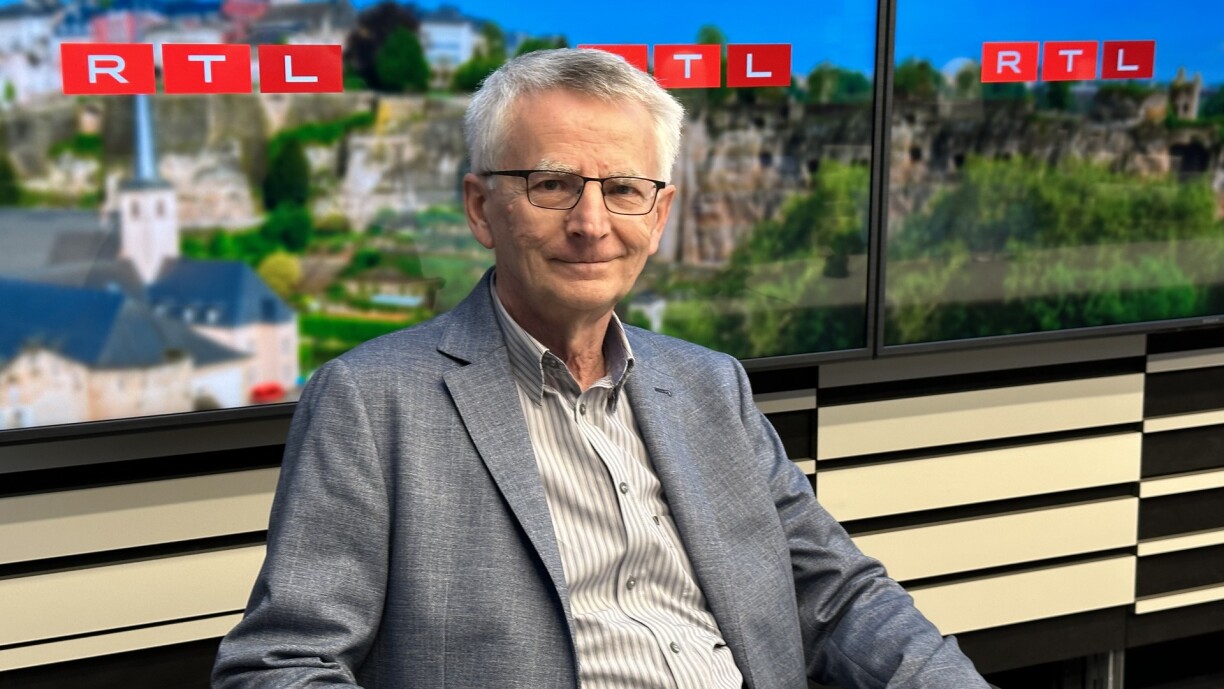
"Luxembourgers vote for people rather than policies," explained Pauly at the beginning of the interview. The historian and contributor to the magazine Forum said that this phenomenon is even clearer at the municipal level than at the national level - even if it is also stronger there than abroad.
The question should therefore be asked whether the candidates elected in the municipal elections will fulfil their mandate or whether they will move on to the Chamber or the government after the parliamentary elections. Pauly pointed out that 2023 will be the first time that municipal and national elections will be held in that order in one year.
The historian indicated that a number of national problems must be tackled at the municipal level. As examples, he mentioned the problem of poverty, but also that of housing and climate: "It is up to voters to ask the candidates, very concretely: how much social housing do you intend on building in the next six years?"
In regards to municipal autonomy, Pauly cited one example where it is limited, namely the law on the separation of church and state. This stipulates that towns are forbidden to financially support their local church. Pauly wondered why this should not be left to the majority of a local council to decide.
The historian named heritage protection as another example where municipal autonomy is a problem. He said that 14 municipalities had retained in their development plans less than 60% of the buildings identified as "heritage worthy". "You can see that municipal autonomy can clearly be an obstacle to the implementation of issues of national importance", concluded Pauly.





