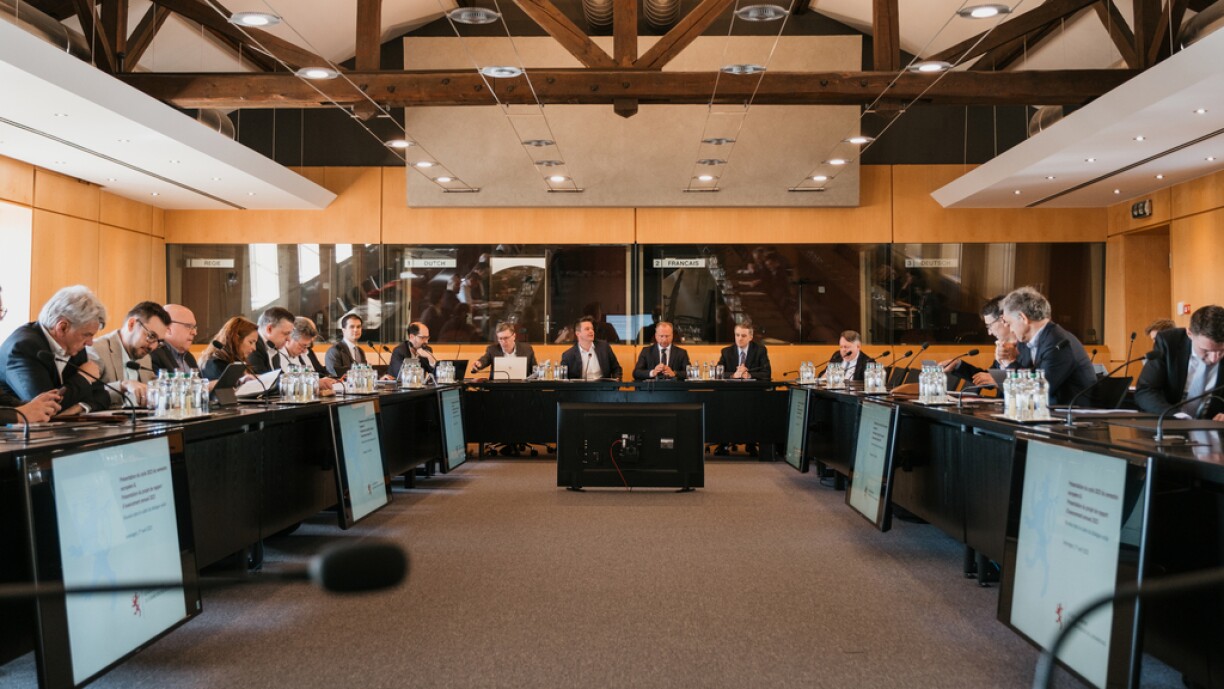
According to the Chamber of Deputies, the 2025 cycle of the European Semester involves organised stages in which all EU member states submit documents outlining their financial and economic policies. These are then assessed by the European Commission, which issues recommendations in return.
Tuesday's discussions were based on figures from the National Institute of Statistics and Economic Studies (Statec), presented at Senningen Castle.
In terms of public finances, Finance Minister Gilles Roth described Luxembourg as "stable", noting that public administrations recorded a surplus of nearly €890 million in 2024 – around 1% of GDP. This positive result was largely due to the central government’s improved performance, with a deficit of just €99 million compared to €1.5 billion the previous year.
Public debt rose by €2.4 billion over the past year, reaching €22.6 billion. Roth attributed this increase to the issuance of bonds worth €2.4 billion, stressing that the funds remain in the state’s reserves.
Roth also highlighted the importance of social dialogue and budgetary discipline, describing social dialogue as a cornerstone of Luxembourg's social model. However, he cautioned that stability and growth remain essential to securing the country’s long-term prosperity.
Both Roth and Economy Minister Lex Delles addressed attendees in Senningen and later MPs in the Chamber, underlining the need for a sustainable and inclusive economy. Despite global economic risks and tensions, the government intends to prioritise major investments in defence, housing, and energy.






