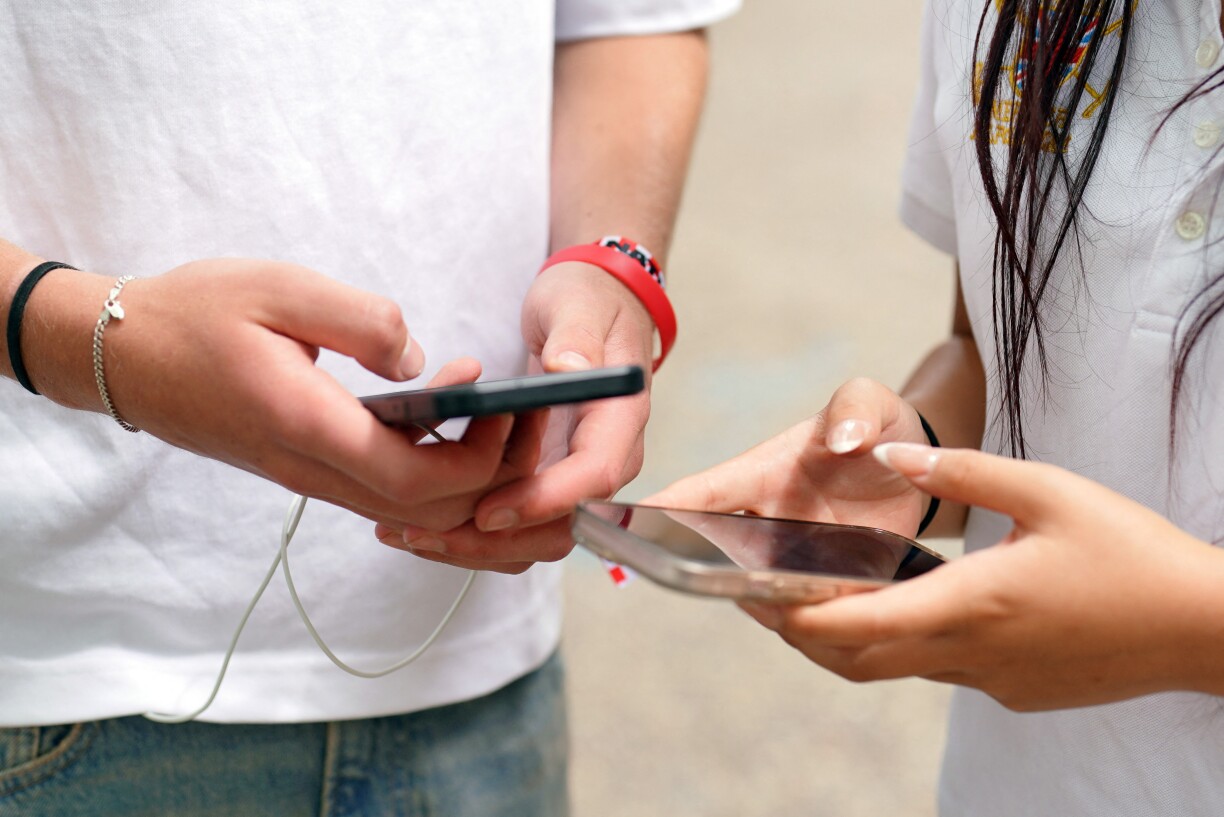
Luxembourg is considering a ban on access to major social media platforms for children and teenagers below a yet-to-be-defined age, Minister of Justice Elisabeth Margue said during an appearance on RTL Radio on Friday morning – arguing that young people face growing exposure to harmful content and that existing safeguards are not working.
Margue was joined on the Q & A programme by Jeff Kaufmann of BeeSecure, Luxembourg's internet safety initiative, as listeners called in to debate whether the country should follow Australia's lead in restricting access for under-16s.
The discussion focused on online risks including cyber bullying, misinformation, AI-generated fakes, hateful content, and pornography. Callers also raised concerns about addictive design features that encourage long periods of scrolling, with several callers supporting tougher rules, while others warned a blanket ban could backfire.
Margue said Luxembourg's position is to move towards a social media ban "under a certain age", but preferably as part of a European approach. She pointed to EU legislation, such as the Digital Services Act, as evidence that regulators can pressure major platforms to change, and said recent events involving xAi's Grok chatbot showed political pressure can have an effect when access restrictions are threatened.
"We cannot just watch what happens", Margue said, arguing that some types of content are harmful and that children and teenagers need stronger protection.
The minister linked the debate to mental health concerns, saying social media can expose teenagers to a seemingly "ideal world" that fuels comparison and distress. She also said Luxembourg is working on strengthening legislation against cyber bullying and on tackling the non-consensual sharing of intimate images, including cases where multiple perpetrators target a single victim.
Several callers questioned why Luxembourg could not act alone. Margue responded that a national ban would be harder to enforce, especially against large platforms operating across borders. She said a key issue is age verification: how to check a user's age effectively while respecting privacy and data protection rules.
It is one thing to say we would like a ban, she explained, the other is how do we verify age in a way that is also compliant with data protection.
Margue said a working group has been set up to examine technical options and that Luxembourg has set itself a timeline. She referred to comments by the prime minister indicating that if there is no progress at EU level within six to 12 months, Luxembourg will take action itself.
Listeners repeatedly returned to the practical problem of enforcement. A caller cited examples of bans being bypassed, including facial recognition tricks. Kaufmann said age verification systems range from simple self-declaration clicks to demanding users upload identity documents, and that a European pilot project seeks a middle ground that protects user data while remaining effective.
Margue added that the pilot builds toward a European digital identity approach, where platforms would only receive confirmation that a user meets an age threshold without receiving full identity details. She said AI-based facial analysis raises privacy concerns because it requires repeated processing of personal data.
Kaufmann said BeeSecure already runs sessions in primary education from Cycle 3.1, explaining how the internet works and why sharing a photo online can mean losing control over it. In Cycle 4.1, he said the programme covers how social media profiles function, privacy settings, data collection, and how algorithms can drive excessive use.
He told listeners BeeSecure delivered around 1,400 school training sessions last year and also provides parent evenings on request, as well as a helpline where parents can ask practical questions such as when a first smartphone is appropriate and how to use existing platform settings.
In response to a question about parental responsibility, Kaufmann said many "parental control" tools already exist, allowing adults to set time limits, restrict downloads, and manage content. He also referred to the "3-6-9-12" guidance promoted to parents, which sets age-based recommendations for screen and device use.
Callers expressed sharply different views. One mother supported Australia-style restrictions and asked for more media literacy teaching earlier in school, saying children do not always listen to parents. Another caller opposed bans in principle, arguing that prohibition can create backlash and fuel political resentment.
A recorded message from a young listener acknowledged risks including cyber bullying, beauty standards, comparison pressure, and addictive behaviour, but argued that a ban alone would not solve the problem and that education at home and in schools is essential.
A 15-year-old caller said teenagers will find ways around restrictions and warned a ban could drive social media use underground and reduce adult oversight, adding that a guided approach with education and parental involvement may be safer than an abrupt switch at 16.
Margue said she understood concerns about effectiveness and about defining what counts as social media, but maintained that government has a duty to act when risks are clear. She also argued that age limits should be part of a broader effort to make platforms safer for everyone, including adults who are often targeted by online scams.
The minister said further political debate is expected, with the topic set to be discussed in parliament in the coming days.





