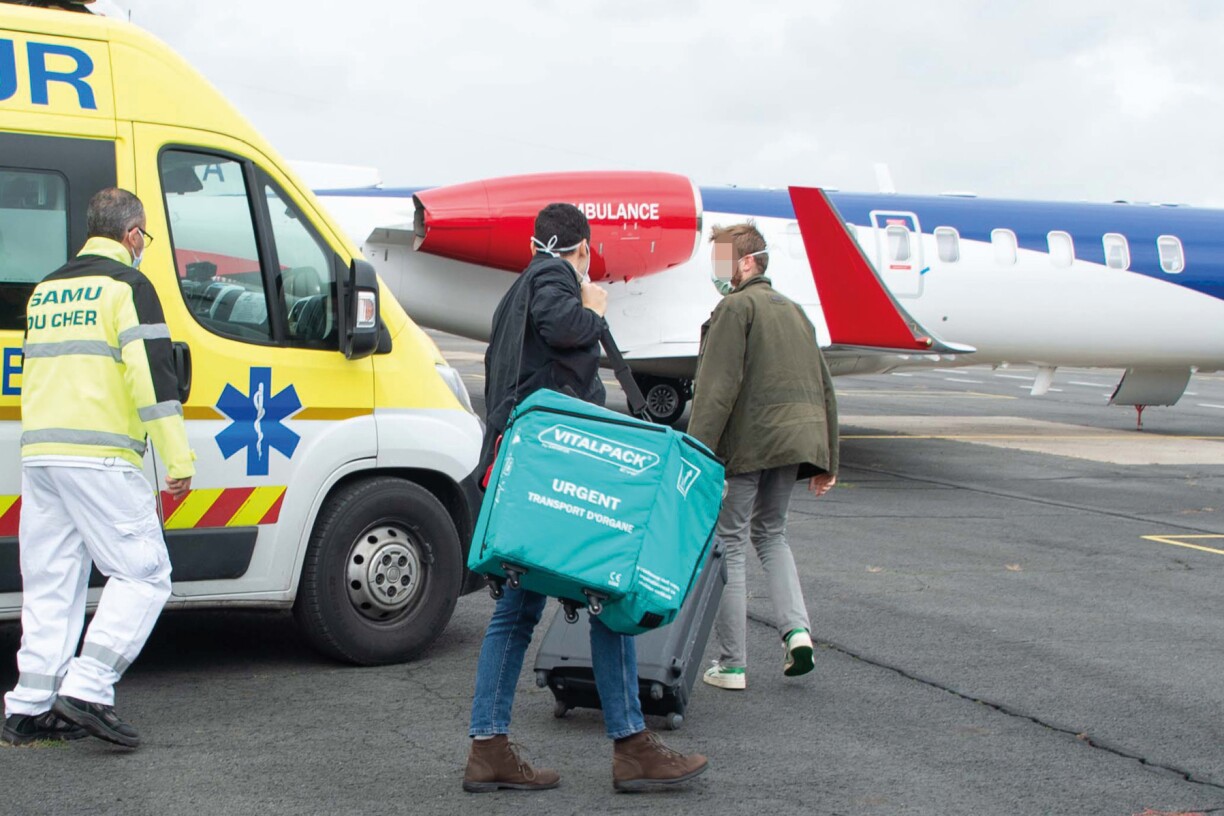
It was a bittersweet moment this Christmas as Luxembourg Air Rescue (LAR) helped a French patient receive a heart transplant on 24 December. However, as one person received a second chance at life, another had to lose theirs first.
"These are the moments you do your job for, situations that force you to step up at a moment's notice. And it's one of those stories you love to tell, because they're about life and death", René Closter, President of LAR, shared. However, he underlined the importance of anonymity when it comes to organ transplants."Of course, I was not allowed to share where we flew the organ from, so that it can't be worked out who received whose heart"
The viable organ is placed in a cool box and flown by plane, along with the medical team, to the receiving hospital where it is then transplanted. This was the procedure followed on Christmas Eve in France as well.

In partnership with a Lyon-based organisation, LAR holds exclusive rights to carry out air organ transports in neighbouring France. All flights are coordinated from the LAR headquarters in Findel, where four staff members are solely responsible for organising around 1,300 operations each year. Organs transported include lungs, livers, kidneys, pancreases, and hearts.
Due to the sensitive nature of these missions, everything must run smoothly, according to Closter. He explained that this is because, firstly, organs do not stay viable for long. Hearts, for instance, can only be preserved for around eight hours. Secondly, the patient awaiting the transplant may already have had their failing organ removed and would not survive without the new one.
In light of strict anonymity rules, it is not possible to find out how the person who received the heart is doing – though ideally, the transplant has given them a chance to continue their life.





