After two women died following a lorry crashing into traffic on Monday evening, there have been renewed calls for better checks of the trucks travelling through Luxembourg.
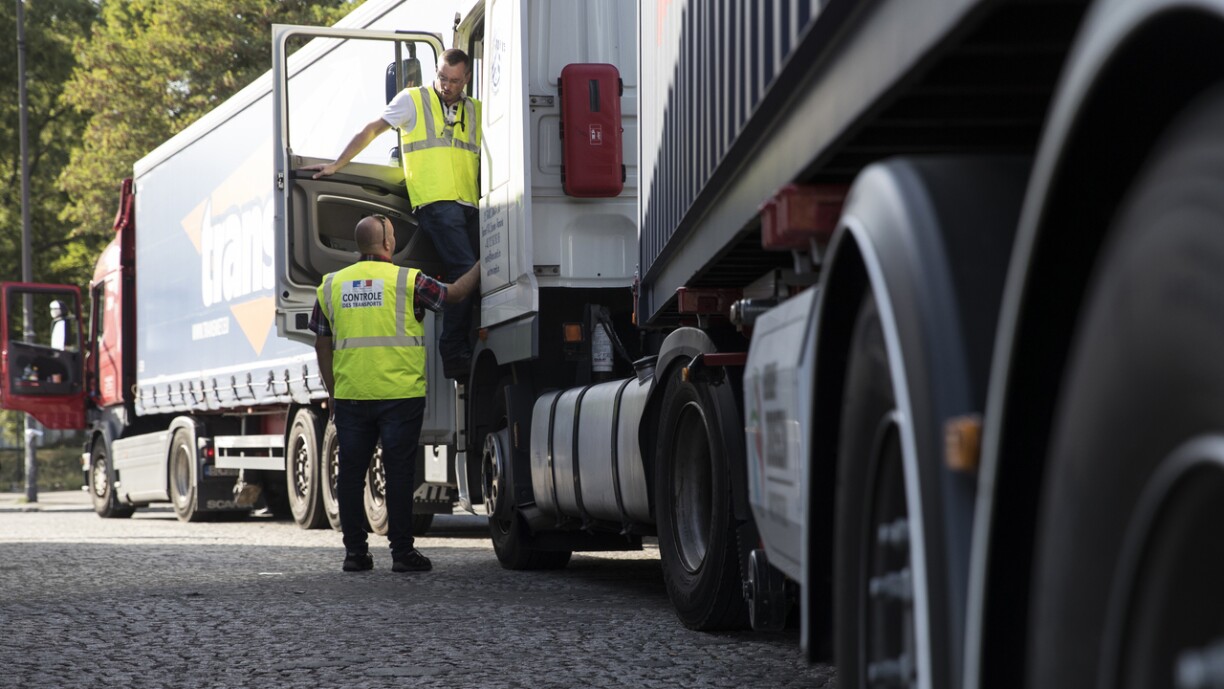
President of the Road Safety Association Paul Hammelmann pointed out that whenever the police do hold lorry checks, the general conclusion is that lorries fail the checks in one way or another.
Fatal crash on A6: Two dead after lorry collisionThe public prosecutor's office ordered autopsies on the deceased, to ascertain the cause of death and their identities. The lorry driver at fault has also been taken into custody. Upon hearing of the tragedy, Hammelmann said he immediately thought of his long-standing concern, which is that police checks on lorries are both too infrequent and when they occur, over two-thirds of lorry drivers fail checks.
At the time of the crash, it was dark and foggy. Traffic was reduced to 70 km/h due to roadworks, leading to tailbacks. It remains unclear how fast the lorry was driving at the point of impact, but technical installations in lorries can allow investigators to determine the speed after the event.
In theory, however, a lorry can never drive faster than 90 km/h. Recent technology also allows the monitoring of how long lorry drivers have been on the way. Thanks to a 2015 EU directive, lorries must be fitted with alerts on approaching other vehicles and forcing emergency brakes.
Most common infractions include drivers who fail to adhere to the appropriate number of breaks in between driving hours and cargo that has not been secured adequately.
Hammelmann added that the police must be stricter in ensuring lorries are not overloaded and that brakes are functioning well, in addition to other concerns.





