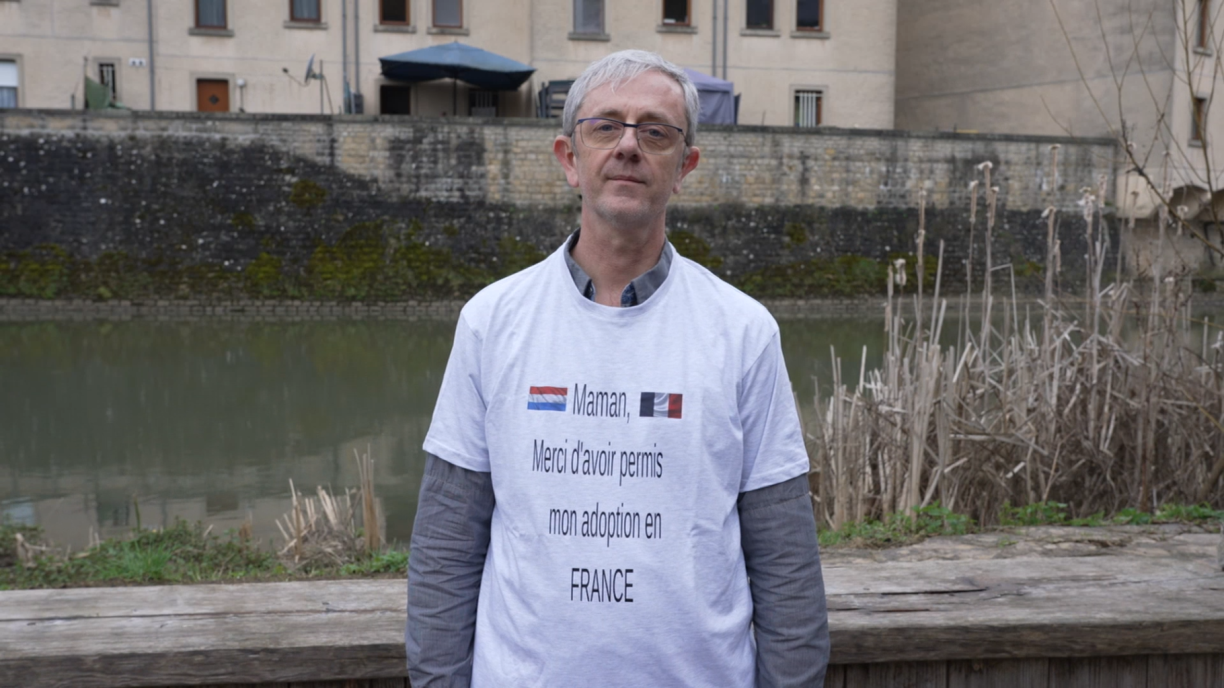
Frédéric Blanjard, born from an illegitimate relationship in Luxembourg, was given up at birth across the border in Metz. 53 years later, he travelled from central France to try to reconnect with his origins. Luxembourg, meanwhile, is accused of lagging behind on the issue of anonymous births.
In Luxembourg, anonymous birth allows a woman to give birth without her identity being recorded on the child's birth certificate as they give up their child immediately after birth. For the handful of children born under this system each year, that missing name can come to symbolise a line drawn through their past.
It would be easy to criticise women who decide to build such a wall between themselves and their children. But behind every abandonment, there is a story. And it is often tragic: deep distress, incest, rape, an unwanted pregnancy, family, or religious pressure.
It also means forgetting too quickly the role of fathers, who too often disappear long before the birth, leaving these future mothers alone with a terrible decision to make.
Blanjard, however, expresses no blame and no resentment. His search is about a void he hopes to fill, for himself, but not only for himself.
The 53-year-old Frenchman decided to travel from Clermont-Ferrand to tell his story to RTL. It began in the summer of 1972, when his biological parents had what was described as an illegitimate relationship.
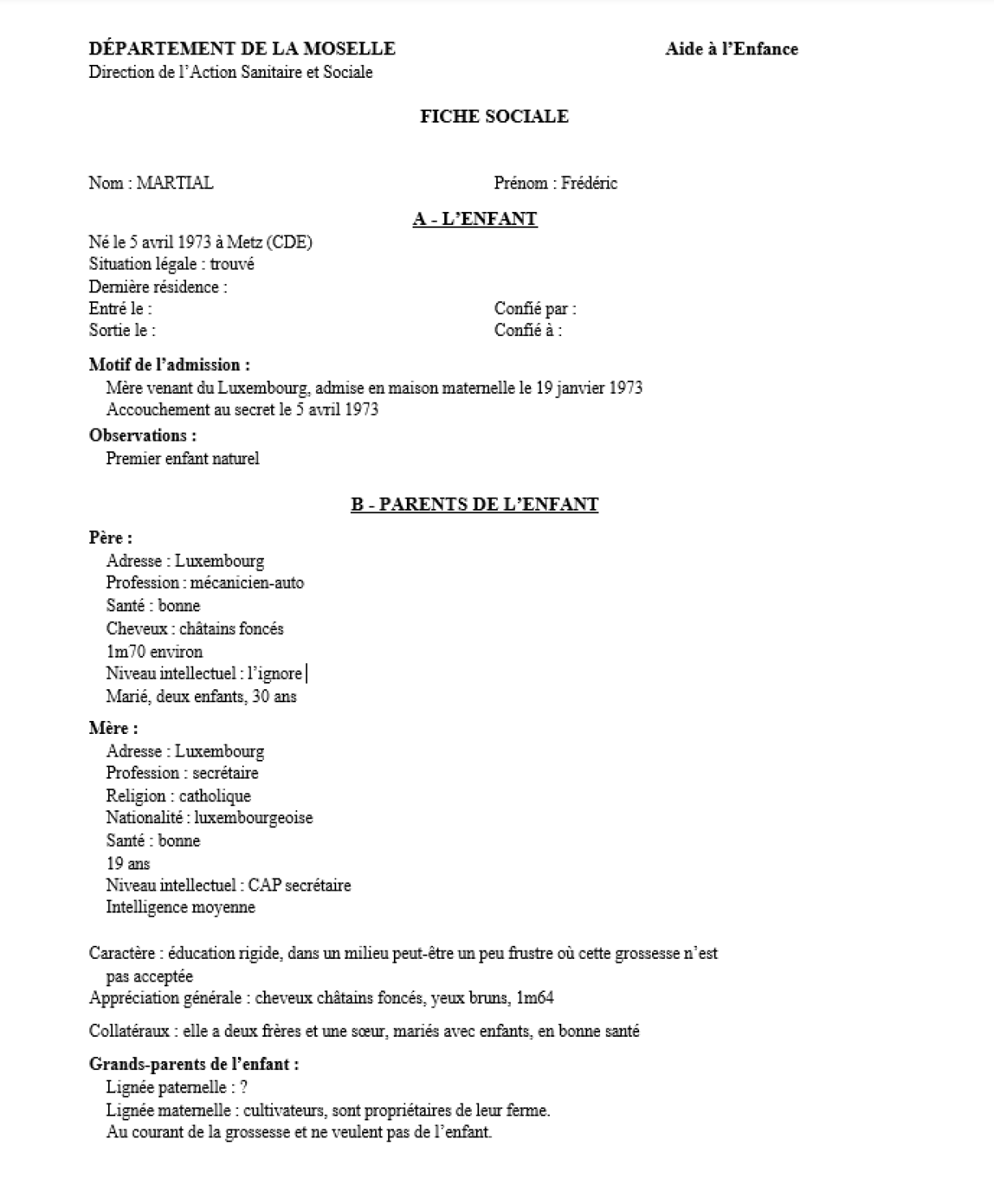
At least, that is what is stated in a social record issued by the French authorities, which Blanjard was able to obtain. Naturally, the names of his biological parents do not appear on it. However, it does state that they both lived in Luxembourg.
His father was a car mechanic, aged 30, about 1.70 metres tall, and was already married with two children. His mother was 19 and worked as a secretary. Blanjard was the young woman's first child.
According to the document, she had received a "strict upbringing, in a perhaps somewhat rough environment where this pregnancy was not accepted". Two lines specify that the woman was Catholic and that her parents, who were farmers, were "aware of the pregnancy and did not want the child".
Here again, caution is needed: only his biological mother holds the keys to this story. But it should be remembered that it took place in the context of the 1970s and was rooted in Luxembourg's Christian traditions.
The Church saw anonymous birth as an alternative to abortion and to the abuse suffered by women who conceived outside the sacrament of marriage. Those values still permeated Luxembourg society when the law on anonymous birth was adopted in 1975.
The Ministry of Justice explained to RTL that anonymous birth was introduced to allow a woman to give birth safely while guaranteeing her anonymity and ensuring the child was immediately cared for. Afterwards, the child could either be taken back by the mother or placed for adoption.
The ministry added that this legal and secure alternative was created to avoid tragedies such as the infanticide of newborns by mothers in distress or the abandonment of newborns in dangerous places.
The practice was widely accepted at the time. But no one had anticipated the problems it would create for children born anonymously.
Blanjard was born on 5 April 1973, at precisely 8.30am, at the departmental children's centre on Route de Plappeville in Metz. The question of why his mother gave birth in France rather than in Luxembourg remains unanswered.
What is certain is that, as soon as she had recovered from childbirth, she returned to the Grand Duchy and cut all ties with her child.
French authorities gave Blanjard the name Frédéric Martial. He was placed in a nursery.
At an age when every baby seeks the love and unique attention of a parent, Blanjard was passed from one pair of arms to another, cared for by childcare workers. It left a deep trauma within him. Yet he considers himself lucky.
"I was adopted after only six months. I know not everyone has that chance, and that some people spend their whole childhood in state care, in children's homes", Blanjard said.
His adoptive parents, who came from Fontainebleau, welcomed him with joy. His adoptive father was a career soldier, while his mother was a PE teacher, Blanjard said. He emphasised that they could not have children, so they were delighted that their adoption process had succeeded. That was how he received his new surname: Blanjard.
Blanjard described his childhood as "almost" normal, adding that he had a happy childhood and lacked very little. His adoption was not a taboo subject, according to him.
He said that his adoptive parents never tried to hide anything from him, and that he learned that he was adopted once he was old enough to understand such things, at around five or six. But he did not immediately understand what it meant to have been born anonymously, Blanjard added.
His adoptive parents later divorced during his teenage years, causing another rupture. He said this did not stop him from continuing with his life, although he felt the situation deeply.
But what matters most to him is that both of his adoptive parents remain grateful for the gift his biological mother gave them by bringing him into the world, Blanjard said. Through that act, he said, they were able to become parents. Blanjard, visibly moved, said that this is something they will never forget.
As an adult, Blanjard wanted to learn more about his origins. He began several procedures in the 2000s. It was not until 2005 that he was finally contacted by the French National Council for Access to Personal Origins (CNAOP).
And then came a surprise: the CNAOP had a file containing his biological mother's name, first name, and place of residence. The file concerning his biological father, however, contained no information.
Under the rules on anonymous birth, Blanjard could not access that confidential information. However, the French authorities contacted their Luxembourgish counterparts, who were tasked with reaching out to his mother.
Eventually, in 2005, Blanjard received a letter from Luxembourg's Ministry of Justice. The answer was categorical: She refused all contact and wished to maintain the secrecy of her identity, according to Blanjard.
The shock was devastating for him. But he persisted and wrote a letter to his mother through the Luxembourg authorities.
In the letter, he told her that he understood her reaction, acknowledging that seeing a 32-year-old story resurface in her mind could no doubt cause a major emotional shock.
He wrote he had felt the same sensation when he received the letter. The first thing he thought was that she was alive and that she knew he was looking for her, he continued. That, he wrote, was the reward he had no longer expected.
He also opened up about his own life. He explained that he lived with his partner Christelle, who supported him in his search and who worka as a secretary for an obstetrician-gynaecologist, while he works for French national railway company SNCF.
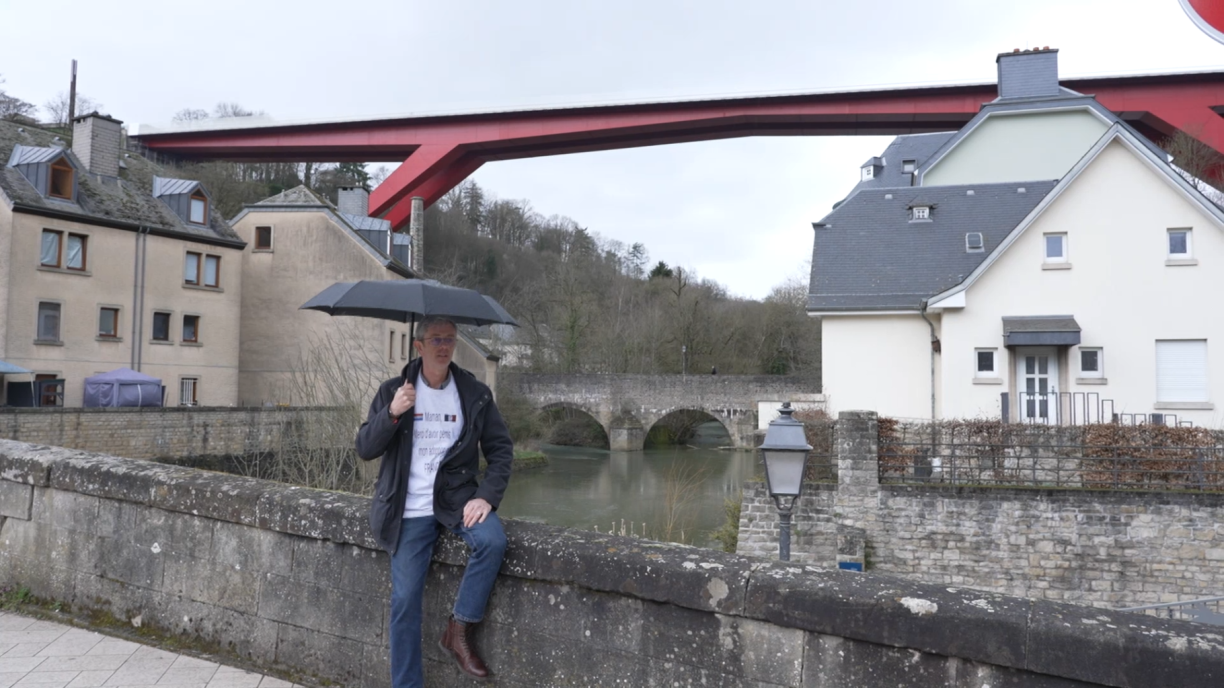
Blanjard wrote that he had visited Luxembourg several times, sometimes for his research and sometimes as a tourist. He knew places such as Bourglinster, Echternach, and Vianden, and had kept all his travel notes on floppy disk, he wrote further. 'I felt a bit at home', Blanjard expressed in the letter.
He ended the letter by saying that it was difficult to draw a line under his past. He wrote that he needed to know his roots and origins, but that he had no desire to judge his biological mother or put her on trial.
He had already been lucky enough to be born and to have been adopted, and that was already a great deal, Blanjard wrote. Reading those words again, Blanjard has to stop, once more overcome with emotion. His mother never responded to this heartfelt appeal.
Nearly 20 years have passed. Blanjard is back in Luxembourg. It was while watching a report about the country that the flame still burning inside him was rekindled.
He agreed to travel from central France to tell us his story. Above all, he still hopes to convince his Luxembourgish mother, if she is still alive, to meet him.
Blanjard said other people might have gone as far as hiring private detectives, but he refuses to do that. He does not want to force her hand, only to offer her his, he said.
By going through a Luxembourgish media outlet such as RTL, he said he had a tiny hope that something might change. If nothing comes of it, at least he will have tried, Blanjard added.
The question of his biological father lingered. Blanjard said it was not his main concern, especially as he has even less information about his father. But perhaps one day, if things move forward with his biological mother, he said, leaving it in suspense.
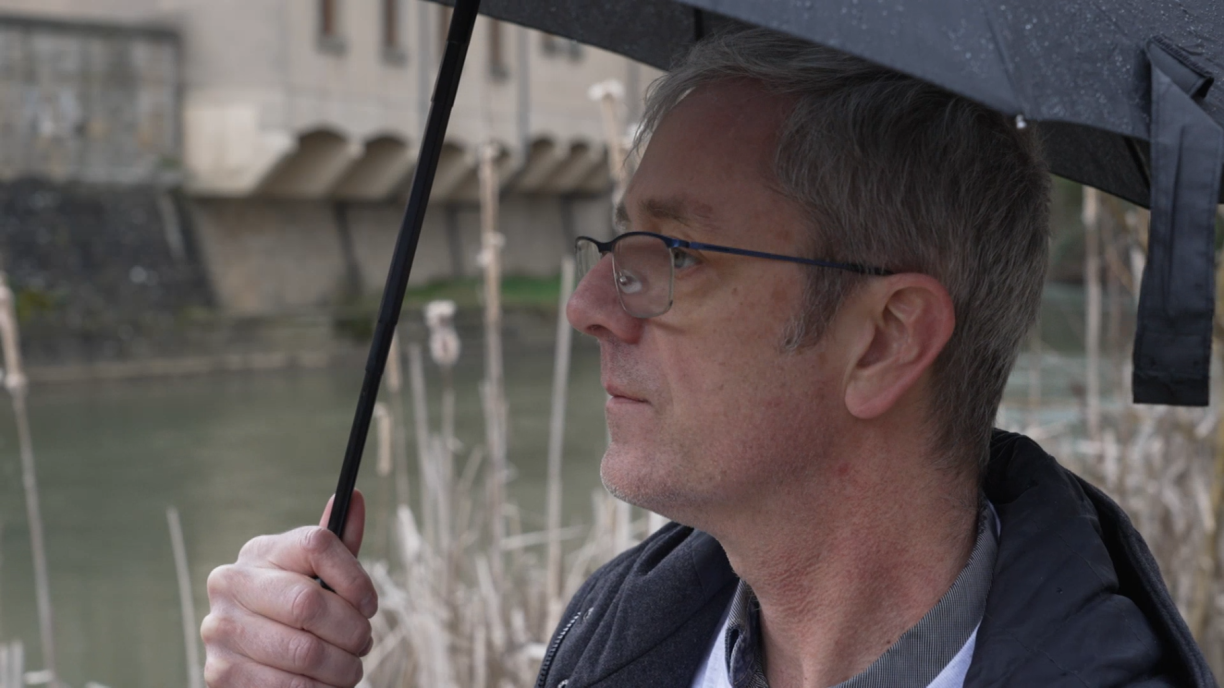
There has also been a major development in his personal life. He has been married to Christelle for 10 years, he said, adding that he has a son. He tells us this during the interview, visibly shaken by emotion.
It then becomes clear, between the lines, that he is also doing this interview for his son, and taking the risk of stirring up the past once again for him.
According to Blanjard, his son knows that he has roots in Luxembourg. They like to say that Blanjard is 100% Luxembourgish and that his son is 50%. But his son would also like to know more, Blanjard said, adding that they can build a family tree on his French mother's side, but not on his.
Asked what kind of father he tries to be, Blanjard gave a shy smile and said he wanted to be a normal father: loving and attentive.
His concern for his son is also one of the reasons he wants to meet his biological mother. He said he lacks information about whether his biological parents have health issues, and therefore whether he has medical history or genetic problems that he may have passed on to his son.
Charel Schmit, Luxembourg's Ombudsman for Children's Rights, known as OKAJU, said Luxembourgish law gives people born anonymously very little chance of finding their biological parents.
Schmit explained that the mother may leave non-identifying information in her file, but that this is not mandatory and that it depends entirely on her willingness. He also pointed to a lack of standardised communication across maternity wards and hospitals to better inform and support mothers.
In other words, the few women who give birth anonymously in Luxembourg, there were six in 2023 and none in 2024, are left somewhat to their own devices. Schmit explained further that, while it may once have been considered in the child's interest not to reveal information about their origins, it is now known that the opposite is true.
He said that abandonment is a primary trauma for these children, affecting them in the long term. A more protective framework is therefore needed, according to Schmit.
OKAJU naturally leans more towards the rights of the child, he said, but it remains a delicate balancing act that must take into account the legitimate interests of both the child and the mother.
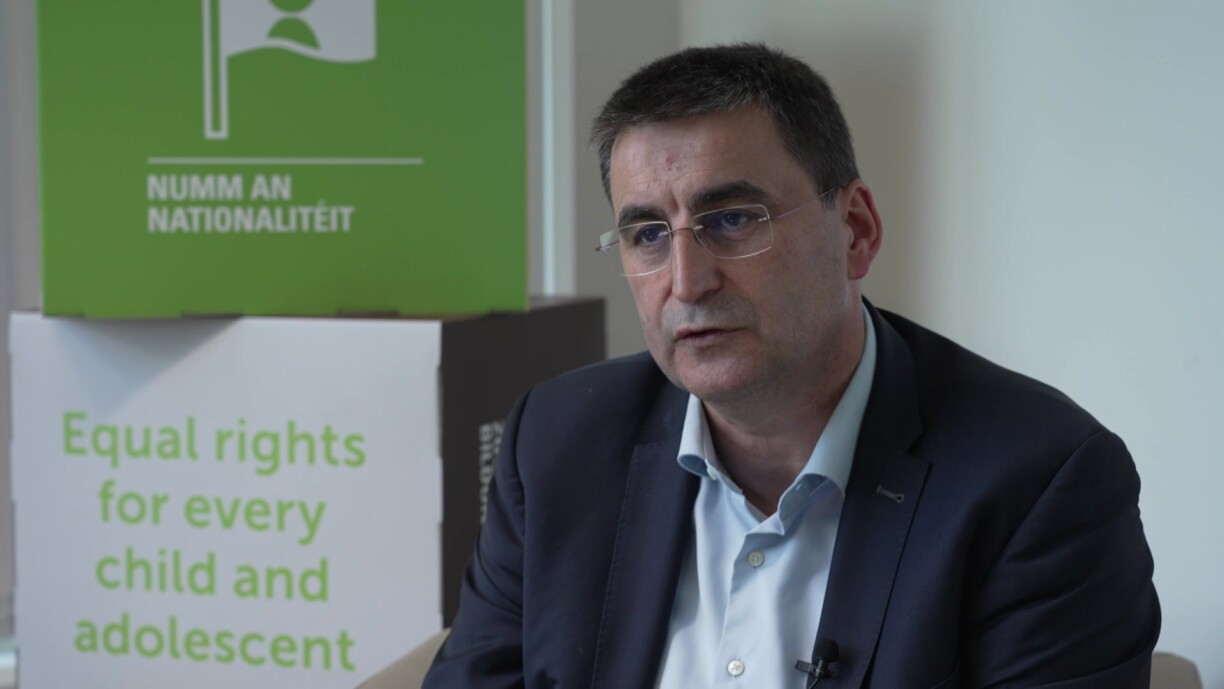
He also confirmed that access to non-identifying information concerning the medical history of the mother and father is essential for disease screening and treatment. Such information should be collected as early as possible, he said.
Schmit recalled that, under the 1989 Convention on the Rights of the Child, ratified by Luxembourg in 1993, children have the right to full information about their biological parents. Since that ratification, he argued, Luxembourg has not complied with this right.
OKAJU is calling on the Luxembourg government to finally complete the reform on access to origins, which has been in the pipeline for years.
This also applies to children born through medically assisted reproduction, for whom Luxembourg also lacks a legal framework. Schmit said the country is around 30 years behind international requirements in this area.
To ensure that the issue is handled impartially and effectively, OKAJU has called for the creation of a new independent administrative body, similar to the CNAOP in France, to carry out this mission linked to children's right to access their origins.
RTL contacted the Ministry of Justice to ask about the status of draft bill no. 7674 on the organisation of access to origins in the context of adoption or medically assisted reproduction. Tabled in 2020, the bill is still under discussion, with new amendments currently being prepared.
The ministry first noted that adoption practices have changed significantly since the 1980s, just as the issue of the right to access one's origins has undergone major societal change.
According to the ministry, society has moved from an approach based on anonymity to a recognition of the need to know one's origins. This also applies to children born through medically assisted reproduction, the ministry stated.
The ministry explained that the purpose of the bill is therefore to establish a legal framework allowing both the child and the birth parents, when the parties so wish, to begin a process of access to origins based on their agreement and respect for everyone's rights.
The ministry confirmed that, at present, anonymous birth guarantees a woman the right to give birth anonymously, protecting her identity from the child and from the civil registry. The current legal framework does not provide for the possibility of leaving either identifying or non-identifying information, the ministy stated.
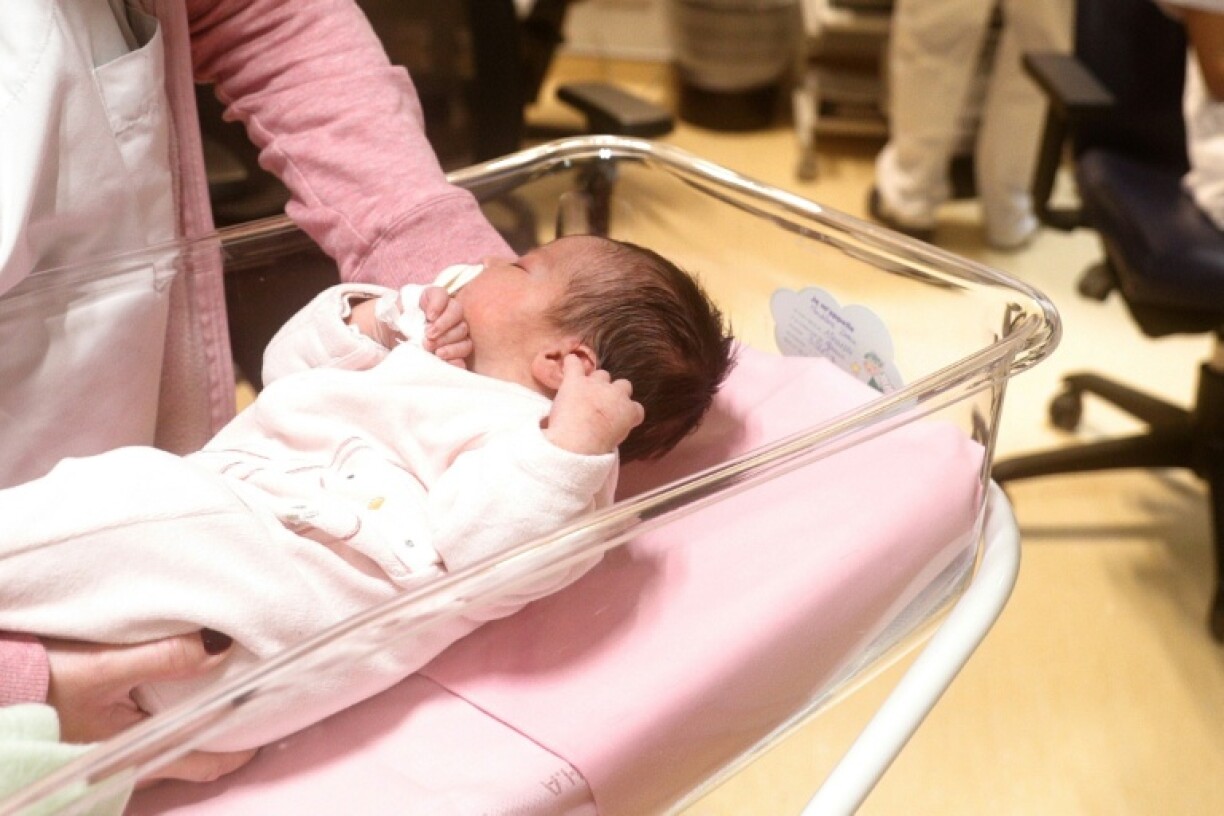
According to the ministry, the draft law would create a framework in which the parent who gave birth to the child and the other birth parent would be free to leave non-identifying information in a sealed envelope. They added that this could include medical information about their health, information about the child’s origins, the circumstances of the birth, or even objects.
It is also planned that the parent who gave birth and the other birth parent would be able to make a declaration of identity in a separate sealed envelope, allowing for possible reunions, the ministy said.
Responding to criticism that Luxembourg is lagging behind legislatively, the ministry said the current legal framework complies with the country's international commitments, adding that Luxembourg ratified the Convention on the Rights of the Child with a specific declaration relating to anonymous birth.
The ministry stressed that the UN Committee on the Rights of the Child has issued recommendations to guarantee access to identity information and establish clear procedures for managing and storing data. While these recommendations are not legally binding, the ministry stated that Luxembourg has received them with great interest.
Things should also improve within maternity wards and hospitals, according to the Ministry of Education, Children, and Youth. The ministry said the bill on access to origins provides for it to be responsible for support in cases of anonymous birth.
According to the ministry, biological parents would be informed by maternity wards of their legal situation and that of the child when they wish to remain anonymous. They would also be made aware of the importance, for the child, of having information about their biological parents, they added.
In this context, the ministry stated that it is preparing a document bringing together all relevant information, addind that this document would be given to the biological parents so they can sign it and confirm that they have been duly informed of their rights and obligations. If they refuse to sign, this would be recorded, according to the ministry.
The bill on access to origins therefore aims to ensure that uniform guidelines are applied across all maternity wards and clinics concerned, the ministry explained.
But it still needs to become reality. And above all, mothers who give birth anonymously need to take up this opportunity to shed light on their childrens origins.
Blanjard, for his part, is keeping his fingers crossed. He said he has a tiny hope that, by going through a Luxembourgish media outlet such as RTL, something might move. If nothing comes of it, he will at least know that he tried, he said.
Blanjard invites his biological parents, as well as anyone who would like to discuss this subject, to write to him via RTL. Anyone who would also like to share their experience of anonymous birth, medically assisted reproduction, or any other related subject can also contact us.
Please fill in the confidential form below, with anonymity guaranteed, or email our journalist at .





