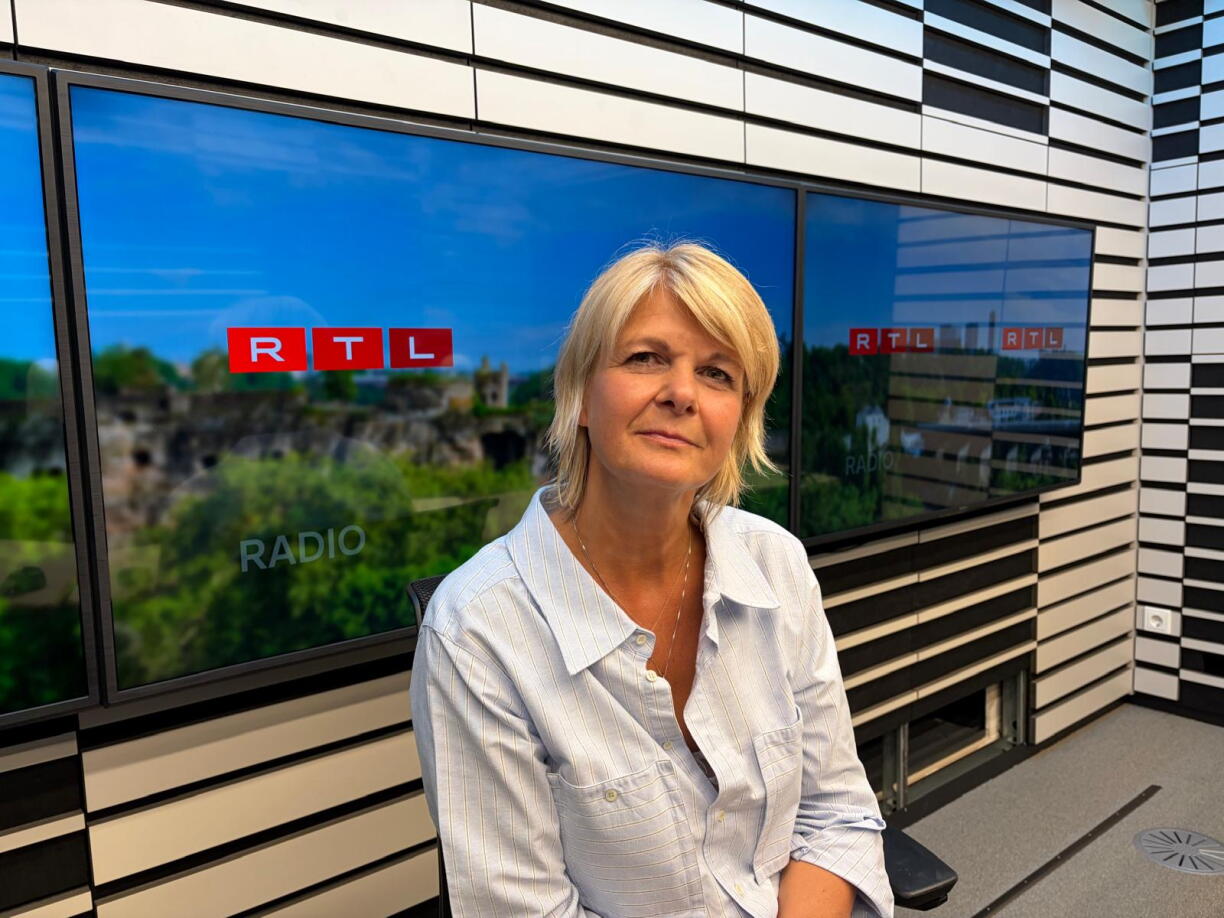
Aline Müller, CEO of the Luxembourg Institute of Socio-Economic Research (LISER), noted that Luxembourg's current situation is complex and requires careful, fact-based work. She addressed Prime Minister Luc Frieden's State of the Nation speech in conversation with RTL on Wednesday.
Müller stressed that Luxembourg, like many other countries, was facing a difficult economic and social environment. Asked whether the Frieden's speech had been too positive, she said that was more of a political question than a scientific one.
The key issue, in her view, is not only how problems are presented, but how the work continues from here.
Müller said housing should not be seen only as a question of buildings or property, but as one of the key factors shaping social cohesion in Luxembourg.
If people cannot find affordable housing, she said, they cannot live and work in the country or contribute to the economy. Housing affects families, the labour market, mobility, health, and trust in institutions.
She acknowledged that the speech contained little that was new on housing. Frieden mentioned administrative simplification, the legal framework for VEFA projects (off-plan purchases), and measures to unblock stalled projects. Müller described these as crisis measures, but warned that they do not solve the structural problem.
However, she also welcomed what was not announced. She said it was positive that no further tax advantages for housing were presented, as research in Luxembourg and abroad shows that such measures may stimulate buyers in the short term, but do not solve affordability problems and can even push prices higher.
For Müller, the deeper question remains land. She said the debate often focuses on the edges of the problem rather than the whole picture. The real issue is how Luxembourg deals with land and the fundamental factors that shape housing prices, she said.
On poverty and social cohesion, Müller said the State of the Nation address was one of the speeches in which social cohesion had been mentioned most clearly, either directly or indirectly.
For a research institute such as LISER, whose work focuses heavily on inequality, poverty, and living conditions, this was a welcome point. Müller also praised the national anti-poverty plan, saying it appeared to be grounded in data, analysis, and a real understanding of people's situations.
She said the plan does not simply add new forms of support, but also seeks to simplify, automate, and combine existing aid schemes. These approaches, she noted, are in line with scientific findings.
However, Müller stressed that such policies must be evaluated over time. Effective policy, she said, cannot be improvised, adding that it needs to be tested, assessed, and improved continuously.
Frieden's speech repeatedly referred to the tripartite talks, social dialogue, and the responsibility of the social partners. Müller said she was somewhat surprised by the idea that employers, unions, and the government should be expected to be aligned from the outset.
She said social dialogue does require trust and a sense of shared responsibility. But, she noted, from a scientific perspective, it does not work because all interests are identical at the start. What matters is that all sides agree on the common problem they are trying to solve, according to Müller.
Different partners may interpret the diagnosis differently, and those differences need to be accepted and worked through, she said. In that process, Müller stressed that the state has a special role. It is not only there as a funder, she argued, but also to ensure clear rules, transparency, and a shared factual basis.
According to Müller, research shows that if there is too much asymmetry of information, meaning that different actors do not have access to the same facts, they cannot work together properly.
Artificial intelligence was also discussed in Frieden's speech, including the introduction of a new chatbot for ministries and public administration.
Müller said AI should mainly be understood as a force that will transform work, rather than simply destroy jobs. Technological progress has always raised fears about job losses, but history shows that new types of work are also created.
She said AI may replace certain tasks and some professions may disappear, but the broader effect will be a transformation of work. Luxembourg, she added, should not underestimate the strengths it already has.
Müller pointed to the country's highly skilled and diverse workforce, including residents, cross-border workers, people educated in Luxembourg, and immigrants who have brought expertise to the country. These skills, she said, should be used to manage the AI transition collectively.
Research shows, she concluded, that AI is more likely to become a driver of productivity in organisations that work collectively and involve people in the transformation, with the same applying to a country.





