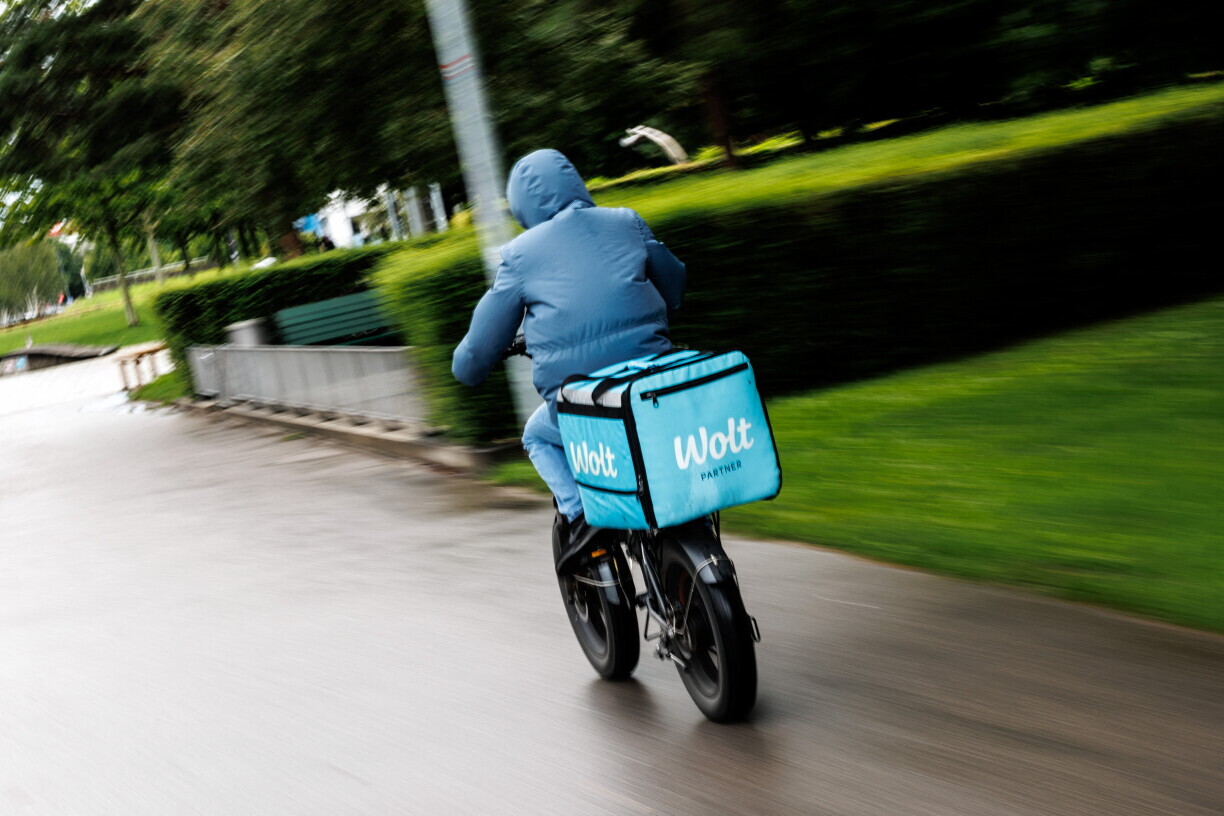
A few taps on a familiar app and, usually within an hour, a meal arrives at the door. Yet the earnings and working conditions of the delivery riders who bring those meals are questions that often go unasked. On Wednesday, a meeting at the Ministry of Labour addressed these very concerns, concluding that food delivery services should face stricter scrutiny to ensure compliance with Luxembourg's labour laws.
Minister of Labour Marc Spautz has signalled his intention to meet the minimum demands of the Independent Luxembourg Trade Union Confederation (OGBL) and the Luxembourg Confederation of Christian Trade Unions (LCGB). For now, the focus is not on platform work as a whole or the relevant EU directive, but specifically on the company Wolt, whose delivery riders recently voiced their dissatisfaction. Around 160 riders launched a form of strike action on 12 June.
Minister Spautz said: "Right now, it is primarily about undeclared work. It is also about how the people in this sector work, and whether they are respected. These are the issues we are tackling now."
The minister indicated that the Inspectorate of Labour and Mines (ITM) should carry out increased checks, though the details remain to be clarified.
The trade unions supporting delivery riders have spoken of extreme working conditions, with riders working long hours for little pay. Paul Glouchitski of the LCGB noted that most delivery riders work more than 12 hours a day. According to Glouchitski, they are put under pressure, with threats of being removed from the platform if they fail to generate a certain turnover. "They are under pressure," he stressed.
Despite these demanding conditions, riders often end up with just €2,000 a month – significantly less than Luxembourg's minimum wage. They must also cover their own costs, as one delivery rider, who wished to remain anonymous for fear of losing their job, told RTL.
The anonymous rider, who delivers orders on a scooter, explained: "I have to pay for my petrol and maintenance myself. And we are extremely dependent on the weather. When it is as hot as it is now, or when it rains or snows heavily, that has an impact on our work and how well it goes."
David Angel from the OGBL also highlighted the extreme demands of the job, noting that the situation becomes particularly problematic when companies register on delivery platforms and then subcontract the work.
Angel explained that most riders on the platforms are classified as self-employed – though in the OGBL's view, they are "fake" self-employed, as they have little choice over when, how long, and for whom they work. In recent years, however, there has been a growing trend of individuals registering a company on the app and then employing others through it. Angel described this practice as "the biggest grey area." The OGBL is aware that many illegal practices in the sector are concentrated in this specific niche, as the platform can absolve itself of responsibility by claiming it simply works with a company over which it has no direct influence. "Behind the scenes, these companies then offer the absolute worst working conditions," Angel criticised.
Recruitment is reportedly even taking place at refugee facilities, targeting some of the most vulnerable individuals. While the Wolt platform is not directly responsible for this practice, the company has also been reluctant to discuss its own working structures. When approached for comment, the communications officer for Wolt Luxembourg stated that, due to time constraints, no interview with a manager could currently be arranged, but provided a written response from the company.
In the statement, Wolt said the company supports the EU Directive on Platform Work and believes its implementation should reflect how platform work functions in practice. The company stated it takes feedback and concerns seriously and had invited delivery riders' representatives for discussions. Wolt added that it had not observed a gathering outside its office on 12 June, that delivery times had remained normal, and that the number of orders that day was close to a record high. The company said a delivery rider's earnings depend heavily on when and where they work, and stressed that active delivery time should not be confused with the time spent online. Wolt said it wanted to remain engaged in a constructive, fact-based dialogue aimed at protecting people while preserving flexibility.
The trade unions are due to meet with a firm hired by Wolt for an exchange on 1 July.
While the unions acknowledge that increased checks would be an important start, they argue that delivery riders are not genuinely self-employed and should therefore be granted employee status by law. The OGBL and LCGB have both called for such a change.
Minister Spautz has confirmed that it is beyond question that Luxembourg will implement the EU Directive on Platform Work, speaking in the context of the protest by Wolt delivery riders.





