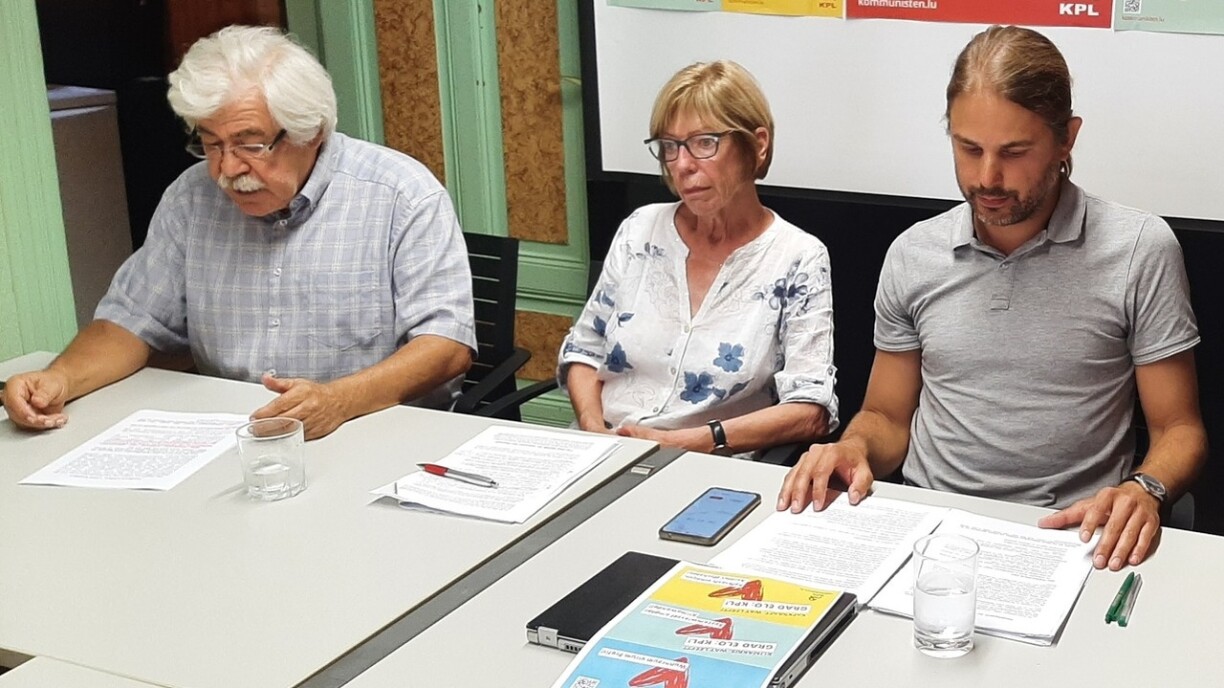
The KPL sees these as realistic points: in terms of the index, they call for an increase to 8 indexations in line with inflation instead of the current 2.5, and also demand a 20-percent increase of the minimum wage.
To overcome the housing crisis, the KPL believes the state and the private sector need to cooperate to build 50,000 public housing units over the next ten years. The rent would then be capped at 10 percent of the tenant's income.
The party foresees the remaining costs to be covered by capital taxes, which banks and larger companies should contribute to in a greater extent than today. The latter would then also be socialised, adds Alain Herman when explaining the election programme.
"Socialisation does not mean that a company is run by the state, civil servants or a management, but that the employees who generate added value for a company also have a say. That they can then also take the strategic decisions in the company, take part in the discussions and also have a right of veto."
A further concept the party put forward is the so-called state investment fund. This would allow the state to invest in sectors that are not interesting for private companies because they are not profitable, explains Ali Ruckert.
"This fund would bring together billions of euros, which would be a great basis for systematically investing in areas where the state believes it is necessary to invest and create jobs."
In terms of foreign policy, the KPL demands withdrawal from NATO, the dissolution of the army, and a halt to the supply of money and weapons to Ukraine.
All candidates at a glance
Key takeaways on voters' decision-making process





