The POLINDEX 2023 study is commissioned by the Chamber of Deputies and delves into recent electoral patterns in Luxembourg. Conducted in collaboration with the University of Luxembourg and the Ilres Market Research Institute, it uses interviews from 1,000 voters and 500 foreign residents. This part of the report focuses on the motivation and deliberation-time behind voters' decision-making process.
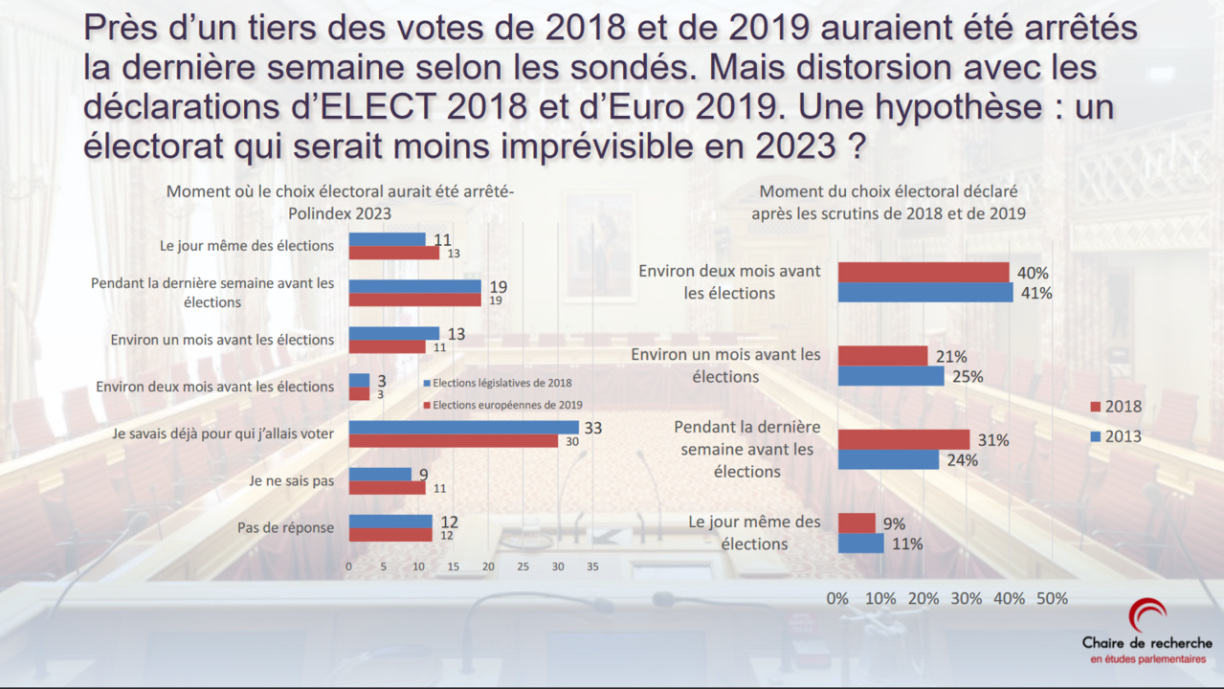
Read also: POLINDEX Survey part 1Data from the last European elections in 2019, as well as the most recent national election in 2018, indicate that 30% and 33%, respectively, knew immediately who they would vote for. A fledgling 3% made their decision two months ahead of election day.
Should the upcoming election be comparable in any way, the official campaign period will have little influence over a third of the population. In 2018, only about 13% made up their minds one month before election day, 19% during the last week, and 11% on the day itself.
According to political scientist Philippe Poirier from the University of Luxembourg, there are three main reasons for people to decide so late. For one, first-time voters - mainly young people and recent citizens - take longer to decide. The second group of late-deciders are those less inclined to fully identify with one single party or political orientation.
And last of all: "It's that the complexity of economic, political, environmental, and other issues means that some voters, in the context of compulsory voting, are simply finding it harder and harder to make up their minds."
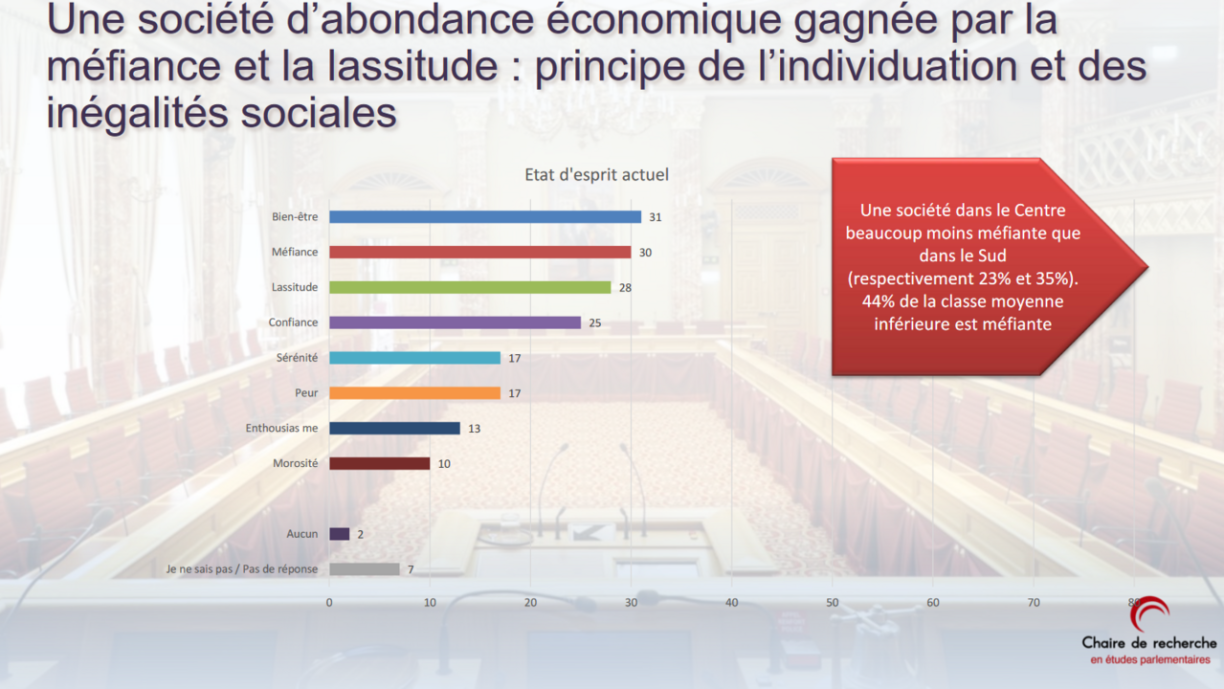
Ahead of the last national election, 31% of voters said they were satisfied or optimistic. At the same time, 30% indicated they felt suspicious.
Poirier argues that polarisation affects people according to age, income, and geographical location. Elderly people in particular are more suspicious, while those aged 35 to 50 tend to be most satisfied with their lives.
Unsurprisingly, greater income means greater satisfaction among voters. Close to 40% of households earn more than €6,000 per month. Those below €4,000 per month are more prone to be generally distrustful.
What is more surprising for a small country like the Grand Duchy is that there are significant differences between election districts. Poirier noted: "The most distrustful or worried are found, above all, in the southern and northern constituencies. This is not the case or is much less the case in the Centre and even more so in Luxembourg City."
Housing was the most pertinent issue for voters ahead of the last election, something that will likely remain unchanged this year. Supporters of the major parties represent the biggest faction of homeowners, while a majority of those supporting The Greens and The Left are renters.
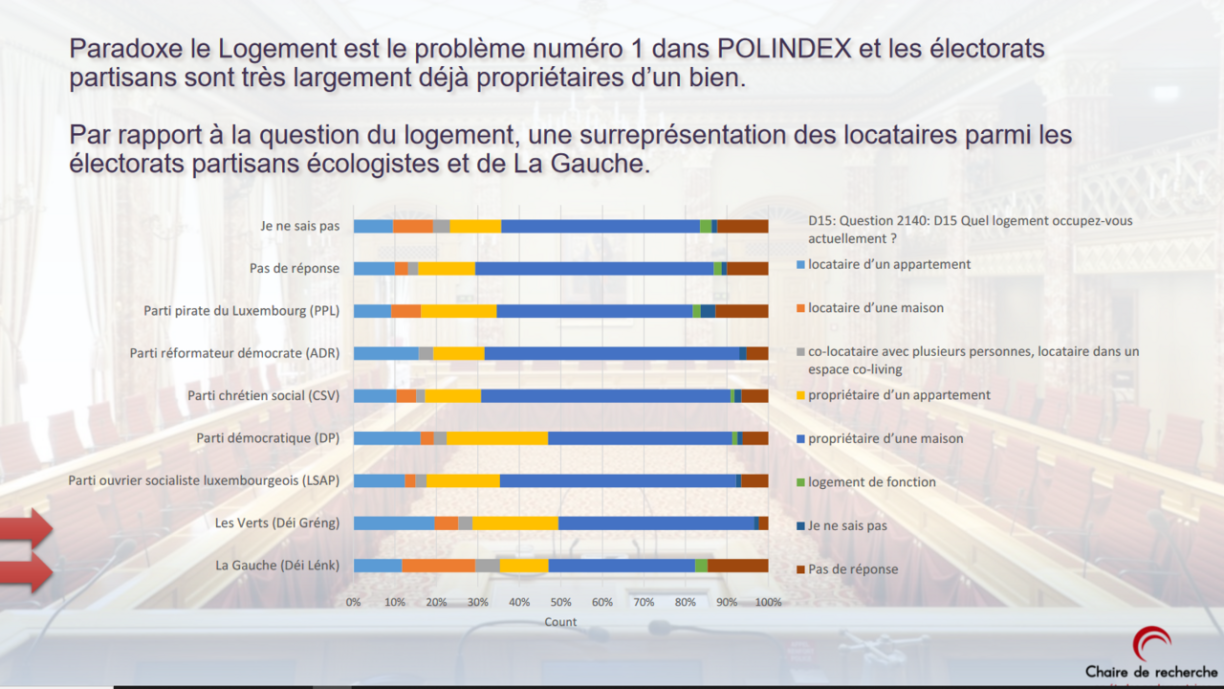
The latter parties are therefore more likely to propose measures that would benefit renters rather than homeowners. Nevertheless, the overall issue of housing is expected to be a priority for all of the parties in the race.
Politicians now have five weeks left to convince voters of their vision for the future.





