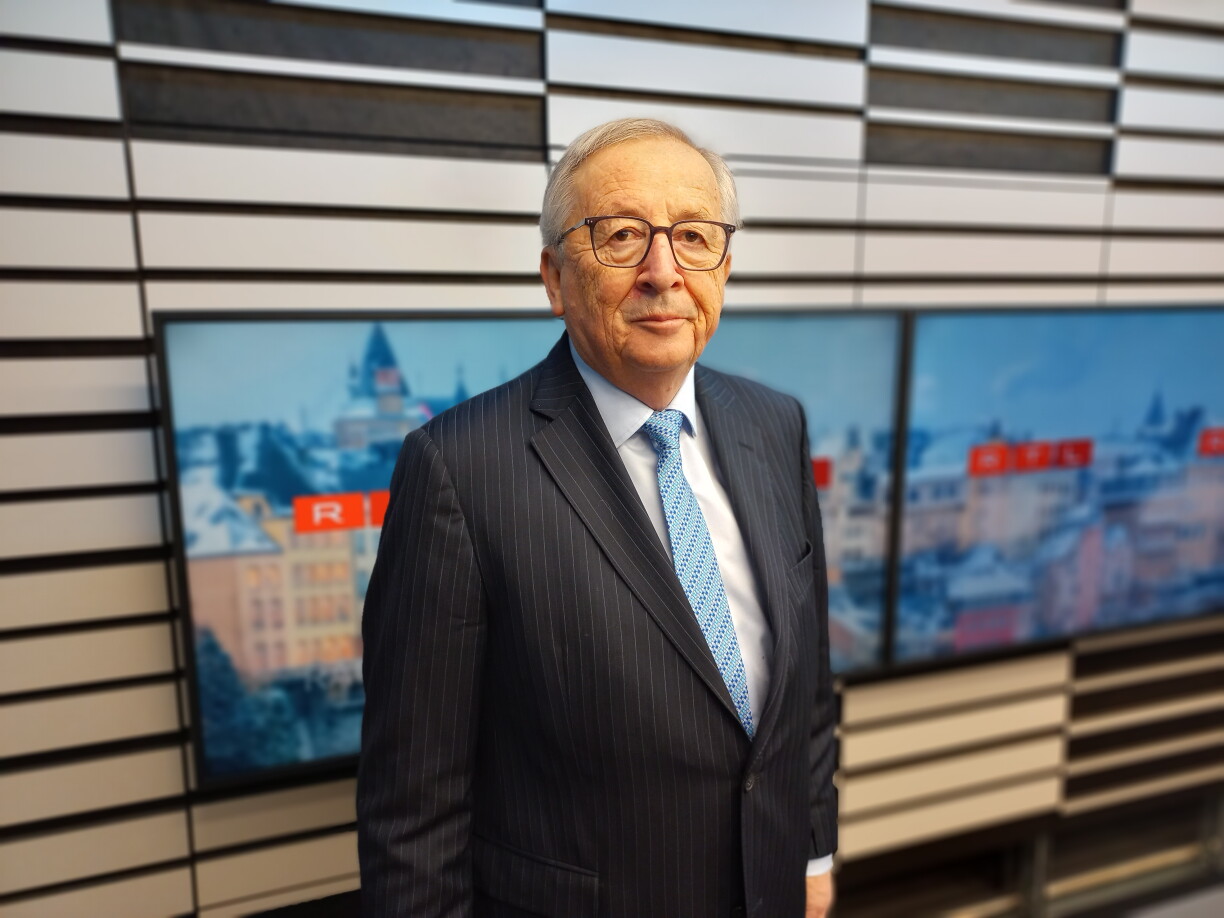
Speaking on RTL's "Background am Gespréich" programme, Former Prime Minister and ex-European Commission President Jean-Claude Juncker described the tripartite as the right mechanism for responding to the economic and geopolitical challenges currently facing Luxembourg, although he believes it should have been convened sooner.
"I think the tripartite, by its composition, is the right consultation body and the right compromise factory for Luxembourg", he said, praising Prime Minister Luc Frieden's decision to broaden discussions beyond energy costs to include a wider range of issues affecting households and businesses.
While tensions between government, employers and unions had intensified in the months leading up to the negotiations, Juncker insisted that claims of a looming social crisis had been exaggerated.
"A social crisis, as long as it doesn't exist, should not be talked into existence", he cautioned, arguing that repeated warnings risk creating unnecessary anxiety among the public. He added that there had been "a lot of nervousness and a lot of played-up nervousness" before the talks even began.
Juncker welcomed the outcome of the negotiations, describing the agreement as substantial and balanced. He particularly praised efforts to revive regular dialogue between social partners and pointed to the package's broad range of measures.
Among them is a planned €200 increase in the minimum wage through a tax credit mechanism. Juncker said the measure was justified, though he stressed that policymakers must remain mindful of the impact on businesses.
"It is a good decision", he said, noting that minimum wage increases often trigger wider salary adjustments throughout companies. Small businesses in particular should not be overburdened during a period of economic uncertainty.
Despite supporting the measure, Juncker acknowledged that the 'working poor phenomenon', where many workers still struggle to make ends meet, also is a reality in the Grand Duchy. However, he argued that Luxembourg's social model must be viewed as a whole, citing free public transport, free schoolbooks and subsidised childcare as factors that improve living standards.
The former labour minister also strongly defended Luxembourg's automatic wage indexation system, calling it a cornerstone of social peace. However, he suggested that in times of crisis, policymakers could consider limiting index-linked increases for the highest earners.
"I don't need an index adjustment on my pension in the middle of a crisis", he said, arguing that full indexation for very high salaries raises questions of fairness.
Juncker stressed that lower- and middle-income workers should continue to benefit fully from indexation, but questioned whether the same approach should apply to top earners. He argued that indexing high salaries generates significantly larger gains than those received by minimum wage workers, making a temporary cap a matter of social justice during difficult economic periods. Such a move, he suggested, could also help contain labour costs for businesses while preserving the purchasing power of workers who need it most.
Looking beyond wages, Juncker identified unemployment as one of the country's most pressing challenges. He expressed particular concern about youth unemployment, saying Luxembourg now faces one of the highest youth unemployment rates in Europe. "That should be food for thought", he lamented.
"The people who have the biggest problem in this country are those who do not have a job", Juncker added, welcoming the fact that employment issues formed part of the tripartite discussions.
For Juncker, maintaining social dialogue and focusing on employment remain essential if Luxembourg is to navigate an increasingly uncertain economic environment.





