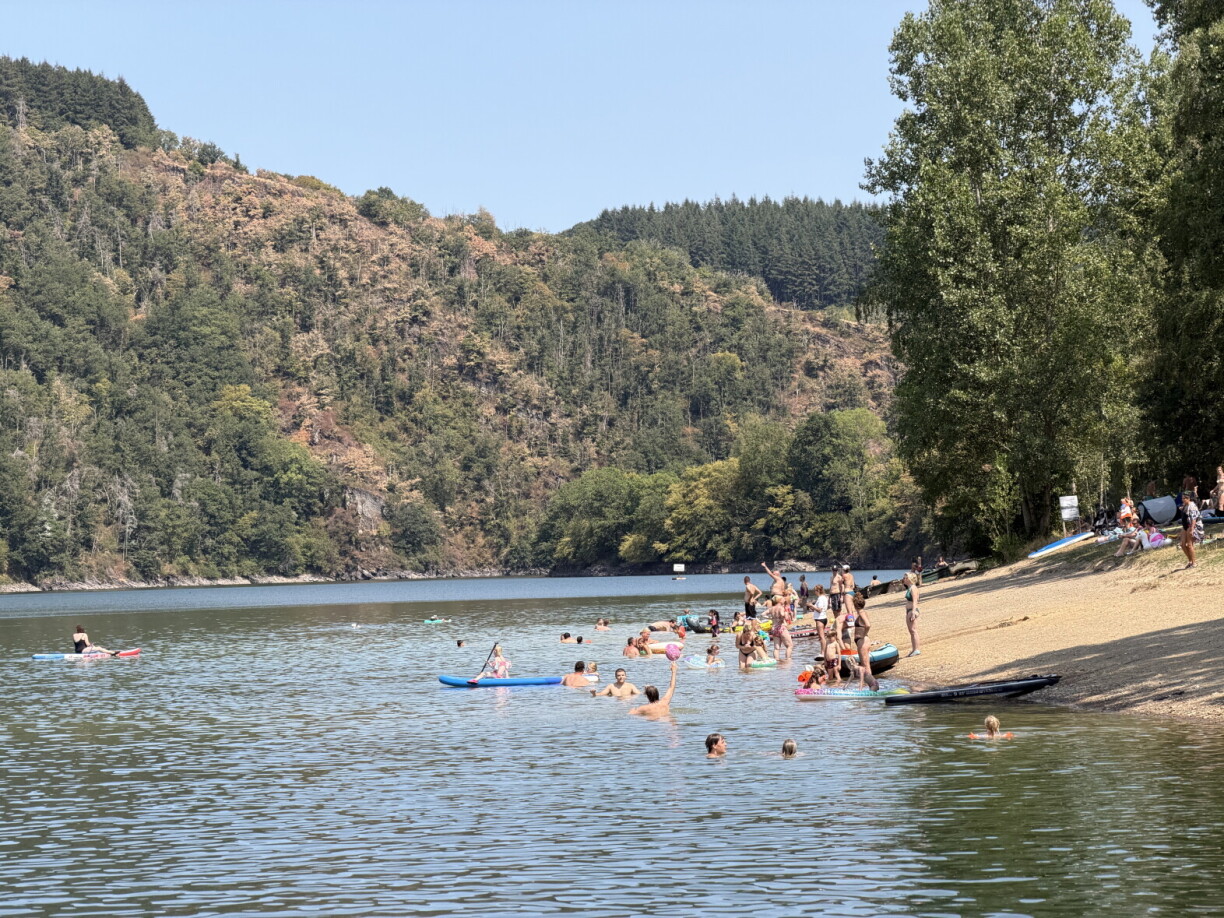
As temperatures hit 30°C or higher, the number of visitors to the popular swimming spot increases, with thousands heading to the beaches around the lake to cool off.
But residents in the neighbouring villages are suffering from the influx of cars and people, calling for a national concept to lessen the impact on the environment.


On Saturday 25 July it was unusually quiet in Lultzhausen, with no cars circulating around the village in an endless pursuit of parking.
Since this weekend, the council has taken measures to assist residents. The municipality has put up barriers and engaged security staff to keep the village's roads clear. It is a step in the right direction, says resident Pierre Wolff:
"I've lived here all my life, first in Insenborn and then in Lultzhausen for the last 30 years. The evolution has been such that we have increasing number of visitors coming here, mimicking the country's development and population growth. But the infrastructure and signage around here is still the same as 30 years ago. There really needs to be some changes, a new concept to ensure we can manage the traffic, cars and people properly in these villages. It needs to work for residents and for people visiting to be able to find the beaches and somewhere to park."
As soon as temperatures rise, from May to September, people begin flocking to the lake. Not just residents, but also tourists from Belgium, the Netherlands, and France. The issue arises with people who are unfamiliar with the local area, resulting in crowds alongside the dangerous N27.
Wolff says: "The first car park in Insenborn is called 'am Kéilert'. I am in favour of the Luxembourgish language, but I don't think the car park should be called that. Foreigners, in particular French speakers, will be looking for a 'plage' car park, for example."
From signage to a clearer parking system, and regulations for the beaches and surrounding areas, residents are calling for a national concept to ease the issues. A current example is the fact that the local municipality has banned barbecuing or fires on the beaches since Friday, due to the increased risk of wildfires.
Pier Bormann, Insenborn resident and former mayor, says:
"I checked this morning because I took the kayak across the lake. In Liefrange, for example, there are no bans, everyone can barbecue or start fires. The same applies to Rommwiss, and around the bridge. I saw people using barbecues there this morning. So it needs to be the same across the board. I think the nature park could take on a mediation role to bring all the municipal councils together on the committee and ensure we all follow the same rules."
Bormann and Wolff agree on one point.
"The issue of the lake can't be managed by Esch-sur-Sûre council alone, " says Bormann. "It has to be regional, or even national, in order to find a solution. That seems to be a problem because the financial resources simply aren't there."
Residents in both villages are calling for more sustainable tourism, asking people to respect nature and the local residents.
Bormann also questioned why there is still no cycle path around the lake, in the interest of soft mobility and fewer cars.





