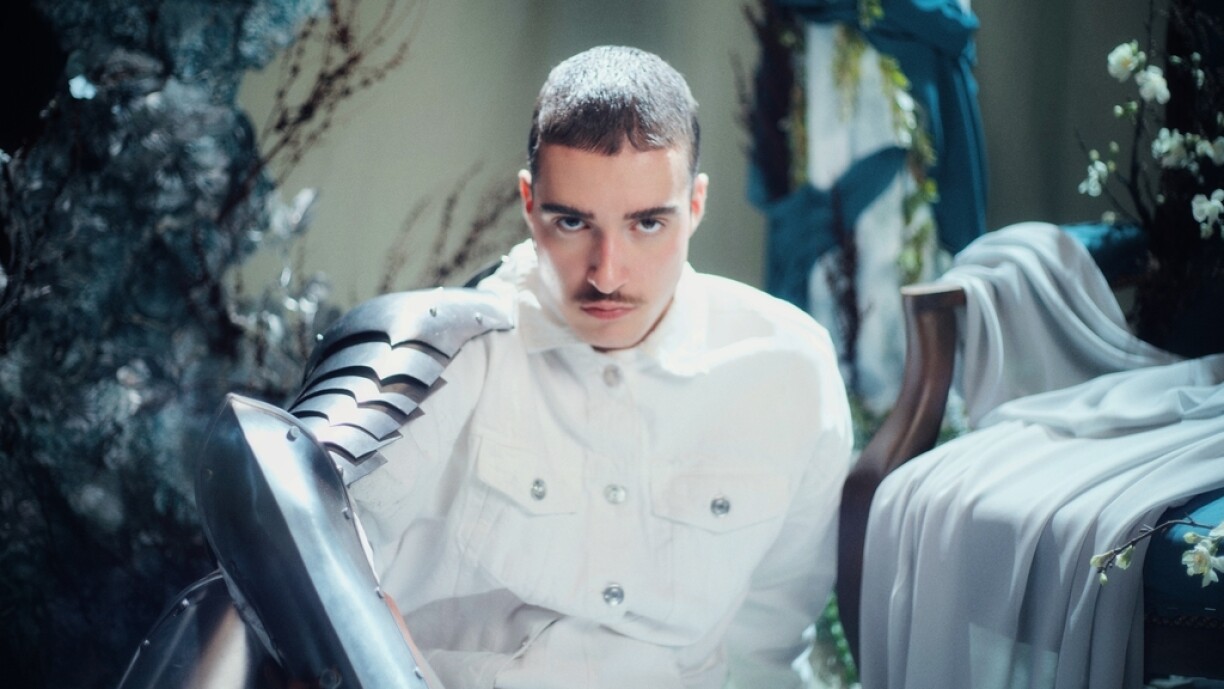
Adriano, 24, is part of the LGBTQIA+ community. In an interview with our colleagues from RTL.lu, he shared his journey as a gay man, shedding light on the challenges and successes experienced within the community, and discussed his perspective on identity, representation, and the progress made in Luxembourg.
From the outset, Adriano made it clear that his views are his own and don't represent the entire LGBTQIA+ community: "I am always told that I am one of those who represent the community in Luxembourg. But I don't feel like that at all. I'm actually part of a community which doesn't have a representative."
When questioned about the various categories and labels within the community, Adriano acknowledged the desire to find a sense of belonging and representation. "Everyone in every category wants to feel represented," he says, "that's why a letter is sometimes added to the collective term." While he recognises the importance of inclusivity and understanding, he also understands the argument made by some that too many micro labels could lead to an increasingly divided community.
For this reason, Adriano's personal stance is live and let live: "For me personally, it doesn't matter if it's LGBTQ or LGBTQAI+ or whatever. I know what it's about. For me, that's enough." Whatever label is used, the main point, according to Adriano, is that it is understood to refer to "a community of people who do not fit into the heteronormative class." He urged unity within the community, discouraging attacks on individuals for omitting or adding letters, as the members of the community "already struggle with enough problems on a daily basis. We don't have time to argue with each other."
Reflecting on his personal journey of self-acceptance, Adriano revealed the difficulties he faced in naming his sexual orientation. He admits, "I made it very difficult for myself. Now, at 24, I think it could have been much easier."
Growing up, he struggled with understanding his differences and suppressed his identity until the age of 20: "I knew very early on what I was, but it took me almost 20 years to admit it to myself." Reflecting on why he might have hesitated to come out, Adriano says, "maybe it had something to do with my environment or the climate in secondary school, which was a bit queerphobic. The fact that I didn't want to disappoint anyone also played a role."
Regarding the current situation in Luxembourg, Adriano acknowledged progress but highlighted the existing disparities. While legislation protects LGBTQIA+ individuals, he shared instances of discrimination he still encounters in daily life: "When I walk through Luxembourg City, people still shout things after me. I was once with my boyfriend in a car park, we said goodbye, and someone pointed at us. When I hold someone's baby or say hello to a child, I see the more defensive reaction of the mother."
At the same time, Adriano acknowledges the privileges he holds: "I'm white, I'm middle class. If I wasn't gay, I would have won the lottery of life. If I was a person of colour, if I had mental problems or a disability for example, it would be very different for me. Because then you're gay plus something else, which is not considered the norm in society. But I am gay and white, and that plays a big part in my daily life, because it is easier."
Despite the favourable circumstances for members of the LGBTQIA+ community in Luxembourg, Adriano encourages continuous activism and engagement. While he praised the representation, particularly in the person of Prime Minister Xavier Bettel, as well as the laws and regulations that protect the community, Adriano cautions that "we have to continually make sure that we don't lose all these protections." He points out events in other European countries have shown that change can sometimes happen overnight.
Adriano stressed the importance of political involvement, particularly among young people, to safeguard the progress made and prevent any regression. For the same reason, he does not understand why young people "waste their vote by not voting."
Adriano's commitment to social issues is evident in his musical contributions. He recently wrote two songs in Luxembourgish for "Eis Stëmmen" ("Our Voices"), a project launched by RTL.lu in the context of which our colleagues asked several Luxembourg-based musicians to compose songs about topics relevant to the election year.
RTL-News: GBTIQ+: Wéi wichteg ass den Numm vun der sexueller Orientéierung?





