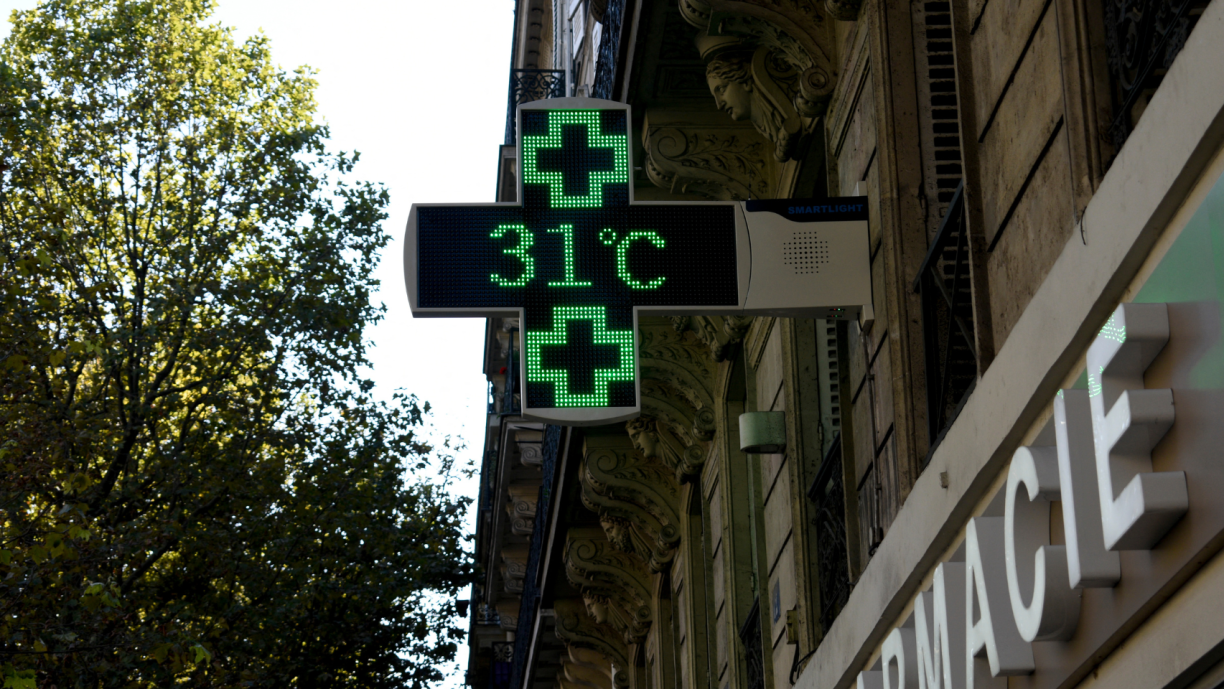
And if recent trends are anything to go by, 2024 could well be up there among the hottest years. Copernicus, the European service for climate change, has stated that last year was the warmest year globally since records began.
Much warmer temperatures have been a feature of recent summers in Luxembourg, with 2023 recorded as the fourth hottest year.
So, are we in for a heatwave this summer?
While it is nigh impossible to predict this so far in advance, Luca Mathias, Meteorologist at MeteoLux, told RTL Today, the likelihood is quite high due to climate change that 2024 could be another record-breaking year.
"We can see that days with +30 degrees are becoming more frequent, heatwaves are also happening more often. The likelihood is much higher that we will get a heatwave in this current climate than 30 years ago.
"June and September were the standout months of 2023. June was the warmest, sunniest month on record, equalling the temperature record set 20 years previously in 2003. Last September broke all records, being the warmest since records began in 1947."
Mathias explains that these findings are based on the values of one year compared to a 30-year reference period.
"The current reference period is from 1991 to 2020. When compared to the last three decades, average temperatures for 2023 were approximately one degree above the 30-year average. It was the fourth warmest year since 1947."
However, with weather forecasting there is no crystal ball for the long-term outlook in 2024.
"To do a forecast for the next year is always difficult. Accurate forecasts only have a range of three to five days, sometimes up to seven days, depending on if there is a stable high pressure system," says Mathias.
So, the long-range forecast apps we consult are effectively guesswork based on a "raw model output", he explains. "We can state general trends but for a more detailed forecast it’s impossible."
As far as other extreme weather events go, the probability of them occurring is "more likely" due to climate change, but it is not the only factor and doesn't mean that they will occur every year, he states.
"It just means that in a ten-year period, in the colder climate there would be the probability of three out of ten years this thing could happen, but in a warmer climate it means that in seven out of ten years an extreme event could happen such as a heatwave. It's a probability thing. So, it's more probable than 30 years ago."

The most extreme weather event Mathias has experienced working as a meteorologist was the tornado that struck this former hometown of Bascharage in August 2019.
Although tornado risk in general is low and a rare phenomenon in Luxembourg, being as prepared as possible in the event of one striking is paramount to keeping people and property safe, he says.
"It's a complex phenomenon. It's very difficult to forecast a tornado because you need to be active on the ground. We see a thunderstorm coming up from, for example, the north of France and its characteristics mean there may be a risk of this thunderstorm producing a tornado, but we don't know because we don't have verification on the ground.
"For example, in the US there are a lot of storm chasers who give the national weather service a lot of information. For us, from the office, it’s always very difficult to say."
While strong tornadoes are rare in Europe, estimates are that between 200 and 400 weak to moderate tornadoes occur every year across the continent, he adds.
Where weather warnings are concerned, meteorologists often tread a fine line, he explains.
"We try to not issue too many weather warnings but on the other hand we want to keep people safe and we have the responsibility to inform people especially with thunderstorms sometimes they are very isolated or local."
Thanks to GouvAlert, Luxembourg's answer to efficient emergency communication in the wake of the 2021 floods, a more unified and effective alert system will be in place by July this year.
"There is a lot going on in the background to improve communication with the general public about weather warnings. SMS and push notifications will be more regional, in the future we will be able to warn these people living in that specific region."
The reality of climate change is all around us and impacting on our day-to-day weather, he believes.
"For extreme events such as heatwaves and long dry spells, I think it is important to be aware that climate change plays a role in these unusual weather events. Significant events such as a lot of rain or heatwaves are not normal. Thirty years ago, it was not that likely that these events would happen."
So, on this hot button issue, what conclusions can we draw from climate change and individual weather phenomena?
Mathias cites a field of study gaining momentum called attribution research, which tries to ascribe extreme events to climate change. Through this research, European scientists found that the major floods in July 2021, which saw fatalities in Germany and Belgium with Luxembourg also being impacted, were more likely to happen due to climate change-
"With one heatwave, the scientists found that it was 100 times more likely to have taken place because of climate change," he adds.
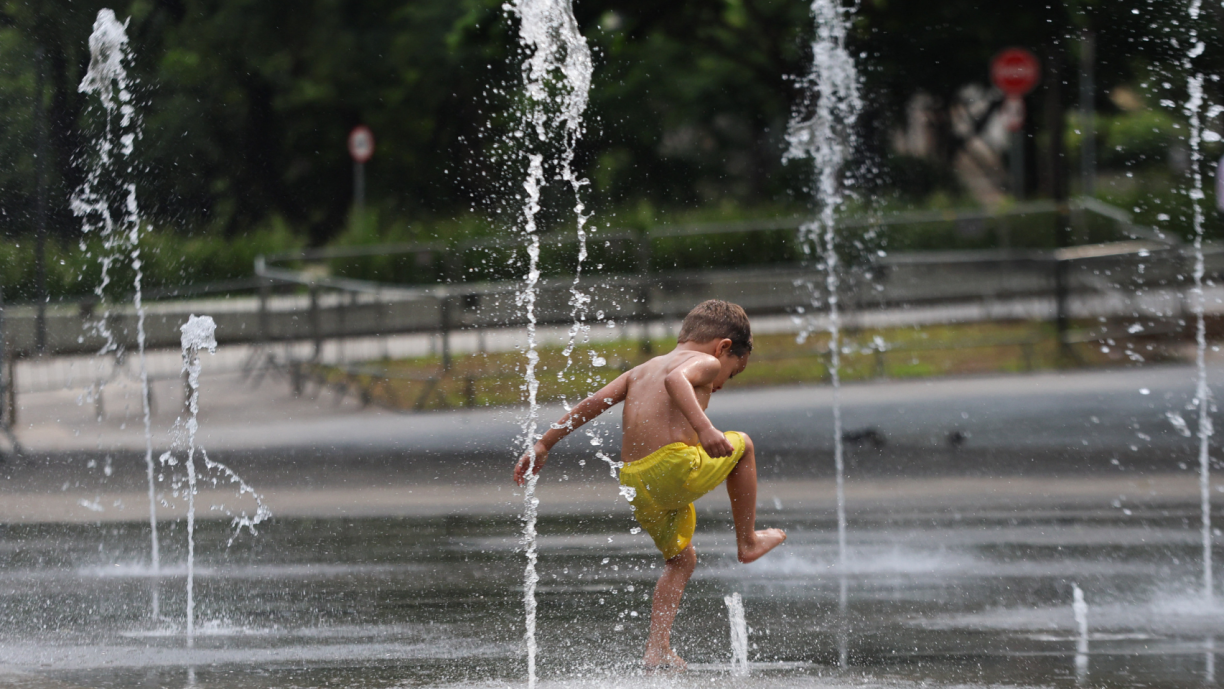
While Mathias agrees there is a crisis globally concerning our weather patterns due to global warming, he feels that we should not lose hope and continue to try to do better.
"Even if we break records year after year, we should still try to keep our heads up and to invest in more climate-friendly energies and infrastructure."
In addition, he's optimistic that Luxembourg is making strides in its climate change mitigation measures.
"There is a lot to do and I still think we can achieve it. Free public transport is, for example, a very good thing. Also, the bonus you get if you buy an electric car or if you install photovoltaic panels. I think a lot has been done but in the end it's a global effort and everyone has to fight together."





