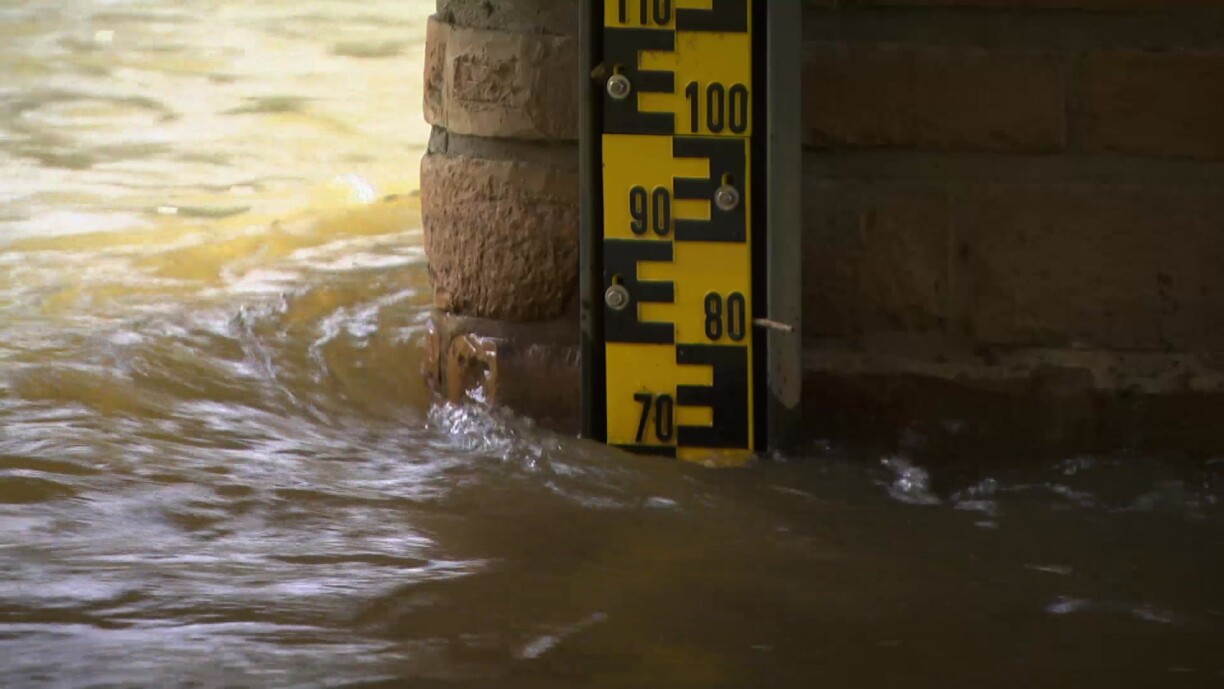
Despite an exceptionally wet winter, particularly January, groundwater supplies in Luxembourg remain low.
A sunny February, as well as little precipitation throughout the spring and summer of 2022, have left their marks. This phenomenon will become more frequent as a result of climate change, experts warn.
While there is sufficient drinking water available right now, alternatives must be looked into the guarantee safe supply in the future.
An impact of climate change is that vegetation periods not only last longer but also start earlier, which is problematic, says Jean-Paul Lickes, Director of the Water Management Authority: "This means that the window of opportunity that allows groundwater to recharge, is getting narrower and shorter."
As a result, "we depend on a lot of rain in the right months", Lickes explains. "The soil must be wet in order for rain to infiltrate towards the groundwater." Ideally, there would be a snow cover throughout winter, which could then slowly permeate the ground, according to the director.
Despite high amounts of precipitation in autumn and winter, lots of rain in a short time period is not always beneficial.
"Due to the dry summer, the soil had grown together almost like concrete," Lickes notes.
There is, however, no risk of a shortage for the time being, as groundwater only accounts for half of Luxembourg's drinking water supply. The other 50% comes from the Upper Sûre Lake, which still contains enough water.
However, if the population continues to grow, it will be necessary to think about alternatives, such as treating the water from the Moselle. At the moment, studies are being conducted to determine how water transport from the south-east of the country to the area around Luxembourg City could be structured.
Full report by RTL Télé (in Luxembourgish):





