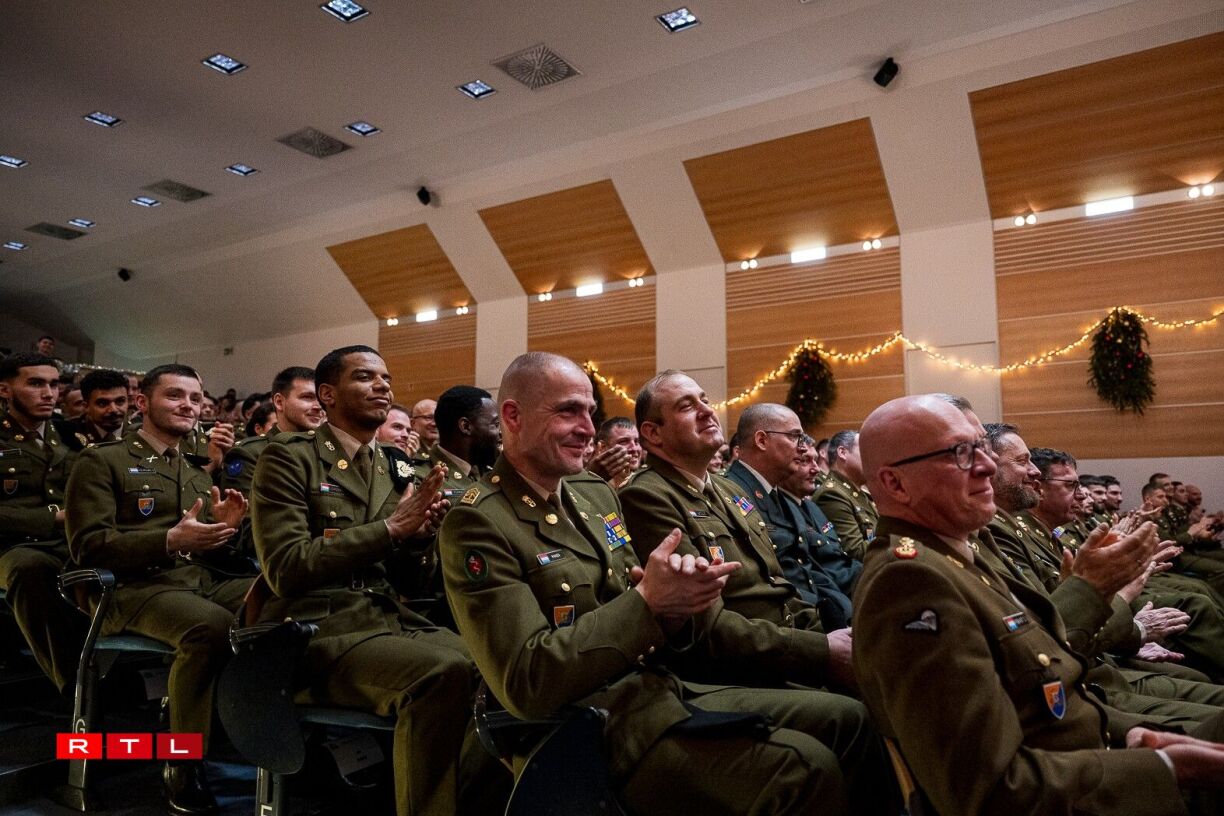
Luxembourg's army gathered for its traditional Christmas vigil at the Herrenberg military centre on 19 December. Looking ahead to 2026, General Steve Thull, Chief of Defence, said the ambition remains to match or surpass this year's recruitment record of 245 soldiers. Thull hopes to reach at least 280 new enlistments in 2026.
The measures package recently approved by the Government Council, now awaiting a vote in Parliament, is expected to support that goal. Defence Minister Yuriko Backes attended the Christmas gathering, where soldiers made no secret of their enthusiasm for what they see as an early gift.
One measure would guarantee every soldier a minimum gross increase of €530 per month. At the Herrenberg military centre, it was difficult to find anyone who was not delighted. Several soldiers stressed that the pay rise recognises demanding work that requires professionalism and resilience, and that higher salaries will help make the profession more attractive.
While pay is central, Backes emphasised that the package goes far beyond financial incentives. She explained that language requirements will be eased: Luxembourgish will remain essential, but candidates will no longer need to prove proficiency in both French and German, as one of the two will suffice.
She added that volunteer soldiers who complete four years of service will be able to apply for Luxembourgish nationality without needing to be residents, saying these are just some of the adjustments designed to modernise the profession and widen access.
General Thull said the proposals align closely with what the army and defence leadership themselves had recommended, and arrive at a crucial moment as the force undergoes rapid expansion. With new defence commitments emerging, he argued that the army must recruit and retain enough personnel to operate a growing range of capabilities.
The expansion of personnel is vital for meeting NATO targets. With war back on the European continent, Thull noted that there is now a broader recognition that Europe, and Luxembourg within it, must significantly strengthen its defence posture. The new targets are substantial and require the army to branch out into new operational areas, he said.
Thull explained that four years after Luxembourg established its joint Belgian-Luxembourg battalion, the country is now moving into integrated air and missile defence, which represents a completely new field. He added that this opens the door to attracting entirely new profiles.
He intends to push these efforts forward until 1 October next year, when he begins a new chapter following his retirement. For now, he admitted he has had little time to reflect on life after the army, with roughly nine months still to go before stepping down.





