Luxembourg Defence Minister Yuriko Backes stressed last week that the country's collective security now depends more than ever on the voluntary commitment of the men and women serving in the armed forces. Her remarks came after the government approved a package of measures aimed at making military careers more attractive.
The scale of the challenges ahead was highlighted by General Steve Thull during the Christmas ceremony at the Military Centre on the Herrenberg hill in Diekirch. He emphasised that the demands placed on the army are so substantial that a large number of motivated recruits will be essential if Luxembourg is to meet its obligations.
The year 2025 is likely to be remembered as a turning point for national defence. Europe is under pressure to strengthen its own capabilities in response to Russia's threats, while the United States, traditionally Europe's close ally, can no longer be relied upon with the same certainty. Luxembourg cannot sidestep these developments.
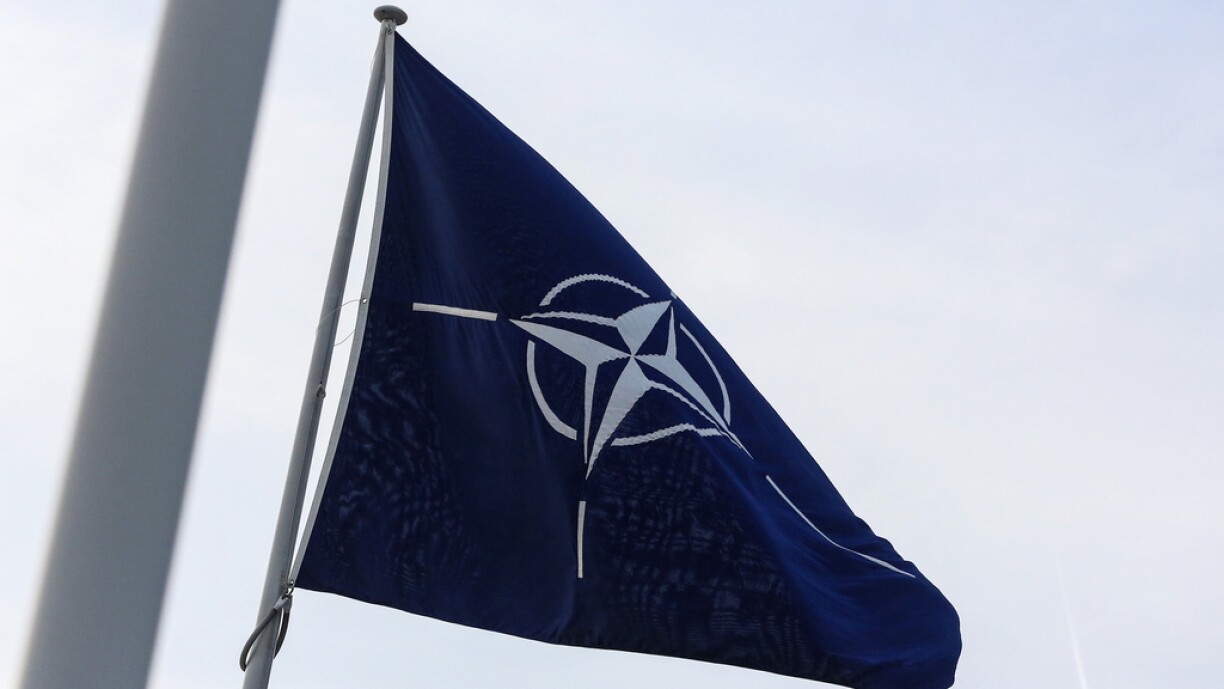
Ahead of a major NATO summit last June, Backes explained that NATO had assessed which capacities the Alliance would require, and that Luxembourg would have to assume its share of that responsibility, which represents a profound transformation for the country's defence sector.
The summit in The Hague turned into a diplomatic charm offensive designed to prevent tensions with Washington. But in the months that followed, the direction of US policy became clearer: the Trump administration repeatedly questioned and criticised the transatlantic relationship that has defined Europe's security since the Second World War.
With that, Europe has little choice but to stand on its own feet, not only militarily but also in broader strategic terms.
In this context, Luxembourg will already reach NATO's benchmark of spending 2% of Gross National Income (GNI) on defence by the end of this year, amounting to nearly €1.2 billion. That target is being met five years earlier than originally planned. Yet matching NATO's expectations would mean quadrupling the budget by 2035.
At the same summit in June, PM Luc Frieden argued that debates about percentages miss the point: what matters is the trajectory, with that trajectory requiring all European countries, including Luxembourg, gradually to invest more in their own security, because, he said, without security there can be no freedom.
Like every NATO member, Luxembourg has been given a list of required capability goals: its "targets".
Beyond moving ahead with the LUXEOSys Earth-observation satellite, Luxembourg will order a second GovSat. The country will, for the first time, develop an air-defence capability, though the system and partners are still being assessed.
The plans also include providing a deployable military hospital, a mobile refuelling unit for aircraft, as well as surveillance and combat drones. Officials are also examining whether Luxembourg Airport could serve as a NATO rear base.
Luxembourg still has outstanding commitments from the previous capability cycle, notably its joint Belgium–Luxembourg battalion with the required vehicles.
A portion of these investments will be financed through a new instrument: €150 million in "defence bonds" that the government plans to issue in mid-January.
However, the financial outlay is only one part of the challenge. To meet NATO's personnel requirements, Luxembourg will need around 650 additional service members over the next 10 to 15 years. Significant infrastructure investments will therefore also be made at the Herrenberg military centre, the firing range in Bleesdall, the Waldhof military base, and at new sites in Sanem and Arlon.
Backes noted that spending money is not the hard part, highlighting that what matters is ensuring that the investments are coherent and genuinely useful.
Luxembourg also intends for its own economy to benefit from the expansion of defence activities. This was a major reason for the launch in November of LuxDefence, an industry association bringing together more than 80 companies.
Carlo Thelen, Director of the Chamber of Commerce, explained on 25 November that they identified around 110 companies with potential in the defence sector.
He said that most of these firms already possess relevant expertise but often lack the know-how needed to enter NATO procurement channels, which are notoriously complex. Others, he added, already provide technologies suitable for both civilian and military use.
Across Europe, defence spending is rising sharply as governments mobilise billions in response to what they see as a direct threat from Russia, which in their view affects not only eastern NATO members, but the continent as a whole.





