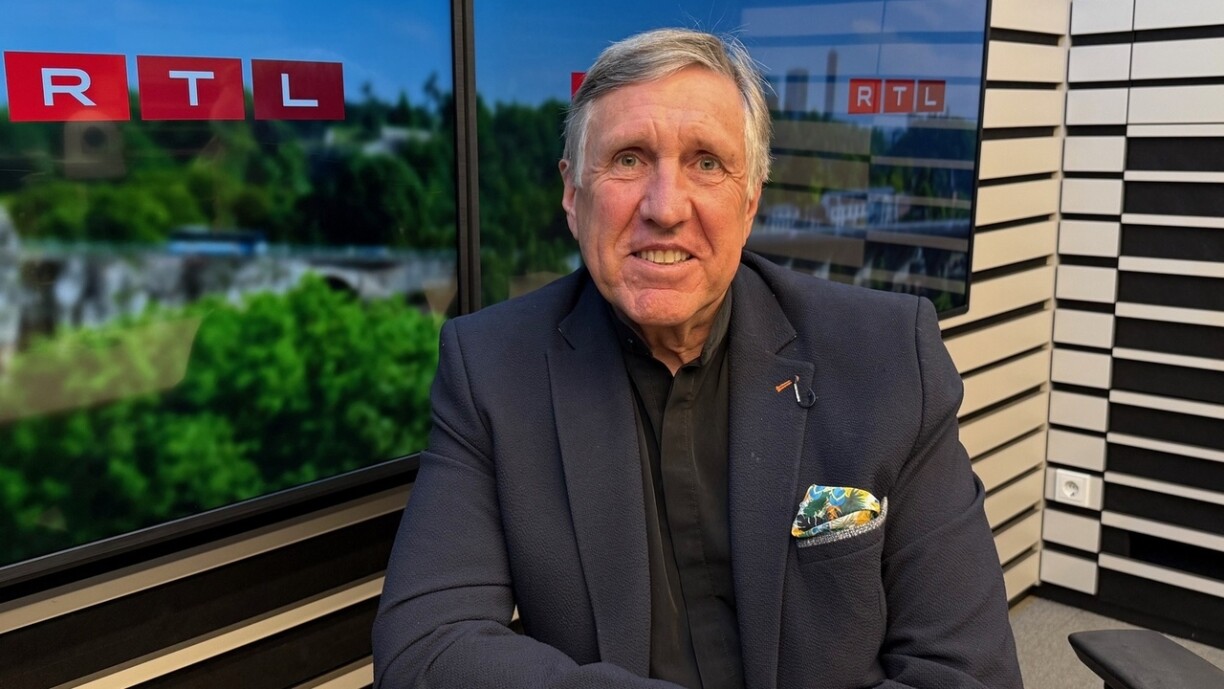
Are we on the brink of a third world war? "The danger is very real", warned Luxembourg's former Defence Minister François Bausch in an interview with our colleagues from RTL Radio on Tuesday, addressing Europe's security and the ongoing support for Ukraine. While careful not to exaggerate, Bausch emphasised the gravity of the current geopolitical climate.
"The war in Ukraine has made the situation increasingly complex", said Bausch, a member of the Green Party (Déi Gréng). "This is not new, [but it has been exacerbated] by the current US president, who no longer operates with the same transatlantic and multilateral approach as his predecessors."
Despite concerns over the White House's current stance, Bausch expressed confidence that NATO's collective defence principle, enshrined in Article 5, would hold firm. "If a NATO country were attacked, Article 5 would still apply", he asserted, believing that the entire alliance, including the United States, would respond.
Regarding the danger of a third world war, Bausch clarified that his intent is not to spread fear but to highlight a sobering reality. He argued that since the fall of the Berlin Wall in 1989, Europeans have lived under the illusion of perpetual peace. "For 80 years, Europe has enjoyed an exceptional period of stability when viewed in the context of its history", he said. However, with war now raging on Europe's doorstep, the risk of further escalation is undeniable, according to Bausch.
On the topic of military spending, Bausch stressed the importance of thinking at a European level rather than a national one. Last week, EU member states approved an €800 billion defence plan, dubbed "Re-Arm Europe", which includes provisions for increased borrowing. Luxembourg's Finance Minister, Gilles Roth, recently voiced opposition to raising debt for defence funding. Bausch, however, countered that it is crucial to differentiate between types of debt.
"Debt for investments, such as infrastructure, is not the same as debt for consumer spending, like VAT reductions in the catering sector", he explained. Bausch argued that the "enormous sums" required for defence cannot be covered solely through revenue. Instead, he advocated for strategic borrowing and investment in infrastructure, which would yield long-term societal benefits.
Bausch also highlighted the need for fairness in funding these initiatives. "Since public money will be invested, the beneficiaries of this crisis", namely, the arms industry, "must be taxed more heavily", he said. Without naming specific companies, he pointed to the dramatic rise in share prices of a major European defence firm, which surged from €83 in early 2022 to €1,200 in 2025.
"These profits must be distributed fairly", Bausch insisted, calling for higher taxation on such gains across Europe.
At the onset of the war in Ukraine, the European Union froze approximately €350 billion in Russian assets, €200 billion of which belongs to the Russian state. Bausch believes these funds should be put to use. "Not to be given to the European arms industry – that would send the wrong signal – but to be given to the Ukrainians", he emphasised. Bausch pointed out that the UK has already taken steps in this direction, and he urged the EU to follow suit.
When discussing the potential for a domestic arms industry in Luxembourg, Bausch highlighted the importance of focusing on the Grand Duchy's existing strengths. "Luxembourg is well-positioned in sectors like satellite technology and cybersecurity", he noted. He argued that investments should be directed towards areas where they can yield significant economic returns. However, Bausch also stressed the need for a broader shift in perspective. "We must move from a national mindset to a European one", he said.
Adopting a European approach, Bausch argued, would not only reduce costs for individual member states but also enhance the EU's overall efficiency. To achieve this, he called for increased pressure on the European Commission. "The Commission is on the right track, and we need to push them even harder", Bausch said. He added that crises often accelerate progress, noting, "Once again we observe that in times of crisis, things sometimes move faster and we make more progress."





