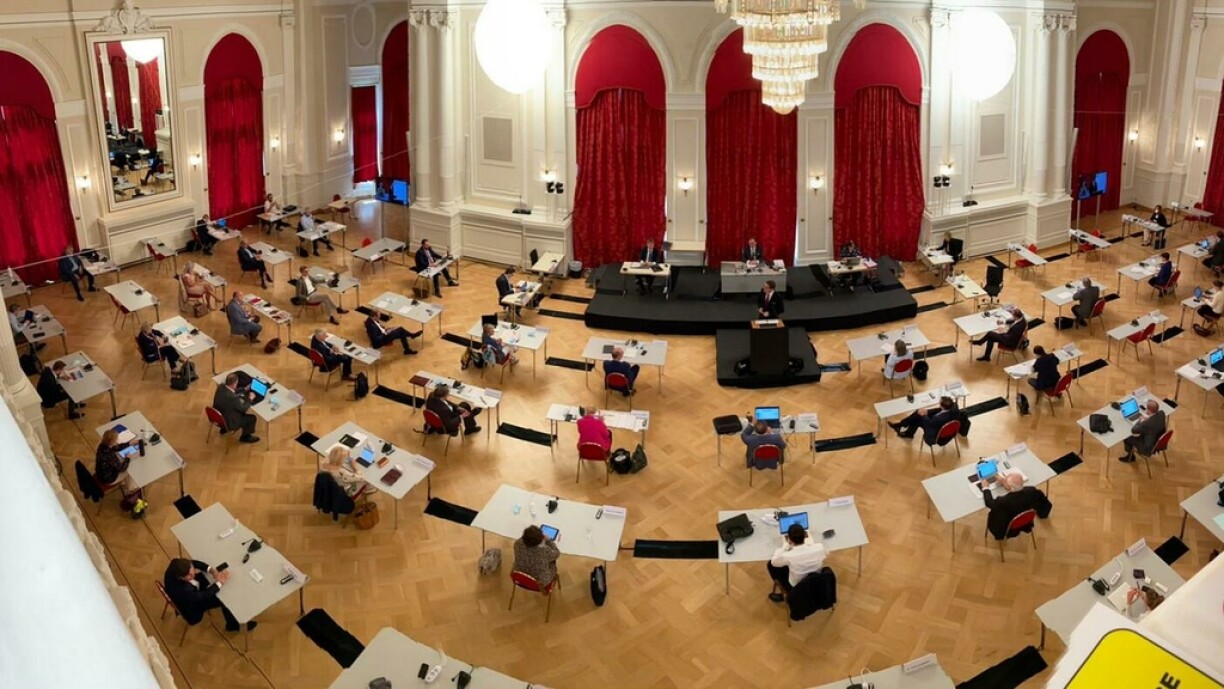
Corinne Cahen, Minister for Integration, joined deputies on Thursday to debate the matter after a question from Paul Galles from the CSV.. All parties were invited to contribute ideas, and they did not hold back. One point of discussion was the National Council of Foreigners (CNE) and its missions. More broadly, the question was raised whether "integration" was even the right term.
The main debate revolved around what society would look like and how people from different nationalities could live together within one country. The concept of "foreign people" to be integrated into a so-called Luxembourgish society was not what Paul Galles had in mind.
"I would much rather talk about a single, wholesome, colourful, multiform society that we all belong to - Luxembourgers and non-Luxembourgers, living together permanently or temporarily."
Fred Keup from the ADR argued that "integration" has a positive connotation, with multiculturalism being its opposite, denoting a division. He also claims that it isn't Luxembourgers who are having trouble with integration, but the others, "the foreigners."
Minister Cahen disagreed:
"What you are talking about is assimilation: 'people come here and they should adapt.' I disagree with this, I think that people coming here are enriching our country. They should get to know us and we them."
With this, the lines were drawn. Nearly all deputies wish for life together in Luxembourg to work better. But in practice this isn't always easy, as more and more people find their way to our country, either voluntarily or sometimes not.
An average of 23,000 new citizens arrive in Luxembourg every year. They end up registering in a municipality, and this should be more than a mere administrative act, said Charles Margue from Déi Gréng. Many associations are available to help, and the state does its part. The National Council of Foreigners (CNE), on the other hand, is falling short.
Corinne Cahen: "This is a difficult affair. The CNE has never really worked, for as long as I've been here."
The 34 members of the council are supposed to address the issues affecting foreigners. It should be institutionalised, like a professional chamber, according to the CSV, while the LSAP suggests reducing the council, turning it into an authority situated between the state and the municipalities. The government wants to start by redefining its missions. What's clear is that the CNE needs to be reformed.
Living together means deciding together, says David Wagner from déi Lénk.
"The right to vote in local election. Let's get rid of the requirement to live in the country for five years."
The question of refugees was also repeatedly raised. The will to improve in matters of integration is there. What's lacking is a legal framework.