A coast guard plane and an Airbus 350 passenger jet collided at Haneda airport in Tokyo on Tuesday, killing five people and forcing the evacuation of nearly 400 passengers as they rushed to escape a raging inferno. All 379 passengers on the airliner escaped without serious injuries.
Investigations have been launched to determine the circumstances which led to the accident. At the time of writing, it seemed as though the incident was down to human error, as control tower radio transcripts showed the airliner had been cleared to land, while the small coast guard plane had been told to wait at a location beside the runway, and should therefore not have been on the runway at the time of the crash.
The investigation is expected to provide additional details.
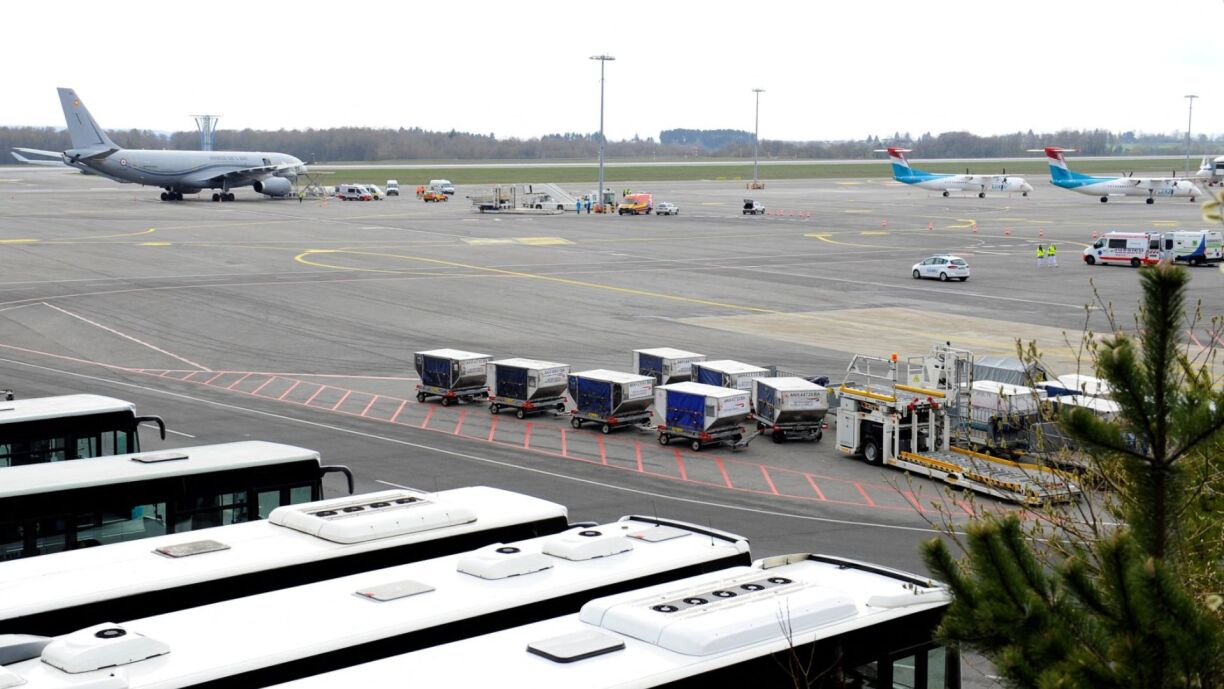
Only one aircraft is allowed on the landing or takeoff runway at any given time, subject to monitoring by the control tower via a number of procedures. Both European and international regulations determine the entire process, while communication is designed to be extremely simple to avoid any misunderstandings. An incident such as the Tokyo crash is very unlikely but not impossible, says Dirk Becker, secretary general of the Luxembourg Airline Pilots Association (ALPL).
If a vehicle or plane is on the runway while a plane is landing, it is possible for the pilot to see it, but this is heavily dependent on weather conditions. In good weather, during the daytime, pilots can opt to stay in the air if they spot obstacles on the runway, in a procedure practised by pilots during their training and repeat exercises.
Trained pilots must take refresher courses every year. Pilots spend 16 hours a year in the flight simulator and test exceptional emergency situations
If an incident occurs on the Findel runway, the Grand Ducal Fire and Rescue Corps are never far away. The Findel barracks are permanently staffed by professional firefighters who have also undergone additional training in order to respond to airport emergencies. The centre also has three specialist fire engines with the capacity to hold 10 times more water than normal vehicles, and are capable at travelling at faster speeds. Firefighters should therefore require a maximum of just three minutes to arrive at the scene in the event an alert is triggered.
The specialist vehicles have space for up to three firefighters, but can be operated by a single firefighter using a joystick. Emergency teams regularly carry out drills, holding a full-scale drill every two years, in order to practise a full evacuation of an aircraft during a potential emergency situation. The alarm system and sirens are tested on a daily basis.
In the event of a serious incident, reinforcement firefighters would be deployed from the Niederanven, Sandweiler and Luxembourg City emergency centres. As Dirk Becker, a pilot who still works for a Luxembourgish airline, says, an accident such as the Tokyo disaster is extremely unlikely to take place at Findel.





