
The Court of Justice of the European Union (CJEU) ruled on Thursday in favour of cross-border workers, declaring that Luxembourg's Children's Future Fund (CAE) had unlawfully discriminated against blended families. Since 2016, the CAE had ceased granting family allowances to the non-biological children of cross-border workers in such family arrangements.
The ruling was hailed as a "great victory" by associations representing cross-border workers, who are now encouraging affected families to apply for the allowances and are exploring legal action against the Luxembourg state.
"This is a great victory for cross-border workers", declared Pascal Peuvrel, president of the Association of Cross-Border Workers in Luxembourg (AFAL), stating "Until now, the cross-border worker was devalued compared to the resident." Peuvrel emphasised the economic significance of this group, noting they constitute 48% of Luxembourg's active workforce.
The CJEU's decision mandates equal treatment for all children, regardless of biological parentage. "The ruling considers that all children, whether biological or not, must be treated equally. A child is a child", explained Georges Gondon, president of the Thionville-based non-profit "Frontaliers Luxembourg", which has campaigned on this issue alongside AFAL for nearly a decade. Gondon described the judgment as "crucial", reflecting societal shifts where blended families are increasingly common.
For the advocacy groups, the court's interpretation is clear and expansive. At a press briefing in Thionville on Thursday, they outlined the new standard: proof that a cross-border worker provides for a child's maintenance is sufficient if it is established they share a domicile. "The cross-border worker must provide for the child's maintenance, and for that, proof of a shared life [...] is sufficient. This proof is established by the fact of being domiciled under the same roof", summarised Peuvrel, quoting the ruling. This establishes the broadest possible interpretation of the maintenance requirement.
The ruling provides further clarity on practical arrangements. Gondon underlined that "this shared home does not necessarily have to be full-time", a provision that accounts for the reality of shared custody in many blended families.
Thursday's decision marks the "final turn in this case, which has been going on for ten years", noted the associations. It is the second time the CJEU has ruled on the matter, following an April 2020 judgment that declared Luxembourg's 2016 law abolishing the allowances "discriminatory". That initial ruling established the principle that "from the moment it is established that the cross-border worker provides for the maintenance of the child or children in the blended household, family allowances should be granted", Peuvrel recalled.
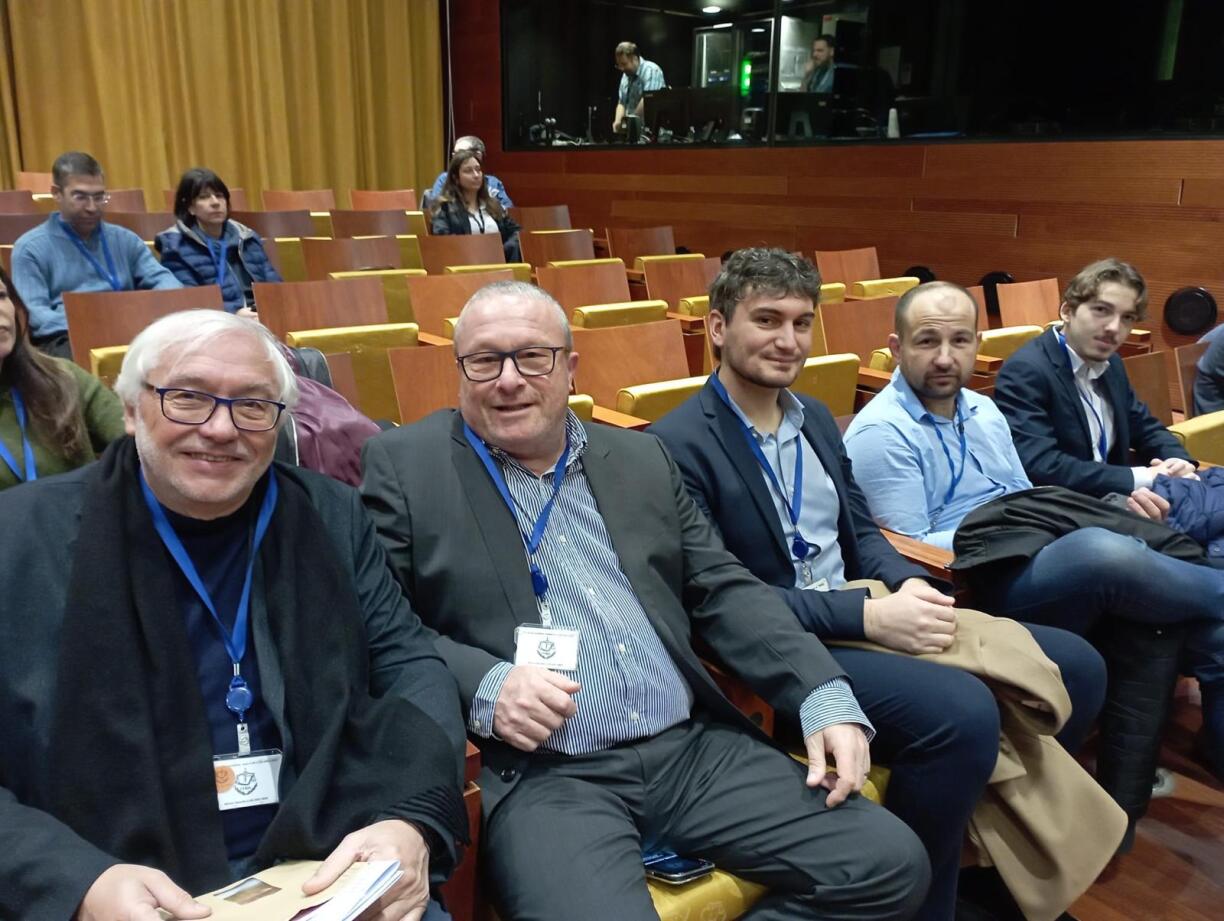
However, this principle was not interpreted uniformly by the CAE in the intervening years. The fund began demanding extensive documentation to prove the worker covered the child's entire financial needs, leading to a back-and-forth of contradictory decisions within the social security administration.
This ambiguity prompted the Luxembourg Court of Cassation to refer preliminary questions to the CJEU in April 2024, seeking "more clarification on the concept of providing for a child's maintenance." The core question was whether proof must cover every expense or if shared domicile alone sufficed. Thursday's ruling delivered the definitive answer.
The final phase of the affair is now procedural. As CJEU rulings are binding on national courts, the Luxembourg Court of Cassation is expected to quash its prior judgments and refer the cases back to the High Council of Social Security for re-examination. For ongoing appeals, judges will now simply verify shared domicile to grant allowances.

All claimants with active appeals will be entitled to retroactive payments, which Peuvrel noted "could add up to a tidy sum." Those who withdrew their claims, however, have forfeited that right.
Looking ahead, Peuvrel pledged that the associations will "study the possibility of suing the Luxembourg state or the CAE for liability due to the defective functioning of public services", seeking redress for individuals who lost years of allowances after abandoning their claims.
The associations allege that Luxembourg employed a deliberate "legal strategy" over the past decade, "playing on procedural delays" and "multiplying the proceedings." Peuvrel argued this approach has "saved the Luxembourg state millions" in unpaid allowances. He compared the situation to the protracted legal battle over student grants, suggesting a pattern.
The presidents of the advocacy groups estimate that thousands of households have been affected by the policy since 2016.
Looking ahead, Peuvrel stressed that the ruling's impact is lasting and universal: "100% of blended families will now be entitled to family allowances." He urged all eligible families to submit their applications to the CAE immediately, noting that the law permits retroactive payments for up to one year from the application date.
Beyond the financial redress, Gondon highlighted a broader principle. "It is nonetheless important, in a state governed by the rule of law", he noted, "that associations such as ours are able to use legal procedures to make a state change its tune."





